
Urban Farming Under the Becakayu Toll: Concrete Above, Greenery Below
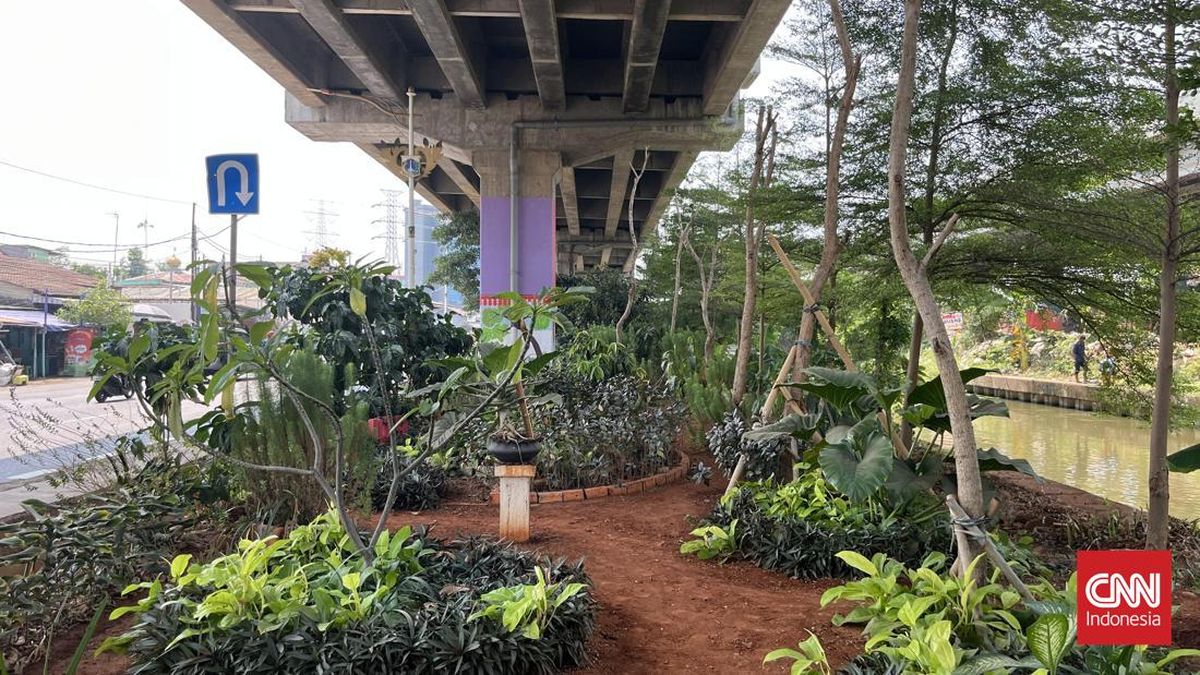
The concrete of the Becakayu toll road in the Duren Sawit area, East Jakarta, stretches over the head of Fahturozih on a Monday afternoon. Despite the sweltering heat and months without rain, Fahturozih wanders beneath the shade of the elevated highway, inspecting the various plants he nurtures there.
Between the concrete support pillars, red soil beds are neatly arranged, filled with fresh vegetables. In other corners, bananas and tomatoes have begun to bear ripe fruit. These urban farm crops grow on approximately 900 square metres of land in RW 7, Pondok Bambu, East Jakarta. Situated directly beneath the toll road, this urban farming site is flanked by the Kalimalang river flow and the Kalimalang Highway, which connects Jakarta to Bekasi, West Java.
Fahturozih is a member of Jakarta’s Infrastructure and Public Facilities Management Officers (PPSU), often referred to as the ‘orange squad’ due to their uniforms. Speaking during his activities, Fahturozih revealed he has managed the garden since 2023. He recounted that before it became a garden, the land was merely wasteland overgrown with weeds and wild plants.
The Origins of Becakayu Urban Farming
Fahturozih explained that the urban farming project at this location began after the sub-district authorities requested that the vacant land under the toll road be utilised for agriculture. According to him, the land does not belong to the sub-district or district, but to the toll road authorities. However, the sub-district was granted permission to garden beneath the highway.
Source: jawawa.id (https://jawawa.id/newsitem/urban-farming-under-the-becakayu-toll-concrete-above-greenery-below-1790222346)
Originally published by CNN Indonesia (https://www.cnnindonesia.com/nasional/20260922042501-20-1406568/urban-farming-di-bawah-naungan-becakayu-beton-di-atas-hijau-di-bawah), translated from Indonesian