
Urban farming in Jakarta social home builds independence and mental resilience
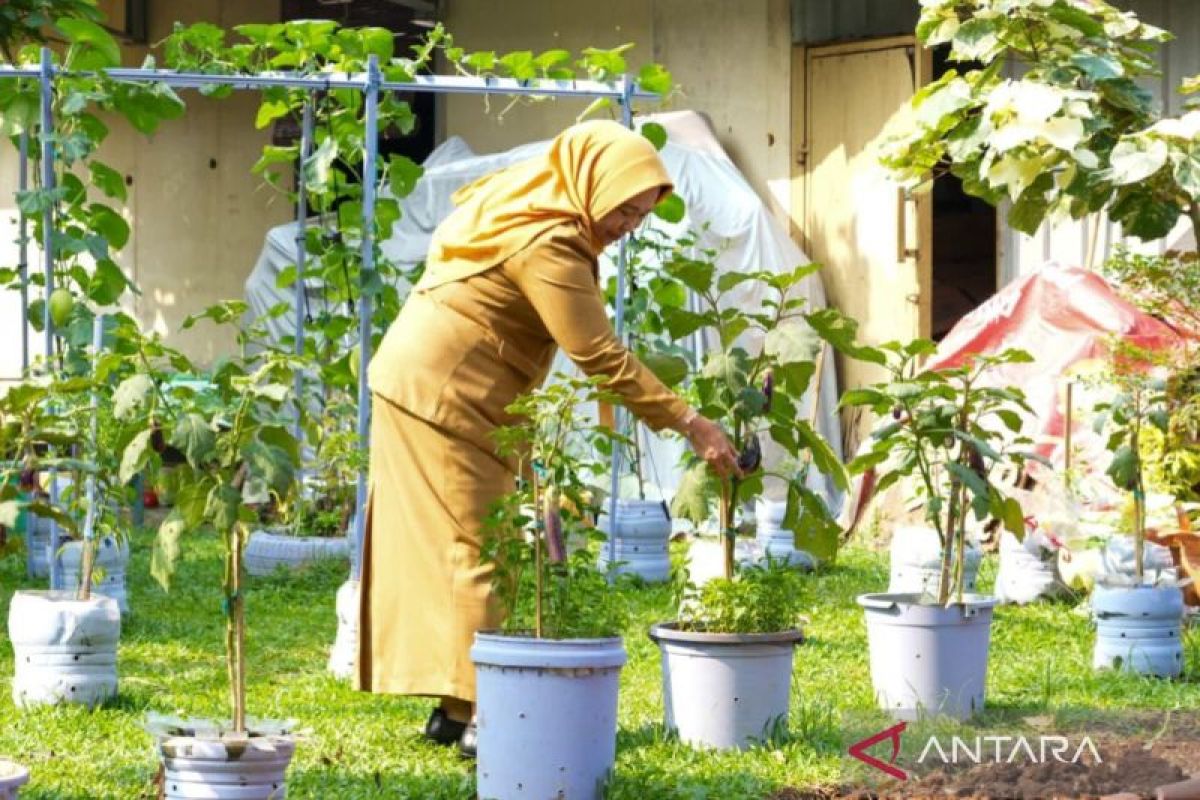
Jakarta (ANTARA) - The urban farming programme developed within the Putra Utama 3 Orphanage, owned by the Jakarta Social Services, has become an innovative empowerment tool capable of building the independence and mental resilience of its residents.
“This urban farming activity, in addition to supporting food security and self-sufficiency, also serves as a means of psychological therapy and an educational medium for skills that can be applied in daily life,” said Ratu Dian Cherrawati, Head of the Putra Utama 3 Orphanage of the Jakarta Social Services, in Jakarta on Tuesday.
Urban farming is conducted using simple and easy methods, such as utilising limited land within the orphanage area to grow vegetables, fruits, and medicinal plants. Dian noted that the techniques employed range from planting in polybags, vertical cultivation, and hydroponics, to the optimal use of available garden space.
According to her, the urban farming programme has delivered positive impacts felt not only through the harvests but also through the learning process undertaken by the residents. Furthermore, the cultivation activities serve as an effective learning tool because they involve residents directly in every stage of plant cultivation.
“Urban farming activities do not only produce agricultural products for the residents to consume, but also serve as a learning medium providing hands-on experience in farming,” Dian explained.
In its implementation, residents are involved from the seed sowing stage through to plant maintenance and harvesting. This active involvement is able to build a sense of responsibility, increase self-confidence, and strengthen the spirit of togetherness among residents.
In addition to providing educational benefits, gardening activities have proven to have a positive impact on mental health. Interaction with plants and green environments helps create a calmer and more comfortable atmosphere for the residents.
“Gardening activities have also been proven to help reduce stress levels and provide a positive impact on mental health,” said Dian.
From an economic perspective, the harvests obtained from the farming programme are used to meet the daily consumption needs of the orphanage residents. This step also helps reduce the operational costs required for food provision. With relatively affordable maintenance costs and no need for vast land, urban farming serves as an effective solution for optimising available space within the social home environment.
The programme is also considered relevant for implementation in various social institutions or urban residential areas with limited land. The success of this programme demonstrates that urban farming plays a role not only in supporting food security but also as an empowerment tool capable of shaping the character, skills, and independence of orphanage residents. Dian hopes that the urban farming programme can continue to be developed sustainably so that its benefits can expand and be felt by more residents in the future.
Source: jawawa.id (https://jawawa.id/newsitem/urban-farming-in-jakarta-social-home-builds-independence-and-mental-resilience-1780988619)
Originally published by Antara (Indonesian) (https://www.antaranews.com/berita/5600284/pertanian-kota-di-panti-dinsos-dki-bangun-kemandirian-dan-mental), translated from Indonesian