
Urban Farming: An Inspiration for City Farmers in Metropolitan Jakarta
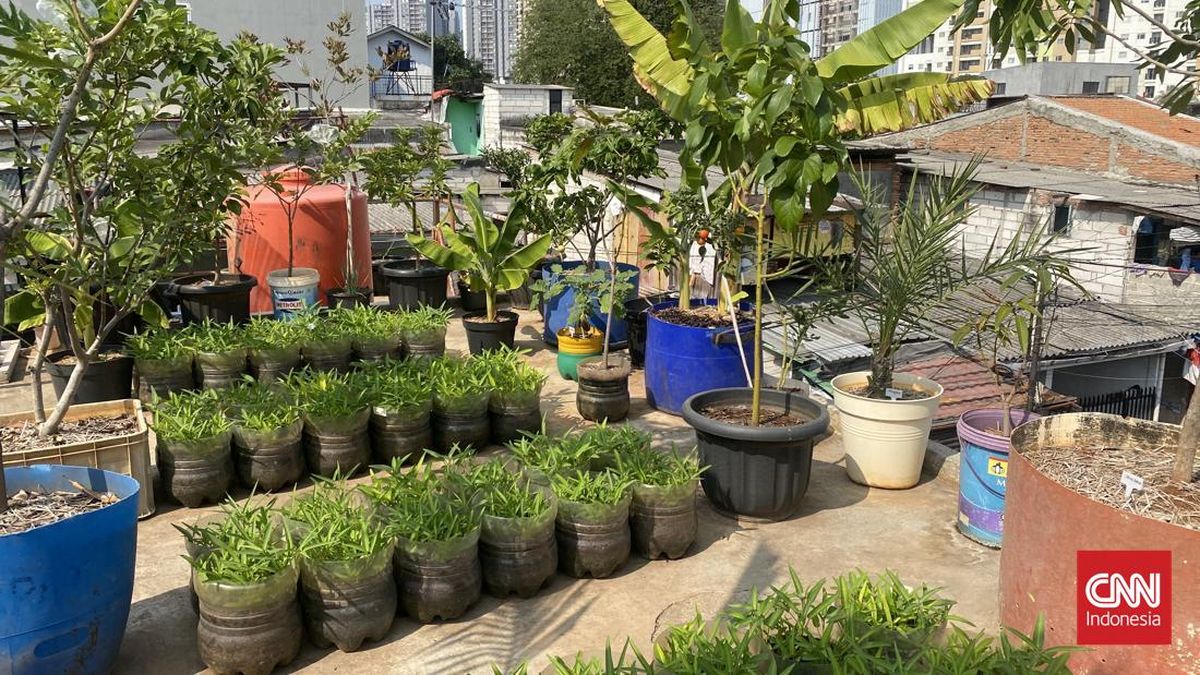
For decades since Indonesia’s independence, Jakarta has become increasingly crowded with high-rise buildings and dense residential areas. However, amidst these structures, a number of creative individuals are utilising available land for farming.
This practice, known as Urban Farming, sees urban residents demonstrating tireless enthusiasm for planting horticultural commodities despite limited space. Not all practitioners have backgrounds in farming or agricultural academia; rather, it is their desire and creativity that allow them to sustain these urban farming activities. Some have even come to rely on these urban agricultural activities for their livelihoods. Every growing sprout represents a prayer planted in the city soil, as these small gardens thrive despite the hustle and bustle of Jakarta.
One such example is a retired teacher couple in Sunter Jaya, North Jakarta. Sutarno and Yuliana, both aged 63, are no longer young, yet they chose to pursue urban farming much earlier in life. At that time, both were still actively working as teachers. Sutarno was the first to engage in urban planting and took early retirement in 2015 to focus on agribusiness, followed by his wife, who retired in 2023.
Urban farming is more than just planting whatever can grow in limited city spaces. Having been active in the environmental sector for years, Sutarno always opens his home to guests interested in learning about urban farming or purchasing his homemade composters. Guests are often treated to various food creations made from ingredients grown in their own garden. During a visit, the couple served Moringa leaf fritters and Centella asiatica pudding, both harvested from the rooftop of their home.
Sutarno shared that he has indirectly practised urban farming since around 2008. Initially, his focus was not on planting, but on managing waste to create compost or growing media. “Initially, it was about how to utilise growing media. But where to plant? That followed naturally. I realised it could be done on roofs or walls. The technology emerged alongside the need. Eventually, what we achieved was that a family could eat sufficiently just from their garden,” Sutlamo told CNN Indonesia.
Through his work with composting, he and his wife now manage a small enterprise (MSME) called Utama Composter. Over time, the urban farming at his home has expanded to his rooftop, featuring food crops such as cassava, spinach, and water spinach, as well as fruit trees in pots (Tabulampot) like apple and ambarella. He also maintains medicinal plants (Toga).
Sutarno noted that the harvests are distributed to various places; some are marketed—both the plants and processed products—online and offline, some are consumed personally, and some are shared.
In Setiabudi, South Jakarta, Suryana (56), who also serves as the local neighbourhood head (RT), utilises the remaining space of his house in a narrow alley for livestock and urban farming. Creating an integrated farming system in a limited urban space is not impossible for him, despite his home being located in a small alley in Pasar Manggis.
He has been gardening on his rooftop since October 2024, following the construction of a new concrete slab. “For vegetables, the regulars are water spinach, chilli, tomato, and eggplant. Occasionally, we also grow shallots and spring onions. This is mainly for personal needs. If there is a surplus, we share it; we invite people to harvest together, sometimes including members of the PKK and the local sub-district office,” said Pak Nana.
Suryana learned these urban farming and livestock techniques independently, without a background in farming or academia. In addition to vegetables, various other plants are cultivated, with small signs for longan and other fruit types visible on his rooftop pots. He revealed that the fertiliser used is produced from the manure of the sheep he raises on-site.
“The waste from the manure is part of integrated farming. This waste can be utilised as fertiliser, both the manure and the urine. That is the reason why we raise sheep,” Suryana explained. He currently raises five sheep, and his livestock routine runs alongside his urban farming management. So far, the presence of the sheep pen has not caused any complaints from neighbours or other residents.
For Suryana and his family, the benefits of urban farming extend beyond reducing grocery expenses; he also feels the impact on his health and spiritual life. According to Suryana, “From a spiritual perspective, it is a bonus; it is considered charity because it provides value to the environment, to humans, and to other living creatures. Sometimes birds, insects, and bees come here…”
Source: jawawa.id (https://jawawa.id/newsitem/urban-farming-an-inspiration-for-city-farmers-in-metropolitan-jakarta-1790222346)
Originally published by CNN Indonesia (https://www.cnnindonesia.com/nasional/20260922054851-20-1406576/urban-farming-sebuah-inspirasi-kaum-tani-kota-di-metropolitan-jakarta), translated from Indonesian