
UPR's Pahandut Smart Ecovillage Realises Science-Based Settlement
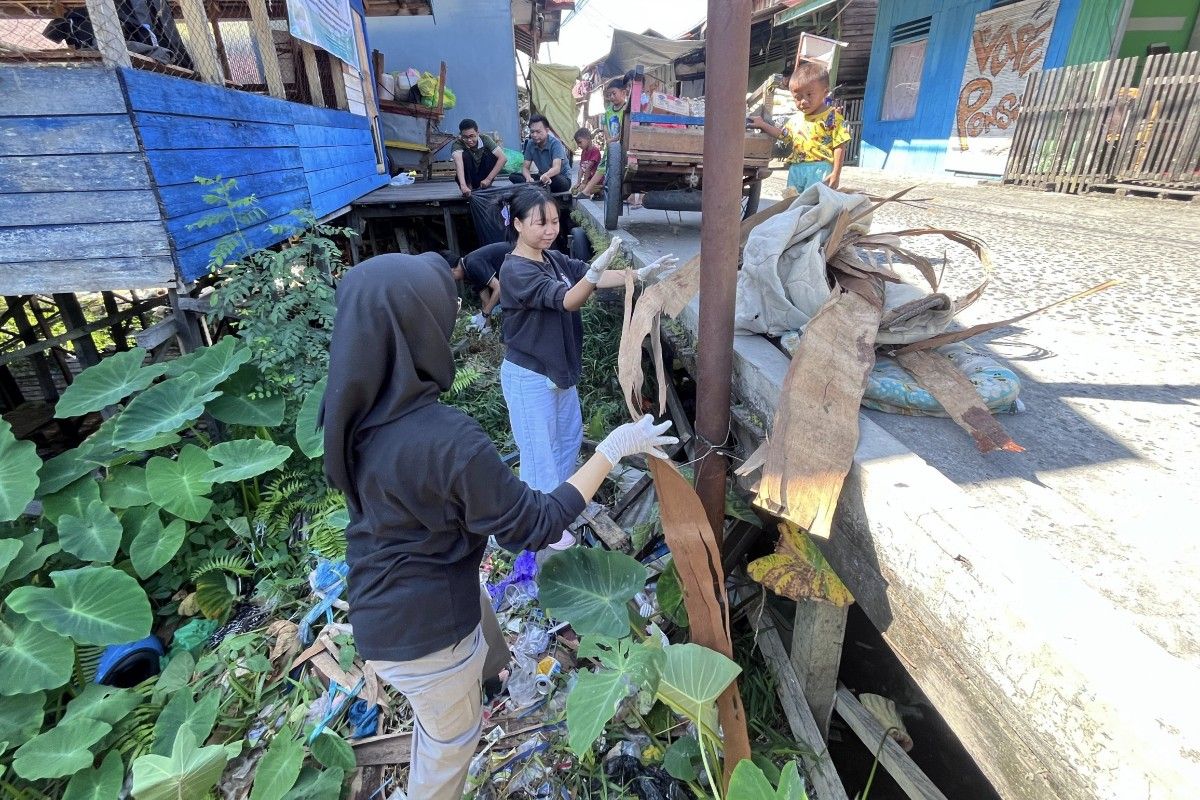
Palangka Raya (ANTARA) - The Faculty of Mathematics and Natural Sciences (FMIPA) at Universitas Palangka Raya (UPR) in Central Kalimantan is developing Pahandut Smart Ecovillage as a science- and collaboration-based model for managing urban swamp settlement areas.
“We want to build a collaborative space bringing together lecturers’ research, students’ creativity, community needs, government support, the business world and media in a single area, so as to produce real and measurable change,” said FMIPA UPR Dean Agus Haryono in Palangka Raya on Monday.
The programme is being implemented in RW 007 of Pahandut subdistrict, Palangka Raya city, home to around 1,000 residents or 384 families. The area was selected after the team identified various environmental and social problems faced by the community.
“We designed this programme so that research results do not stop at the laboratory, but can be applied directly and deliver real benefits to the community,” he said.
Made Dirgantara, Deputy Dean for Student Affairs at FMIPA UPR and coordinator of the Pahandut Smart Ecovillage, explained that from July 2026 the team will begin implementing the programme’s seven main pillars: smart waste, smart health, smart safety, smart green, smart economy, smart community, and smart culture and religious. These seven pillars form the basis of various community empowerment programmes.
The programmes being implemented include neighbourhood-unit-based waste management, strengthening waste banks, health education, urban farming development, water filtration technology, solar-powered street lighting, digitalisation of micro, small and medium enterprises (UMKM), and the compilation of community social data systems.
Students are involved through applied research and community service activities.
“Students learn to understand community problems directly, work across disciplines, and design sustainable solutions together with residents. This is the essence of higher education with impact,” he said.
Made revealed that the programme is implemented through a pentahelix approach involving universities, government, community, business, industry and media.
This collaboration is expected to create sustainable change while strengthening community capacity in the Pahandut area. A series of research, community service, education and mentoring activities will run from 2 July to 5 August 2026, concluding with the Festival Kampung Keren on 6 August 2026.
“FMIPA UPR aims for Pahandut Smart Ecovillage to become a model for smart urban wetland-based areas that can be replicated in various regions, so that science is truly present to solve community problems,” said Made.