
Uproar Over Mass Fish Deaths in Belik River, Bantul, Suspected Due to Wastewater Exposure
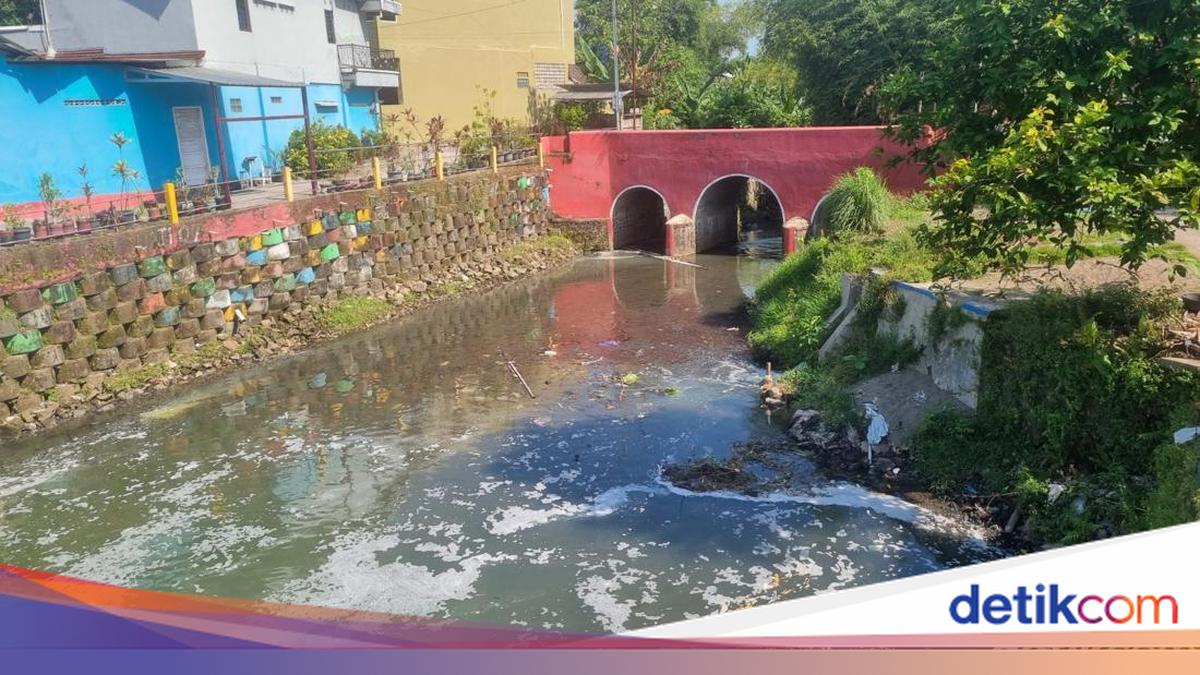
A video post showing residents collecting dead fish from the flow of the Belik River in Pandes I, Wonokromo, Pleret, Bantul, has gone viral on social media. The head of Pandes suspects the fish deaths are due to exposure to liquid waste. The Environmental Agency (DLH) has intervened.
“This morning, the Belik River in Pandes, Wonokromo, Pleret, Bantul, was hit by waste. The river water was full of foam, causing the fish to die. This is not the first time it has happened; it has occurred before, and the repeated incidents suggest the perpetrators are not deterred,” stated the Instagram account @merapi_uncover, as seen by detikJogja today.
The head of Pandes I, Budi Cahyono, confirmed the incident. Budi explained that it occurred this morning around the time people were heading to work.
“It’s true; the incident happened around 8 a.m. Initially, residents saw the water in the Pandes I dam foaming, and upon checking, many fish were unconscious,” he said when met in Pandes I, Bantul, on Monday (20/4/2026).
According to Budi, the number of unconscious fish was very large. Residents even used buckets and suitcases to collect them.
“The number of fish is huge, possibly thousands, because one of my residents got a suitcase full, and others used large buckets. The fish types were noisy ones like wader, tawes, nila, red devil, and even sapu-sapu fish,” he said.
Moreover, when residents caught the fish, they were not fully dead yet. Unlike this afternoon, when all the fish floating in the Belik River were dead.
“When caught by residents, the fish were still trying to save themselves. The remaining fish in the dam are all dead and small-sized, as the larger ones were taken by residents,” he added.
Regarding the cause of the fish fainting, Budi suspects it is due to liquid waste pollution in the Belik River flow. Similar incidents have happened before, but not to the extent of so many fish dying.
“Five years ago, it was similar but not many fish died. This year, the foam is less, but more fish died,” he said.
Regarding the waste source, Budi has traced it to the northern side. The waste is suspected to originate from the Grojogan sub-village, Tamanan village, Banguntapan district, Bantul.
“For now, the fish fainting is due to the foamy liquid waste, originating from the communal WWTP channel in Grojogan. Information suggests residents saw blue drums being washed, and the water flowed into the WWTP,” he said.
Budi revealed that the WWTP channel contamination is happening for the first time since 2013. Additionally, he has confirmed with the head of Grojogan.
“Earlier, the Grojogan WWTP self-help group in Tamanan is ready to take responsibility by restocking fish and not repeating the action, as this was due to lack of knowledge,” he said.
On the other hand, Budi has also asked his residents who took fish from the river dam not to consume them.
“I have asked residents not to consume the fish until the laboratory test results are out,” he said.
Meanwhile, the Head of the Bantul District Environmental Agency (DLH), Bambang Purwadi Nugroho, appreciated the collaboration with the head of Pandes I. According to him, this collaboration allows problems to be detected quickly.
“Next, we have sent a team to the field to check the location; the team has also taken water and contaminated fish samples for laboratory testing,” he said.
Bambang also mentioned coordinating with the relevant area authorities whose river flows are polluted by the waste.
“Further tracing of the pollution source has been conducted involving the area, community policing officers, sub-village heads, and local RT to anticipate prevention so that river environmental pollution does not spread,” he said.