
Uproar over 30,000 Tonnes of Gold Treasure in Banten Plundered by Foreigners
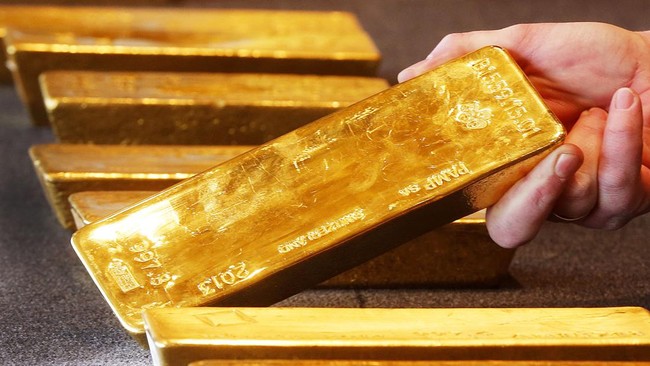
Indonesia’s history records a massive gold discovery in an area near Jakarta. Cikotok, Banten, is said to have produced a total of 30,000 tonnes of gold ore.
The discovery was not only a windfall but also an important milestone that opened a new era in the national gold mining industry.
Initially, the Dutch East Indies colonial government had long heard rumours about a gold source area south of Batavia (now Jakarta), specifically in the Cikotok area within the administrative region of Banten. The location of Cikotok is quite close to the centre of Batavia, only about 200 kilometres away.
This news clearly startled many parties because of its potentially lucrative nature. To ensure it was not dismissed as fantasy, the colonial government then conducted geological research led by Dutch researcher W.F.F. Oppenoorth.
From 1919, Oppenoorth and his team departed from Sukabumi to traverse the forests of Java until they reached the point estimated to be the gold source. The exploration was accompanied by the opening of access roads and the construction of exploration tunnels.
In short, Oppenoorth’s research bore fruit. It was proven that the Cikotok area indeed contained very abundant gold reserves. However, the mining process was not easy. The colonial government had to clear dense forest and open many new tunnels.
By 1928, 25 tunnels had been built cutting through steep hills, highlands, and narrow valleys.
“Approximately 25 tunnels have now been built, only some of which have a depth of no more than 135 metres,” wrote the daily Sumatra-bode (2 March 1928).
The costs incurred were also substantial. The colonial government reportedly allocated around 80,000 guilders—equivalent to billions of rupiah today—per year.
However, the large expenditure proved commensurate with the results obtained. In March 1928, rumours about Cikotok’s gold potential were finally scientifically proven. Beneath Cikotok’s soil, potential reserves of up to 30,000 tonnes of gold were discovered.
“To date, 30,000 tonnes of gold have been found from Cikotok,” wrote Sumatra-bode.
Indonesia’s Treasure Falls into the Hands of Colonisers
News of the discovery practically caused a sensation throughout the country because the colonial government was expected to reap extraordinary profits. Afterwards, the colonial government granted operational mining rights to NV Mijnbouw Maatschappij Zuid Bantam.
From then on, gold exploitation was carried out massively. The transportation route for mining products was not only accessed from Sukabumi. According to the daily De Indische Courant (25 July 1939), the colonial government built new transport access from Rangkasbitung and Pelabuhan Ratu.
In addition, a processing plant with a capacity of 20 tonnes per day was built. However, the plant was unable to accommodate all the exploitation output because the mining material was so abundant. During the work process, labourers often found gold nuggets of varying weights.
“During the work, gold of various weights was often found. The highest reached 126 grams,” wrote De Indische Courant (25 July 1939).
In 1933, mining activities showed a very positive record. The mining concession area in Cikotok was recorded as covering 400 square kilometres. Gold could even be obtained by digging to a depth of only 50 metres.
“The amount of gold revealed from exploration totalled more than 61,000 tonnes of gold with a value of 3.68 billion guilders,” wrote De Locomotief (29 March 1933).
Nevertheless, the abundance of natural wealth only benefited one party, namely the colonial government, which became increasingly wealthy. Meanwhile, the indigenous population did not feel any prosperity from the gold exploitation at all, even though the colonial government had previously made sweet promises.
The Cikotok gold mine then recorded itself as one of the largest gold mining locations ever managed by the colonial government, continuing into the era of the Government of the Republic of Indonesia.
After Indonesia’s independence, the operations of the Cikotok gold mine were taken over by NV Perusahaan Pembangunan Pertambangan, before finally being continued by PT Aneka Tambang Tbk (Antam) in 1974.
The history of the Cikotok gold mine officially ended in 2005 after its gold reserves were declared exhausted. Although it has been decommissioned, the glory of the national gold mining industry has been continued by other, much larger mining locations, such as Freeport in Papua.
Source: jawawa.id (https://jawawa.id/newsitem/uproar-over-30-000-tonnes-of-gold-treasure-in-banten-plundered-by-foreigners-1786791073)
Originally published by CNBC Indonesia (https://www.cnbcindonesia.com/market/20260815122336-17-759633/geger-harta-karun-emas-30000-ton-di-banten-dirampok-asing), translated from Indonesian