
Uproar as Aung San Suu Kyi Vanishes in Myanmar, Feared Dead
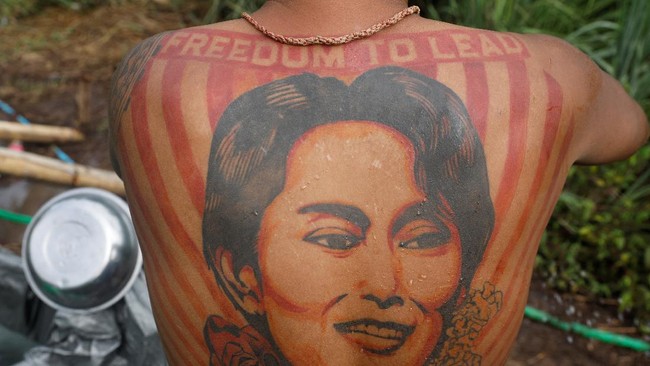
More than three years since her last public appearance orchestrated by the military junta, the mystery surrounding the whereabouts and condition of Myanmar’s Nobel Peace Prize laureate Aung San Suu Kyi has intensified. Family members, the diplomatic corps, and regional leaders are now aggressively demanding tangible proof that the 81-year-old is still alive. The former Myanmar leader was last seen in public at the conclusion of her military trial in late 2022. The junta has consistently refused all requests for access to the country’s most famous political prisoner, despite recently claiming she was moved to house arrest earlier this year.
The search for justice is being led by her youngest son, Kim Aris, who has travelled internationally to urge Western governments to pressure Myanmar’s military rulers for proof of life. Since Suu Kyi was imprisoned following the 2021 coup, even her lawyers have been denied any communication with her, fuelling fears that she has been deliberately hidden from public view.
Diplomatic concern over Suu Kyi’s condition has deepened despite high-level efforts. During a bilateral meeting in New Delhi last month, Indian Prime Minister Narendra Modi directly raised the case with junta chief Senior General Min Aung Hlaing, following a similar request by UN Special Envoy Julie Bishop in May. According to diplomats familiar with the discussions, Min Aung Hlaing reportedly reacted with anger whenever Suu Kyi’s name was mentioned. ASEAN foreign ministers also raised the issue of her welfare during a meeting with junta representatives in Bangkok on Sunday, as confirmation of her condition is seen as a key to mending Myanmar’s fractured international relations.
The military junta insists Suu Kyi is in good health and was moved to house arrest in April to avoid extreme heat. However, the regime has failed to provide convincing evidence beyond a blurry photograph showing her speaking with police officers in an unidentified building. Her son, Kim Aris, has questioned the photo’s authenticity due to the lack of any time indicator proving it was taken recently. He also noted that if she were under house arrest, she would not be at her old Yangon residence, as her private home in Naypyidaw has reportedly been destroyed by the military.
The absence of independent verification has sparked wild speculation that the democracy icon may have died or is suffering from a severe illness in solitary confinement. Analysts suggest the generals’ deep-seated animosity is the reason her fate remains hidden from the global radar. “To keep such a thing [her death] a secret is impossible. The general’s long-standing hostility towards his political rival sufficiently explains why she remains completely isolated,” said Morgan Michaels, a Myanmar expert at the International Institute for Strategic Studies in London.
Suu Kyi remains a crucial political symbol, and her detention holds significant implications for Myanmar’s internal conflict. Since the coup, ethnic armed groups and pro-democracy forces have unexpectedly united to form a mass resistance alliance against the junta. Some senior diplomats believe that releasing Suu Kyi would be the easiest strategy for the junta to fracture this opposition unity, given her historically complex relations with certain ethnic minority groups. Conversely, the military deeply fears her charismatic ability to mobilise millions for peaceful protest, viewing it as more dangerous than the ongoing armed rebellion. “Freeing Suu Kyi is the easiest way to destroy their unity,” a foreign diplomat involved in communications with resistance groups said.
Support for Suu Kyi remains steadfast. Her 81st birthday on 19 June was marked by clandestine commemorations across Myanmar. The junta’s repressive pressure was evident in the arrest of a National League for Democracy (NLD) member for giving alms to Buddhist monks in her honour. The campaign for justice for Suu Kyi has also highlighted the mass atrocities under the military dictatorship. According to the Assistance Association for Political Prisoners (AAPP), at least 14,517 political prisoners remain behind bars in Myanmar, with more than 60 reported to have died in custody this year due to torture and poor medical care.