
Upper Respiratory Infections Surpass 50,000 Cases in Forest Fire Affected Areas Within Two Months
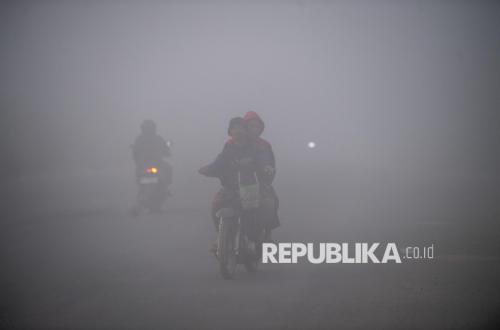
Cases of upper respiratory tract infections (ISPA) have increased significantly alongside forest and land fires (karhutla). The Ministry of Health noted that ISPA cases in areas affected by forest fires reached 50,891 between July and August 2026.
Dr Ika Trisnawati, an internal medicine specialist sub-specialising in pulmonary diseases (lung cancer/respiratory) and a lecturer at Gadjah Mada University, stated that smoke arising from forest fires can increase cases of respiratory tract disorders such as ISPA. Furthermore, during the dry season, exposure to haze and dust particles is more easily carried by the wind and subsequently enters the respiratory tract.
“The increase in ISPA during the dry season period is because there are certainly many dust particles during the dry season. Small dust particles carried by the wind are in the free air and are then inhaled into the respiratory system,” Dr Ika said in a written statement, quoted on Saturday (5/9/2026).
She then revealed easy ways to recognise ISPA symptoms. According to Dr Ika, common ISPA symptoms include coughing and runny noses that can affect the nose, throat, and respiratory tract. In infection conditions, these symptoms may also be accompanied by fever.
Coughing at the onset of a viral infection is generally dry, whereas coughing with phlegm that changes colour to yellowish may indicate a bacterial infection. “For mild ISPA caused by momentary exposure to dust and smoke, the condition generally improves within three to five days,” said Dr Ika.
She urged the public to seek medical examination immediately if complaints do not improve or instead worsen. Signs to watch for include persistent fever, increasing phlegm that changes to a yellowish colour, and worsening shortness of breath.
Specifically for children, who are more vulnerable to contracting ISPA accompanied by symptoms such as wheezing during breathing, immediate medical attention is required. “Examinations can begin at primary health facilities such as Puskesmas or primary healthcare services. The benchmark is not whether the ISPA is caused by a viral or bacterial infection, but rather the symptoms,” she said.
She revealed that individuals with chronic lung diseases are among the vulnerable groups. This includes sufferers of asthma, chronic obstructive pulmonary disease (COPD) due to smoking, pulmonary tuberculosis, and lung cancer.
Additionally, members of the public with other chronic diseases such as diabetes, heart disease, and kidney failure are also among the groups vulnerable to ISPA. The elderly also face a higher risk, which is related to the decline in organ function, including the respiratory tract, with advancing age.
Source: jawawa.id (https://jawawa.id/newsitem/upper-respiratory-infections-surpass-50-000-cases-in-forest-fire-affected-areas-within-two-months-1788576912)
Originally published by Republika (https://ameera.republika.co.id/berita/tkvctk425/tembus-50-ribu-kasus-ispa-di-wilayah-terdampak-karhutla-dalam-dua-bulan), translated from Indonesian