
UPNVJ promotes literacy and organic waste management
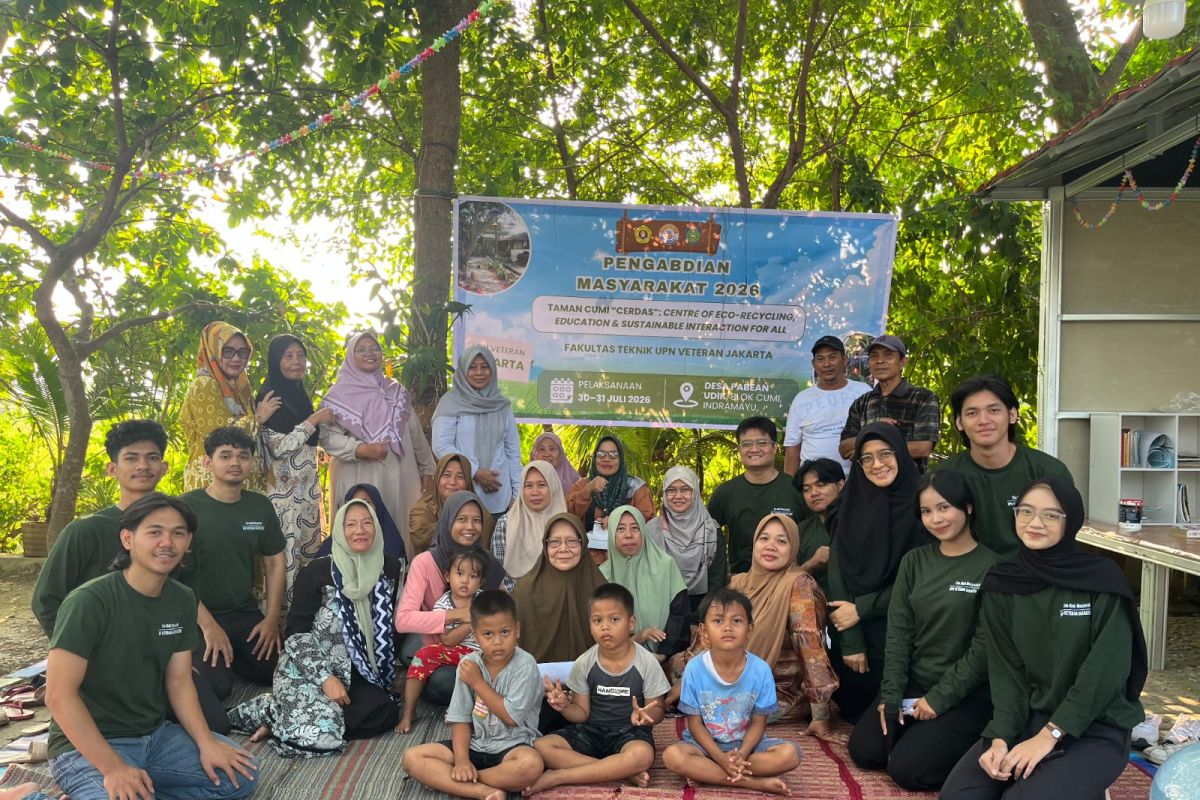
Universitas Pembangunan Nasional “Veteran” Jakarta (UPNVJ) is promoting improved literacy and organic waste management through its Community Service Programme (PkM).
The programme was realised through the revitalisation of a reading garden and education on organic waste management using compost drums and black soldier fly (BSF) cultivation in Blok Cumi, Pabean Udik Village, Indramayu Regency, West Java.
PkM team leader Nur Fajriah said the programme was designed not only to provide direct benefits but also to encourage the community to develop activities independently and sustainably.
“Through the revitalisation of the reading garden, we hope the community, especially children, will have a comfortable learning space and can improve literacy culture,” she said.
Meanwhile, the organic waste management education is expected to encourage residents to process waste at its source, so that the environment becomes cleaner and the processed products can provide benefits for daily life.
The PkM activity, held on 30–31 July 2026, involved eight students from UPNVJ’s Industrial Engineering Study Programme, namely Achmad Fikri Ramadhan, Alyssa Fitriani, Anastasya Putri Wahyudi Uloli, Mohammad Zidane, Muhammad Rivi Radithya Batubara, Reyza Caesar Sidqi, and Rifat Khadafi, as well as two lecturers, Mohammad Rachman Waluyo and Fajaria Nurcandra.
The reading garden revitalisation was carried out through the construction and repair of a reading hut, the building of a gateway, and the installation of a reading garden signboard.
The team also provided a number of supporting facilities, such as bookshelves, carpets, and a collection of children’s reading books, which are expected to support community literacy activities and create a more comfortable learning space while increasing public interest in reading.
Nur Fajriah added that the team also educated residents on how to sort and manage organic waste from households.
Thirty residents of Pabean Udik Village attended a socialisation session on the importance of sorting organic waste at home, the types of waste that can and cannot be processed, how to use compost drums, and the utilisation of composting products in the form of liquid organic fertiliser and solid compost.
In addition to waste processing using compost drums, the team demonstrated maggot cultivation as an alternative method of organic waste processing.
According to her, residents learned the stages of cultivation, from preparing the cultivation medium, feeding, and maintenance, to the use of maggots as animal feed and the cultivation residue known as kasgot as organic fertiliser.
“The demonstration showed that organic waste management can not only help reduce waste but also has the potential to generate economic value for the community,” said Nur Fajriah.
To measure effectiveness, the team conducted pre-tests and post-tests to determine participants’ level of understanding of the material presented. Participants actively engaged in discussion sessions, asked questions, and directly practised using the compost drums.
The programme is part of the implementation of the Tridharma of Higher Education, which aims to support the improvement of community literacy culture and encourage more effective organic waste management through the application of science and technology.
“We hope the reading garden revitalisation and organic waste management programme can continue to be developed by the community of Pabean Udik Village, so that it can strengthen literacy culture and encourage organic waste management at the household level to create a cleaner and healthier environment,” she said.