
UPNVJ Accelerates Internationalisation with 10 Strategic Programmes and Infrastructure Development
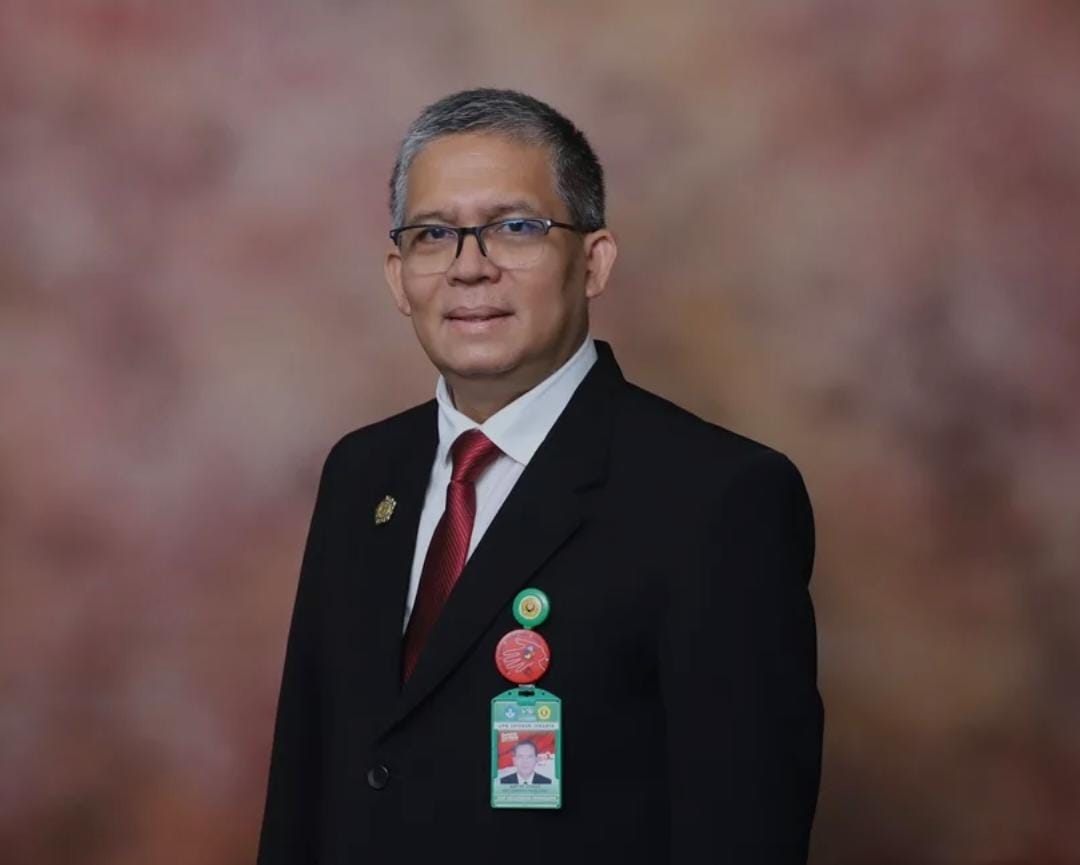
Universitas Pembangunan Nasional “Veteran” Jakarta (UPNVJ) is accelerating its internationalisation agenda through ten strategic programmes spanning education, research, cooperation, academic mobility, global recognition, and infrastructure development.
Initiated in late 2022 by the Rector of UPNVJ, Prof. Anter Venus, this initiative serves as a vital step in transitioning the ‘Bela Negara’ (National Defence) Campus from a local and national identity towards a more competitive international position. Located in Jakarta—the centre of government, culture, and national educational reference—UPNV and views a global vision not merely as an option, but as a strategic necessity. Through acceleration spanning 2023 to 2026, several targets originally projected for 2026 are being achieved ahead of schedule.
This acceleration is running in tandem with the strengthening of campus infrastructure, digital services, learning support facilities, and plans to develop integrated educational and healthcare zones in Tangerang.
Prof. Venus explained that UPNVJ’s internationalisation is built upon four stages: preparing, engaging, enhancing, and recognising. The initial stage involved re-conceptualising the university’s vision into an institution that is excellent, internationally high-quality, innovative, competitive, and maintains its ‘Bela Negara’ identity for the development of Indonesian society.
“Because we are situated in the centre of Indonesia—the hub of culture, power, and educational reference—UPNVJ’s vision cannot merely be local or national. Our vision must be global,” said Prof. Venus.
He noted that while this path is challenging for UPNVJ, which has only held state university status since 2014 and began operating effectively in 2015, the institution’s relatively young age is not a barrier to rapid progress. UPNVJ views its resources, geographical position, and institutional networks as capital to pursue measurable internationalisation targets.
The foundation for quality enhancement began in 2022 through FERCAP recognition for the Ethics Committee and ISO certification to standardise organisational governance. From this foundation, UPNVJ is expanding into international curricula, international accreditation, global rankings, cross-border academic cooperation, and the strengthening of the research ecosystem.
The ten internationalisation programmes include international accreditation, international rankings, adjunct professor programmes, international funding, international scientific publications, student exchanges, international cooperation, international student admissions, internationally accredited journals, and international classes through double and joint degree schemes.
In terms of quality standards and recognition, UPNVJ has noted significant progress through the international accreditation of several study programmes. This process began with FIBAA in 2023, continued with full accreditation in 2024, and is being expanded through ASIIN in 2025, IABEE for the Faculty of Engineering, and IAHE for the Faculty of Medicine. To date, 18 study programmes, or approximately 40% of UPNVJ’s total programmes, have achieved international accreditation.
This acceleration indicates that the internationalisation stages are not running linearly but are interconnected and can be achieved more rapidly. Targets originally designed to be phased in until 2026 have begun to be realised since 2023, showing tangible results from 2024 onwards.
“We are actually targeting all these programmes to reach full performance by 2026. However, the fact is that several achievements have been visible since 2023 and 2024. This shows that the organisation is moving faster than the original schedule,” said Prof. Venus.
Regarding academic mobility, UPNVJ continues to encourage student participation in international exchange programmes. Through the IISMA programme, UPNVJ has sent 26 students to various universities ranked within the world’s top 100. Conversely, UPNVJ is also receiving international students from countries including Kazakhstan, Malaysia, and Thailand for semester-long exchange programmes.
The admission of international students is a key part of this agenda. Currently, international students at UPNVJ hail from various nations, including Timor-Leste, Libya, Yemen, India, and Pakistan. UPNVJ aims to increase the number of international students to approximately two per cent of the total student population.
Strengthening internationalisation also involves opening international classes. One programme currently being prepared is a double or joint degree collaboration with Ablaikhan University, Kazakhstan, in the field of International Relations. This programme is expected to commence once the licensing and academic preparations are complete.
In terms of teaching capacity, UPN_VJ will begin implementing an adjunct professor programme in 2025. Through this initiative, professors from overseas universities will teach regularly at UPNVJ for one semester. These instructors will come from partner countries, including Malaysia and Japan. This programme differs from the visiting scholar scheme as international instructors will be more intensively involved in the learning process.
In the field of research and publication, UPNVJ continues to encourage lecturers to increase their articles in reputable international journals, including those indexed by Scopus and Web of Science. This strengthening of publications also impacts UPNVJ’s position in the SINTA rankings. Furthermore, the university aims for its internal journals to ascend to international indexation.
UPNVJ’s international cooperation continues to expand with various universities and institutions from Malaysia, Russia, the United States, the Netherlands, Australia, and several other countries. This cooperation is directed towards being active and productive, particularly in the fields of teaching, research, and academic exchange.