
UPN Veteran Jakarta Empowers Village Through Medicinal Plants and Waste Bank Programme
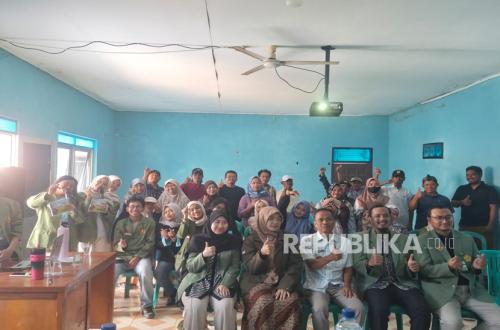
Universitas Pembangunan Nasional (UPN) Veteran Jakarta has reinforced its commitment to community-based health development through a service programme in Weninggalih Village. Themed ‘Waste Transformation, Gender Equality Towards an Independent and Innovative Village in Health Development’, the initiative encourages residents to manage local potential independently and sustainably. The programme involves cross-disciplinary collaboration between the Faculty of Health Sciences, Faculty of Medicine, Faculty of Engineering, and the Student Executive Board (BEM).
A key activity was the planting of family medicinal plants (TOGA), led by Vice Dean for Student Affairs, Alumni and Cooperation of the Faculty of Health Sciences Agustiyawan, alongside other faculty vice deans and the village head. This planting is intended as a first step towards building a healthier village environment while promoting land use for family health support. Agustiyawan stated that health development must begin from the smallest unit, the family and community, and requires active public participation beyond just healthcare facilities.
He explained that the cross-faculty collaboration is the programme’s main strength, integrating health perspectives, promotive and preventive aspects from medicine, and technological innovation in environmental management from engineering. The programme also focuses on waste transformation by processing organic waste into compost, reducing waste volume while producing fertiliser for greening and plant cultivation. Inorganic waste management is strengthened through the development of a Waste Bank, encouraging residents to sort waste at the source and manage materials with economic value, thereby opening opportunities for community economic improvement.
Agustiyawan emphasised that empowerment is key to long-term benefits, ensuring residents gain the knowledge, skills, and confidence to manage their own potential. The programme upholds gender equality by encouraging equal opportunities for women and men to gain knowledge, participate in decision-making, and contribute to village health and environmental management. It also serves as a learning space for students to develop social awareness, leadership, and collaboration skills. Agustiyawan expressed hope that the partnership between the university and the community will continue, allowing Weninggalih Village to grow into an independent, innovative, and healthy model for best practices.