
UPN Jogja Researchers Trace Gas Pathways Triggering Mysterious Fires in Seyegan, Sleman
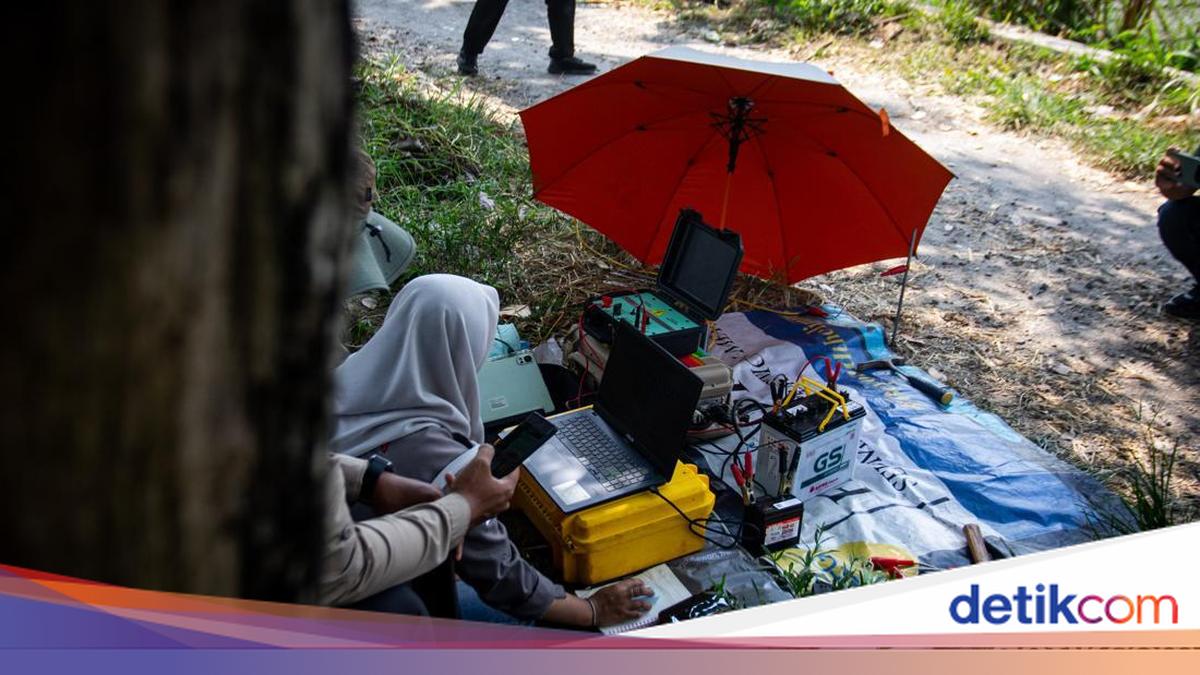
A research team from the Faculty of Mineral and Energy Technology (FTME) at UPN ‘Veteran’ Jogja has begun subsurface mapping at the site of recurring fires in the Kasuran Mriyan X residential area, Seyegan, Sleman. The study aims to identify rock layers suspected of accumulating gas and to trace the pathways through which the gas escapes.
Ardian Novianto, the coordinator of the FTకి FTME UPN ‘Veteran’ Jogja research team, stated that measurements are being conducted using the geoelectrical method. This technique maps subsurface rock layers based on the electrical resistivity or resistance of the rocks.
“We are attempting to identify the subsurface characteristics. Having previously observed outcrops on the eastern side of the river, we now want to observe the subsurface stratigraphic distribution using geophysical methods,” said Ardian at the measurement site in Seyegan on Wednesday.
According to Ardian, the measurements will not be limited to a single point. The team plans to establish six to seven measurement lines, each approximately 200 metres long, to obtain a broader geological overview of the area. The primary focus is to identify rock layers that could potentially serve as underground gas reservoirs and to analyse any structures or fractures.
Ardian noted that conclusions cannot be drawn immediately as measurements and analyses are ongoing. Furthermore, the specific type of gas triggering the repeated fires remains unconfirmed. “There are indications of methane from several measurements. While the Ministry of Energy and Mineral Resources (ESDM) previously detected minor amounts of methane, there is now information regarding the presence of hydrogen,” he added.
At the same location, Aris Dwi Nugroho, a Junior Earth Investigator from the Center for Geological Disaster Technology Research and Development (BBPTKG), stated that teams are currently clearing the river area suspected of being the gas source. Heavy machinery has been deployed to remove mud and bamboo thickets.
“This dredging is intended to eliminate the suspected methane source, though it remains an assumption. I have recommended the removal of the mud and bamboo in the hope that the methane will dissipate,” Aris told reporters.
Preliminary mapping detected gas concentrations at approximately 4 per cent of the Lower Explosive Limit (LEL), which is considered very low. Aris explained that the gas is suspected to move through rock fractures or joints beneath the surface towards the houses affected by the fires. He noted a fault structure to the west that forms smaller secondary faults or joints.
However, Aris emphasised that all hypotheses require further proof through laboratory analysis and subsequent measurements. Meanwhile, the fires continue to plague the residence of a local man, Agus. According to family records, the number of fire incidents has reached 87 as of Wednesday morning, with the most recent incident occurring at 00:50 WIB, destroying items including shelving, wardrobes, and books.