
UPJ Drives Four Technology Innovations from Campus to Industry
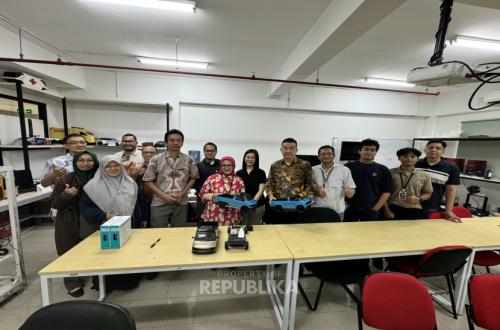
JAKARTA — Universities are expected not only to produce research but also to develop innovations that can be applied to address the needs of society and industry. Universitas Pembangunan Jaya (UPJ) is pursuing this goal by developing four innovations based on artificial intelligence, robotics, digital learning technology and blockchain.
The innovations are being developed under the 2026 Diaspora Berdampak Grant Programme, with the involvement of Rudy J Rahardjo, an Indonesian diaspora member in Singapore and chief executive of Knowledge Catalyst Pte Ltd. Running from September to November 2026, the programme is intended to improve research product readiness, strengthen intellectual property protection and create opportunities for commercialisation.
The four innovations involve study programmes in UPJ’s Faculty of Technology and Design: Informatics, Information Systems, Product Design and Visual Communication Design. This cross-disciplinary collaboration combines technology development, digital creativity, design and business strategy to improve the prospects of applying research findings.
The Informatics programme is developing Smart Waste Sorting, an automated waste-sorting technology based on artificial intelligence (AI), computer vision and robotics. The system is designed to identify and sort waste automatically using intelligent technology.
The Information Systems programme, meanwhile, is developing NusaQuest as a Gamified Competency-Based Learning Platform in Higher Education. The platform combines gamification with competency-based learning to provide a more interactive digital education experience.
The next innovation is being developed by the Product Design programme: an exterior and interior design for a multi-purpose electric car cabin. The design process integrates digital design, virtual reality (VR), AI and rapid prototyping to support vehicle development through a digital approach.
The Visual Communication Design programme is developing TRACE (Traceable Record of Art, Creation, and Evolution). The innovation focuses on tracking the journey of a work, from its initial concept and creation through its development, to the benefits and value it generates.
The four innovations will be assessed for technological readiness, implementation feasibility, intellectual property protection and opportunities for joint development with industry. This stage is an important part of determining the next steps and giving research findings a clearer path towards practical use.
Dr Ida Nurhaida ST MT, chair of the 2026 Diaspora Berdampak Grant Programme, said the initiative was a strategic step towards strengthening the link between university research and industry needs.
“Through the Diaspora Berdampak Programme, we want to ensure that research and innovation do not stop at publication or prototype development, but have a clear path towards wider application,” she said.
Ida said collaboration with diaspora members and industry partners offered additional perspectives to improve product readiness, strengthen intellectual property protection and create opportunities for sustainable commercialisation.
As part of the programme, Rudy J Rahardjo is contributing through knowledge transfer, strategic discussions, reviews of research product readiness and advice based on his industry experience. His areas of expertise include digital trust, Blockchain-as-a-Service and innovation commercialisation strategies.
The programme also includes the formation of cross-disciplinary working groups, the mapping of priority research products, feasibility workshops, and assessments of technological and implementation readiness using Technology Readiness Level (TRL) and Implementation Readiness Level (IRL).
In addition to product development, UPJ is examining the creation of a Research-IP Registry and Innovation Passport to support the documentation of research assets, verification of contributions and traceability of innovations. The framework is expected to help manage intellectual assets and improve transparency in developing research findings.
Understanding of innovation commercialisation is also being strengthened through a public lecture entitled “Building Research Impact Through Innovation, Intellectual Property, Blockchain & Commercialization” at UPJ’s Building B Hall. Around 400 students, academics, industry practitioners and other stakeholders attended.
The lecture featured Rudy J Rahardjo, BlockDev Foundation head Dennis, and Nur Alif Ramadhan, also known as Acil, creator of Dalang Pelo and chief executive of PT Karya Cipta Pelo. The event formed part of efforts to broaden understanding of innovation, intellectual property protection and opportunities to commercialise research findings.
UPJ is also exploring the possibility of initiating cooperation with Bandung Techno Park (BTP), which has experience managing business incubators, supporting start-ups, transferring technology and commercialising research findings.
Through November 2026, the programme is focused on refining its outputs, strengthening the 2026–2028 research and commercialisation roadmap, preparing product trial plans for a six-to-12-month period, and consolidating partnerships and grant reporting.
Through these four innovations, UPJ is seeking to strengthen the role of universities in producing technology with not only academic value but also the potential for wider application. Collaboration between academics, diaspora members and industry is expected to narrow the gap between campus research and society’s practical needs.