
UPJ and University of Greenwich Develop Future Education Model Based on Sustainable Urban Living
How do universities prepare students for a world shaped by artificial intelligence, climate change, urbanisation, and evolving industrial needs? This question is a focus for many universities globally, including the University of Greenwich in the United Kingdom and Universitas Pembangunan Jaya (UPJ) in Indonesia. To address this, UPJ interviewed Dr. Nnedinma Umeokafor regarding the challenges and future direction of higher education development.
With support from the British Council’s Going Global Partnerships Transnational Education (TNE) Exploratory Grant, UPJ and the University of Greenwich are developing the APSTONE-Hub: Co-Creating a Capstone Partnership for Sustainable Built Environments programme. This initiative represents a joint effort to design a more collaborative, project-based international learning model oriented towards solving real challenges in urban areas.
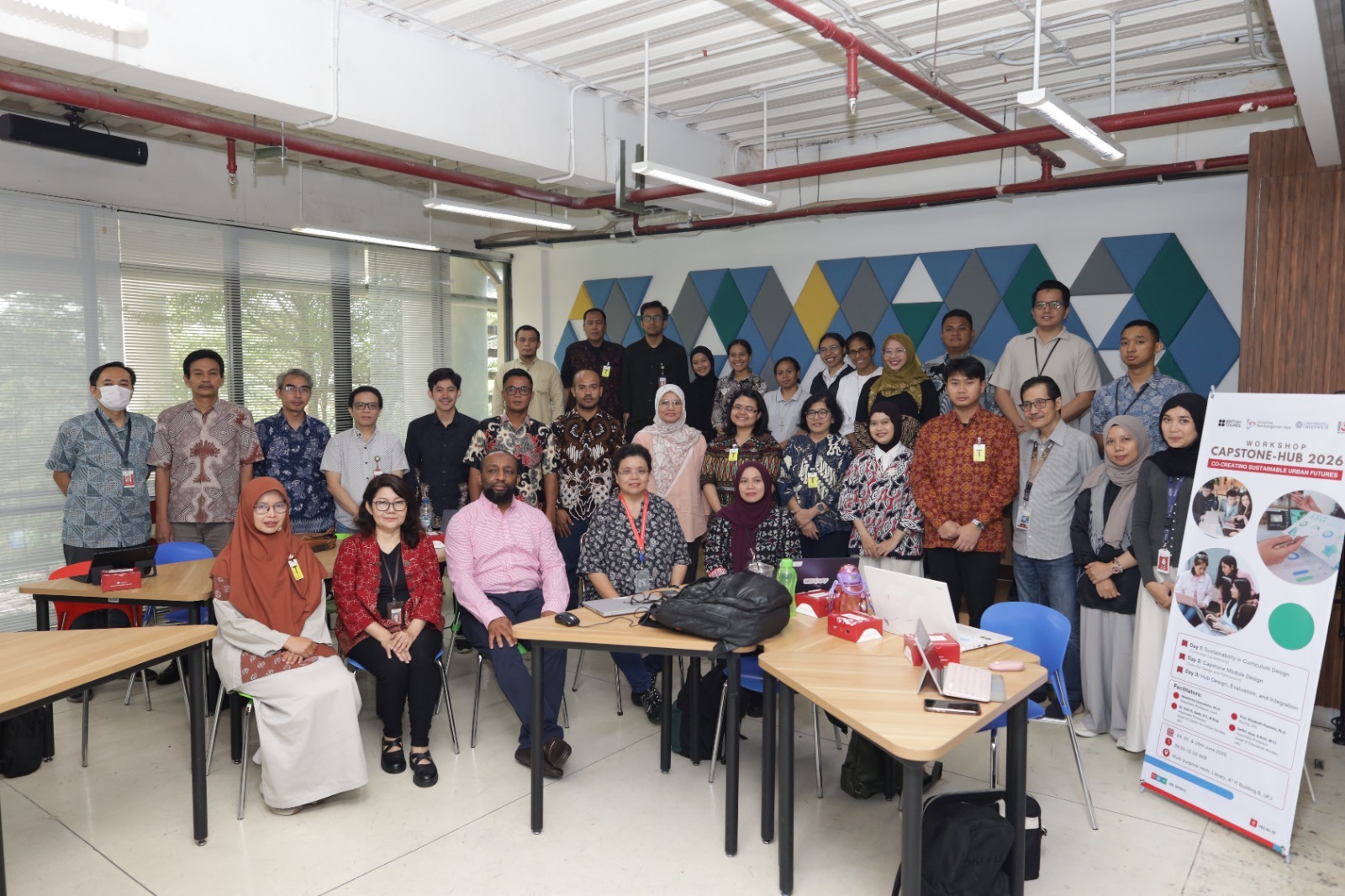
The collaboration was realised through a Curriculum Co-Design and Online Capacity Development Hub Workshop held from 24 to 26 June 2026 at UPJ. The event brought together academics from the University of Greenwich and UPJ, the British Council team, industry representatives from the Pembangunan Jaya Group ecosystem, and various stakeholders. Participants worked together to develop curriculum, strengthen lecturer capacity, and build a transnational education model adaptive to future needs.
Dr. Nnedinma Umeokafor, Associate Professor in Project and Safety Innovations at the University of Greenwich, explained that higher education today faces far more complex challenges than in previous decades. She noted that graduates can no longer rely solely on theoretical knowledge. “In many countries, the challenge we face is that graduates understand theory but are not ready to meet industry needs. They must be able to work across disciplines, solve real problems, and adapt to rapidly changing technology,” she said.
According to Nnedinma, the rise of artificial intelligence, digital transformation, and urbanisation requires universities to change their teaching approaches. Students need learning experiences that allow them to apply knowledge directly through real projects with industry, government, and communities. Consequently, project-based learning has become an increasingly popular approach at universities worldwide. This method gives students the opportunity to connect theory with practice while developing critical thinking, collaboration, communication, creativity, and problem-solving skills.
The CAPSTONE-Hub programme adopts this approach by developing a Capstone course themed around Sustainable Urban Living. The course is designed to enable students from various disciplines to work together to solve urban problems, involving industry and community partners as part of the learning process.
Nnedinma believes that UPJ’s direction is very much in line with global higher education trends. “Universities in many countries are starting to shift towards challenge-based learning, integrating the Sustainable Development Goals (SDGs) into the curriculum, and strengthening collaboration with industry. UPJ has implemented all three aspects. In my view, UPJ is not just following global trends but has a very strong position to become a regional leader in this field,” she said.
One notable strength is UPJ’s identity as an urban campus focused on Sustainable Urban Living. This focus is reinforced through close collaboration with the Pembangunan Jaya Group, giving students learning experiences through various real projects connected to the industrial world. According to Nnedinma, this advantage is an important asset in developing the concept of a living laboratory, a learning approach that utilises the surrounding environment as a live laboratory. “Universities like UPJ have an advantage because they are located in rapidly developing urban areas. The city can become a learning space where students work with communities, industry, and government to solve real challenges,” she explained.
The living laboratory approach allows education, research, and community service to run in an integrated manner. Students no longer learn through hypothetical case studies but contribute directly to solving problems faced by society.
The CAPSTONE-Hub workshop served as a collaborative space to translate these ideas into curriculum. Over three days, participants jointly developed a Capstone course design covering learning outcomes, cross-country supervision models, assessment strategies, industry-based projects, and quality assurance mechanisms for transnational education. Additionally, the team developed the concept of an Online Capacity Development Hub, which will serve as a centre for lecturer competency development through digital materials, mentoring sessions, collaborative learning guides, and various learning resources related to transnational education.
According to Nnedinma, the co-creation approach applied in CAPSTONE-Hub is the main differentiator compared to conventional academic collaborations. “Co-creation involves academics, students, industry, and policymakers from the design stage. When all parties participate in developing solutions from the beginning, the results become more relevant, easier to implement, and create a shared sense of ownership,” she said.