
UPI Lecturer Highlights Threat of Electoral Politics to Baduy Dalam Community
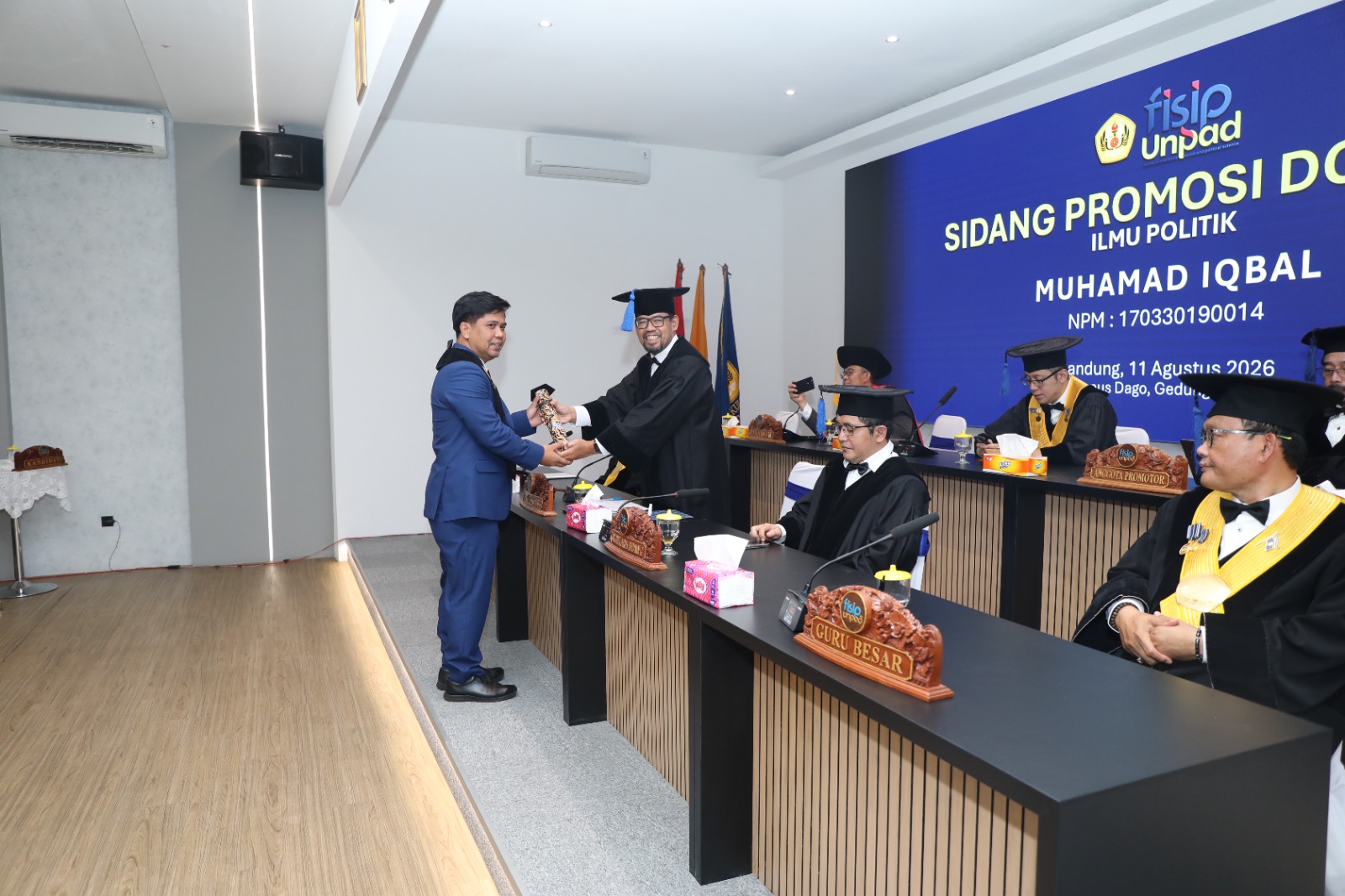
A lecturer at Universitas Pendidikan Indonesia (UPI), Muhamad Iqbal, has earned a Doctor of Political Science degree after examining the political participation of the Baduy indigenous community in legislative and presidential elections.
The study, titled ‘Political Participation of the Baduy Indigenous Community: A Study of Electoral Political Threats and Societal Security in Legislative and Presidential Elections’, was presented at a doctoral promotion hearing at the Postgraduate School of the Faculty of Social and Political Sciences, Universitas Padjadjaran (Unpad), Bandung, on Wednesday (12/8).
The research examines the relationship between the national political system, particularly elections, and the customary order that underpins Baduy life. Iqbal identified potential tensions between formal state regulations and the pikukuh, or customary provisions, of the Baduy community.
The Baduy community holds differing attitudes towards elections. The Baduy Dalam tend to reject the use of voting rights, while the Baduy Luar participate in elections. This difference has become one of the issues in maintaining the social security of the Baduy indigenous community.
‘The sociological approach used places the quality of human relations and the community’s ability to maintain its essential character as an important part of security,’ said Iqbal.
In the study, Iqbal identified a number of obstacles to Baduy political participation, including limited access to information, understanding of the electoral process, administrative requirements, and differences between customary rules and formal state regulations. Educational factors, the observance of major customary days, protection of political rights, and representation of indigenous communities also play a role.
The research used data from legislative and presidential election results, statements from Jaro (customary leaders), education figures, the Kanekes Village election committee, and members of the Baduy Dalam and Baduy Luar communities. Data from 27 polling stations were also analysed to examine voter numbers, voter turnout, ballot papers, valid votes, and counting results.
‘The conduct of elections in the Baduy area has its own challenges. Socialisation cannot be carried out with visual campaign materials and access to certain areas is restricted, so communication is done orally through the Jaro,’ he said.
According to Iqbal, the distribution of election logistics also faces geographical obstacles. Limited vehicle access means some logistics must be carried on foot using local porters.
Polling stations are not established in the core zone of Baduy Dalam. Residents wishing to exercise their right to vote must travel to polling stations in the Baduy border area. A number of customary provisions are also adapted to electoral needs, including the dipping of fingers in ink, which is then promptly cleaned after residents leave the polling station.
Research data shows that of 6,946 registered voters, 4,794 people exercised their right to vote in the presidential election, or around 69 percent. Meanwhile, in the legislative election, voter turnout was recorded at 2,803 people, or around 40 percent. Valid votes in the presidential election reached 4,592, while in the legislative election there were 2,610 valid votes.
Iqbal said one of the main findings of the research is the emergence of forced assimilation in the context of electoral politics. The pressure of the national political system is considered capable of placing the indigenous community in a position of confrontation with the customary rules that have long guided their lives.
‘One of the important findings of the research is the emergence of what is called forced assimilation in the context of electoral political security,’ he said.
This condition, he continued, is not only related to the exercise of voting rights but also has the potential to affect the sustainability of the customary ecosystem. The differing attitudes between the Baduy Dalam and Baduy Luar communities are considered capable of creating fragmentation of political choices.
The research concludes that the political participation of the Baduy indigenous community in legislative and presidential elections remains largely at a symbolic level and has not yet fully achieved substantive participation.
Nevertheless, the conduct of the 2019 and 2024 elections in the Baduy area was considered to have proceeded with various forms of adaptation to customary conditions.
‘Campaigning was carried out directly without mass mobilisation, without modern campaign props, polling stations were placed in Baduy Luar, and no open campaigning was conducted,’ said Iqbal.
Based on the research findings, Iqbal recommends that future elections give greater consideration to the rules and local wisdom of the Baduy community. The General Elections Commission (KPU) is considered to need to accommodate local values as long as they remain within the national legal framework.
‘Respect for local wisdom values can help increase participation while strengthening the substance of Baduy community representation,’ he said.
Iqbal also encourages further research using cultural assessment, political ethnography, constructivism, and grounded theory approaches to examine more deeply the political participation, threats, and security of indigenous communities.
Source: jawawa.id (https://jawawa.id/newsitem/upi-lecturer-highlights-threat-of-electoral-politics-to-baduy-dalam-community-1786704695)
Originally published by Media Indonesia (https://mediaindonesia.com/nusantara/921897/dosen-upi-soroti-ancaman-politik-elektoral-terhadap-masyarakat-baduy-dalam), translated from Indonesian