
Updating Data, Empowering People
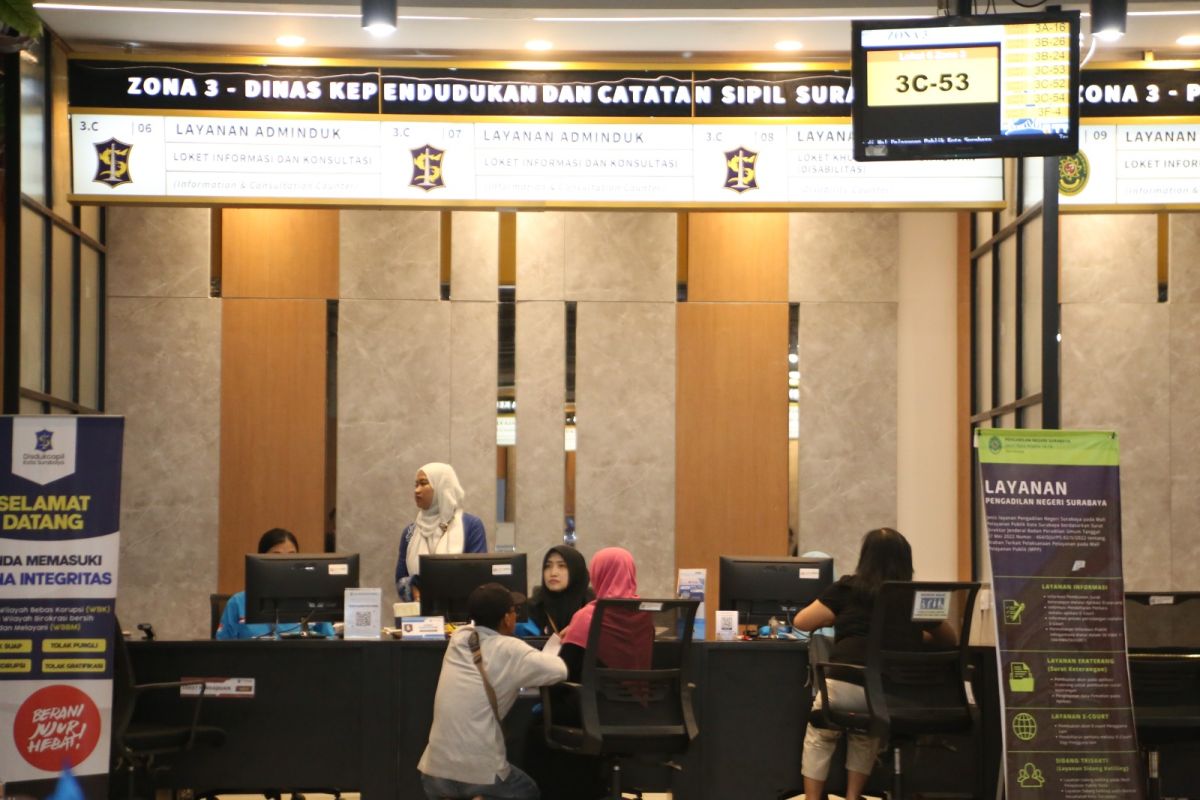
Human-based development must begin with the ability to recognise the people themselves.
Surabaya (ANTARA) - The data appearing in a Family Card (KK) often seems like a mere administrative matter. Name, address, family status, and education level appear necessary only when an individual requires documents for school, banking, employment, or government services.
However, behind those columns lies a picture of the people who are the targets of development.
Therefore, when a citizen has completed university education but their education level in the Family Card is still recorded as primary, junior high, or senior high school, the issue does not stop at administrative discrepancy. Outdated data can result in the face of development read by the government not fully reflecting the actual condition of society.
Such phenomena are still found in the city of Surabaya, East Java. The Surabaya City Government is encouraging residents to update their educational data in population documents so that the stored information aligns with their life progress. This step is vital because population data is linked to various indicators of human development.
This is where updating the Family Card finds a broader meaning. Updating a single piece of personal information means helping to ensure that the government operates with a picture of the population that is more consistent with actual circumstances.
Surabaya possesses strong human development capital. The Central Bureau of Statistics (BPS) recorded Surabaya’s Human Development Index (HDI) reaching 85.65 in 2025, an increase of 0.96 points or 1.13 per cent compared to 2024, which stood at 84.69.
This increase occurred across all dimensions of the HDI, namely longevity and healthy life, knowledge, and an adequate standard of living.
That figure represents a pleasing achievement. However, a high number does not automatically mean that all data forming the basis of policy is perfect. Indeed, the more complex a city’s development becomes, the greater the need for data that is up-to-date, detailed, and reliable.
Population data, therefore, transforms from mere administrative archives into the social infrastructure of development.