
Update on National Roads and Bridges Post-Sumatra Disaster: PRR Task Force Ensures 100 Per Cent Recovery
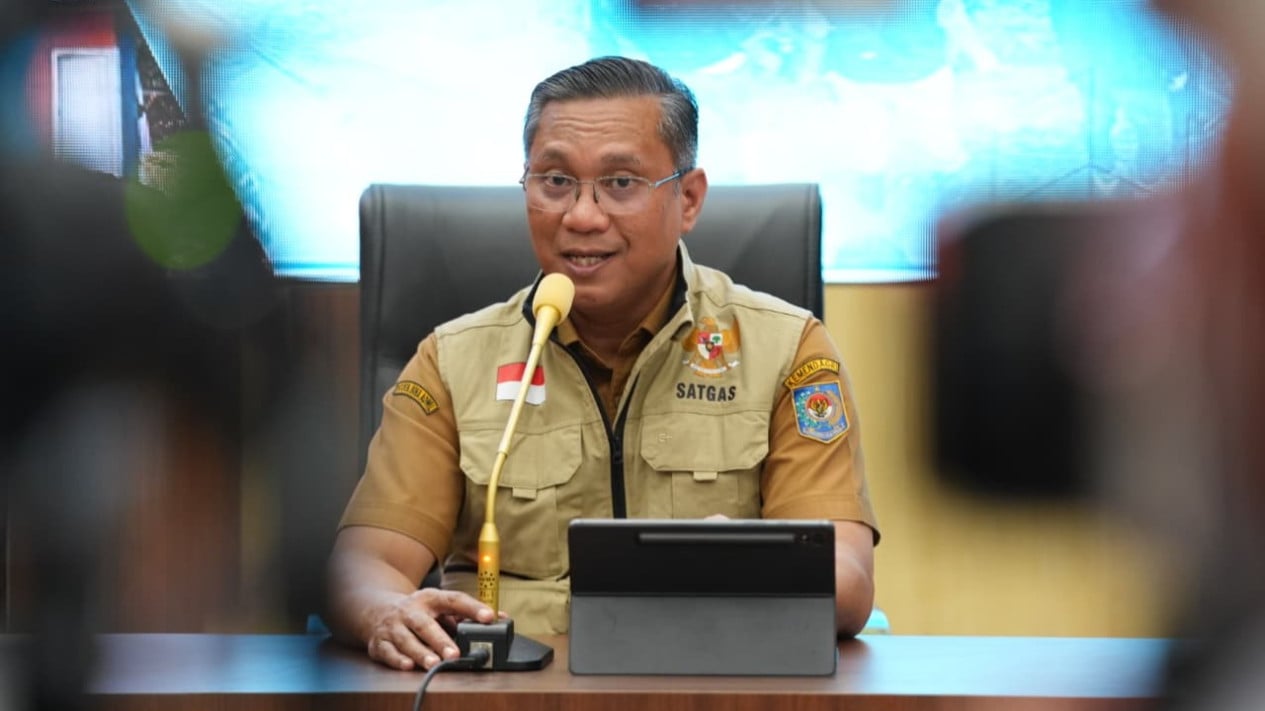
The Post-Disaster Rehabilitation and Reconstruction (PRR) Task Force for Sumatra has confirmed that the recovery of infrastructure following disasters in Aceh, North Sumatra, and West Sumatra is progressing steadily. As of 5 October 2026, all national roads and bridges across these three provinces have reached 100 per cent recovery, while the completion of regional roads and bridges is being accelerated.
This was stated by the PRR Task Force Spokesperson, Amran, during a press conference regarding the Sumatra natural disasters at the Ministry of Home Affairs headquarters in Jakarta on Monday (5/10/2026).
“For national road and national bridge infrastructure, it has reached 100 per cent as of today,” Amran explained.
He noted that the management of regional roads and bridges is currently the primary focus to ensure that community connectivity in the affected areas can return to optimal levels. For regional roads, the recovery progress has reached 94.20 per cent in Aceh, 9ability 98.53 per cent in North Sumatra, and 83.23 per cent in West Sumatra. Meanwhile, progress for regional bridges has reached 58.93 per cent in Aceh, 93.98 per cent in North Sumatra, and 59.50 per cent in West Sumatra.
“The progress on regional bridges is ongoing, and we will continue to strive for completion as quickly as possible. This infrastructure development, specifically for bridges, is also supported by the Indonesian Army (TNI AD) and the National Police (Polri), with several Bailey bridges already under construction,” said Amran, who serves as the Director of Regions, Urban Areas, and National Borders within the Directorate General of Regional Administration at the Ministry of Home Affairs.
In addition to road and bridge infrastructure, the recovery of residential housing is also underway. Out of a target to build 57,027 permanent housing units (huntap), 2,085 units had been completed as of 5 October 2026. Meanwhile, out of a target of 20,803 temporary housing units (huntara), 20,770 units—nearly 100 per cent—have been completed.
Amran explained that the construction of permanent housing requires several stages, ranging from land preparation to physical construction. Therefore, the process is being closely monitored to ensure it is completed in stages while providing certainty to the affected communities.
“This achievement is being continuously improved because the community certainly needs certainty regarding their housing, and we hope that this will be completed exactly at the scheduled time,” he added.
On the other hand, the recovery of basic services is also showing progress, with health and education facilities now 100 per cent functionally operational.