
UNY Supports SDGs 9 and 17 Through Development of Bilimbi-Based Bioadsorbent
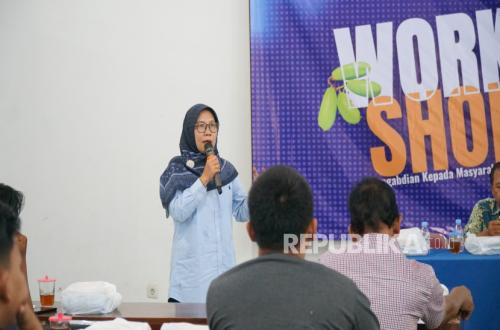
Universitas Negeri Yogyakarta (UNY), through its Faculty of Mathematics and Natural Sciences, has reaffirmed its commitment to delivering tangible innovations for the community via a public service programme. This commitment was realised through a workshop held on 21 April 2026, led by Dr Laila Katriani alongside a team of lecturers and students from UNY’s Physics department. The activity focused on developing a bioadsorbent based on bilimbi (Averrhoa bilimbi) as an environmentally friendly solution to reduce ammonia gas emissions from chicken farming waste. The innovation serves not only as a downstream application of research findings but also supports the achievement of the Sustainable Development Goals (SDGs), specifically SDG 9 (Industry, Innovation and Infrastructure) through the development of research-based technology applicable to the livestock sector, and SDG 17 (Partnerships for the Goals) through collaboration between universities, government, funding bodies, and the community in creating sustainable solutions. The initiative also contributes to public health, responsible consumption and production, and environmental conservation. The workshop was implemented in Ngentakrejo Village, Lendah District, Kulonprogo Regency, an area where most residents depend on the livestock sector for their livelihoods. The location was chosen due to the high demand among farmers for simple technology capable of addressing ammonia emission problems in coop environments. The event was attended by 42 participants, with farmers as the primary partners, enabling them to understand and apply the introduced innovation. During the activity, participants received direct guidance from the service team chaired by Dr Laila Katriani, who was the main speaker and the originator of the bilimbi-based bioadsorbent development. In the workshop, participants were introduced to the various problems caused by ammonia gas emissions, a major challenge in chicken farming. Besides causing a pungent odour, ammonia gas is known to degrade air quality, negatively impacting the health of both livestock and residents living near the farms. Addressing this issue, the team presented the process of converting bilimbi extract into a granular bioadsorbent designed to absorb ammonia gas effectively. The resulting material was characterized using Fourier Transform Infrared Spectroscopy (FTIR), which showed the presence of active functional groups capable of interacting with ammonia molecules. Laboratory tests indicated a gradual decrease in ammonia concentration, while a seven-day field test in a partner farmer’s coop showed more significant results, with an ammonia concentration reduction of up to 91.3 per cent at one observation point and even reaching 0 ppm at another. ‘We hope this bilimbi-based bioadsorbent can become an environmentally friendly and economical alternative to help farmers reduce ammonia emissions and improve the quality of the coop environment,’ said Dr Laila Katriani. These results demonstrate that the utilisation of bilimbi not only has the potential to become a value-added functional material but also supports the implementation of the SDGs through improved environmental health, sustainable waste management, and climate change impact control. The successful execution of this workshop is part of the 2025–2026 Domestic EQUITY Fund Community Service Programme supported by UNY and the Indonesia Endowment Fund for Education (LPDP). Through this programme, UNY continues to encourage the downstream application of research so that it does not stop at the laboratory scale but can be practically applied to meet community needs. The bilimbi-based bioadsorbent innovation is expected to be adopted more widely as an eco-friendly solution for the livestock sector, while strengthening UNY’s contribution to achieving the SDGs. Similar activities will continue to be developed and implemented sustainably in various regions so that the benefits of this innovation can be felt by communities on a broader scale.