
Unveiling the Strategy for Reforming National Election Law
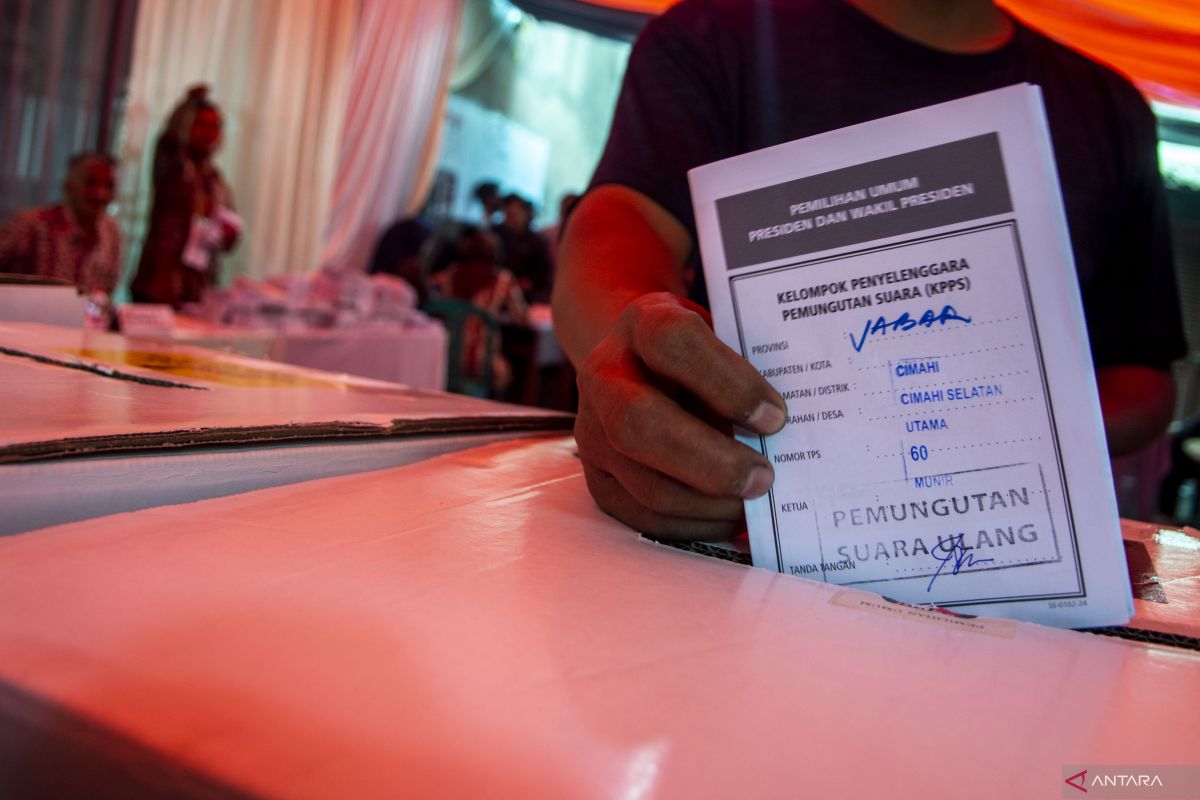
In the arena of democracy, election regulations form the board that determines the direction of every power piece for the sake of national stability. Much like a chess game pitting intellect against sixty-four black-and-white squares, the current discourse on revising the Election Law in the Senayan circle has become a space for contemplation to devise the nation’s strategic moves. In an official broadcast from Parlementaria of the DPR RI, the leadership of Commission II of the DPR RI revealed that the legislative authority is dissecting ten fundamental issues in response to the increasingly complex recent political dynamics. This urgency is reinforced by a statement from the DPR RI leadership affirming the parliament’s determination to formulate regulations meticulously without haste to avoid legal residues in the future. The parliamentary authority emphasises that the bitter experiences from repeated petitions to the Constitutional Court (MK) serve as valuable lessons, ensuring every legislative step is taken with extra caution. Just as a master chess player always considers every consequence before moving a piece, the leaders of state institutions are now communicating the intended policy intensively to find a fundamental ideological meeting point for the stability of the state. This legislative momentum becomes a crucial point for the country to synchronise the rules of the game with the mandate of the MK’s final and constitutionally binding decisions. The fundamental challenge that arises is the ambivalence between regulatory design and operational realities in the field, which often triggers inefficiency and degradation of public trust. Indonesia’s current political chessboard is still coloured by the legal dichotomy between the Election Law and the Regional Head Election Law, creating exhausting institutional divisions for organisers and contest participants alike. Beyond procedural aspects, the latest report from the anti-corruption agency uncovers ten crucial findings regarding the fragility of internal political party governance, which could damage the dignity of democracy if not promptly addressed. The weak correlation between recruitment and cadre systems triggers high political costs, forcing contestants into unproductive transactional circles that harm the integrity of the game in the eyes of the people. Without radical overhaul of a logical legal architecture, elections will merely become expensive procedural rituals that fail to deliver integrity-driven leaders to constituents due to the dominance of short-term interests. The series of crucial issues being discussed, including the parliamentary threshold and presidential threshold, demand deconstruction of past regulatory residues that are no longer relevant. The parliamentary leadership assures that there is no tug-of-war of interests between parties regarding the threshold formula; instead, it is being studied to avoid burdening political parties with real mass bases in the regions. Allowing classic problems such as political dowries and loopholes for organiser manipulation to persist will result in legal certainty always being defeated by reactive power pragmatism. A long-term vision through the integration of moderate strategic solutions now becomes the main key to ensuring people’s sovereignty is not eroded by the flow of narrow interest capital.