
Unusual! US, Netherlands and China Together Push Up Coal Prices
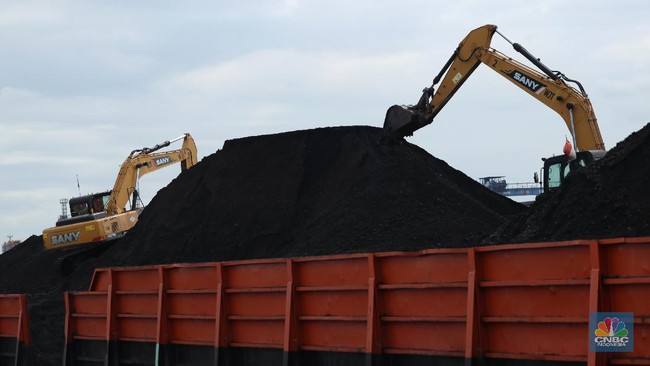
Coal prices climbed in trading on Monday, supported by a wave of positive news.
Coal prices closed at US$134.05 per tonne on Monday (17/8/2026), strengthening by 0.34%.
This increase was welcome news after prices had slipped by 0.36%.
The rise in coal prices was underpinned by stronger oil prices as well as a host of positive developments.
Thermal coal prices in several key production areas in China rose again by CNY 5-10 per tonne yesterday.
This strengthening occurred because of increasingly strict safety inspections and ongoing restocking activity by downstream consumers, so bullish sentiment continued to dominate the market at the mine level.
Of the 117 coal mines surveyed by Sxcoal on 17 August, 20 mines raised prices by an average of CNY 15.1 per tonne, while no mines lowered prices. The other 97 mines kept prices stable.
China’s efforts to tighten mine safety have meant that a number of mines in major thermal coal hubs have not yet been able to return to full operating capacity.
Quoted from Sxcoal, a miner in Yulin, Shaanxi, said that safety inspections had indeed affected market sentiment because miners did not dare to increase production excessively.
Coal supply in Yulin is facing new pressure. Sxcoal reported that 112 coal washing facilities in Yuyang District were ordered to halt operations to conduct self-inspections starting 13 August.
Operations can only resume after the facilities pass verification, which is expected to last until mid-September. This policy is further tightening coal supply in the region.
In addition, an accident caused by a gas outburst at a mine in Hunan that left seven people missing is expected to prompt further tightening of safety standards. This situation is making more miners choose to hold coal prices steady.
Supply restrictions are occurring at a time when demand from the downstream sector remains fairly healthy. Short-term typhoons and local rainfall are not expected to significantly disrupt the hot weather during the final phase of summer in China.
Hot and humid weather is expected to spread across central, eastern and southern China this week, with maximum temperatures reaching 33-35 degrees Celsius. These conditions could keep electricity consumption high and support demand for coal for power generation.
Coal stocks at power plants under China’s six major coastal power generation groups reached 14.08 million tonnes as of 14 August. That figure fell 0.72% week-on-week and 2.67% compared with a month earlier.
Restocking activity is still ongoing to meet increased consumption due to the hot weather. Deliveries under long-term contracts that continue to run are also helping to support coal sales from mines.
Meanwhile, coke and chemical plants continue to secure high-quality, high-calorific value (high-CV) coal to meet their primary needs. Traders operating at railway stations were also recorded as actively conducting transactions.
Coal-fired power plants in the Netherlands are now generating electricity at their highest level in several years. This situation is occurring amid high energy prices and surging electricity demand from neighbouring countries.
Dutch broadcaster NOS reported, based on National Energy Dashboard data, that coal-fired power plants in the Netherlands throughout 2026 have even generated more electricity than total production during 2024.
Production up to 14 August 2026 is still below total production throughout 2025. However, that figure is expected to be surpassed soon.
Coal plant operating rates this high were last seen during the 2022 gas crisis, when the Russia-Ukraine war caused gas prices to spike sharply.
A similar situation has re-emerged amid the Iran war, even though CO2 emission costs or levies for coal use are now higher.
The increase in coal-fired electricity generation has been driven mainly by high energy prices and a surge in electricity demand from neighbouring countries, particularly Belgium.
“Coal-fired power plants are also stepping in because electricity demand from abroad is increasing. We are exporting a lot of electricity abroad,” said Martien Visser, emeritus lecturer in energy transition at Hanze University of Applied Sciences Groningen, quoted from NL Times.
Belgium has become one of the main drivers of the increase in Dutch electricity production. Throughout the first half of this year, Belgium had to import most of its electricity needs because two large nuclear power plants were undergoing maintenance.
This situation led the Netherlands to increase electricity supply to its neighbour.
Interestingly, Visser believes the increased use of coal-fired power plants is not necessarily bad news. He referred to the European agreement on total emissions, which allows an increase in emissions in one country to be offset by a decrease in emissions in another.
Thus, the increase in coal-based electricity generation in the Netherlands does not necessarily mean that overall European emissions have increased by the same amount.
Visser even sees the use of coal as an opportunity to save Dutch natural gas reserves.
“By using coal-fired power plants, we save 60 million cubic metres of gas every week. That gas can be used to replenish our gas reserves,” he said.
This situation shows how supply and price crises are once again reshaping Europe’s energy mix. Although coal is one of the highest-emission sources of electricity and its use continues to be suppressed in the energy transition agenda, the surge in gas prices and the need to maintain electricity supply have made coal-fired power plants play an important role again.
United States President Donald Trump is preparing to use Cold War-era authority to pour hundreds of millions of dollars in government funds into supporting coal-fired power plants as well as US coal exports.
Trump is expected to announce the policy at a White House event on Thursday local time. The US government will use authority under the Defense Production Act (DPA) of 1950, according to White House officials familiar with the plan.
A number of lawmakers and governors from coal-producing states, including Wyoming and West Virginia, have been invited to the White House.
Under the plan, the Trump administration will channel around US$425 million, or approximately Rp6.7 trillion, in DPA funds to support 13 operating coal-fired power plants.
The funds can be used to upgrade or renew generation facilities. The recipient plants are spread across West Virginia, Kentucky, North Carolina, Indiana, Tennessee, Arkansas, Arizona, Oklahoma, North Dakota and Wisconsin.
In addition, the US Department of Energy will provide grants to help build two new coal-fired power plants in Alaska and West Virginia.
The government is also preparing an additional US$75 million through the DPA for the West Gateway coal export terminal project in Oakland, California. The terminal could potentially open an export route of up to 12 million tonnes of coal per year from Wyoming, Montana and other US states to overseas markets.
This policy is Trump’s latest move to revive the US coal industry, both as a source of electricity and as an export commodity.
Since returning to the White House, Trump has aggressively pushed a US energy dominance agenda based on increasing production, consumption and exports of oil, natural gas and coal.
The US Department of Energy has even issued emergency orders requiring a number of coal-fired power plants to remain in operation even though they were previously scheduled to close. The government argued that the plants are needed to maintain the reliability of the national electricity grid.
The US Department of the Interior is also moving to open more federal land for coal mining activity in North Dakota, Montana and Wyoming.
Trump has also directed Defence Secretary Pete Hegseth to make electricity purchase agreements from coal-fired power plants to meet military operational needs.