
UNUSIA Develops Learning Module for Students to Support Mangrove Protection
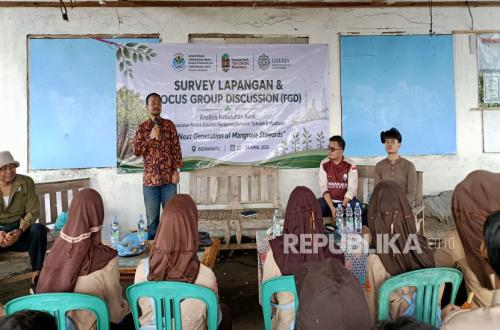
Universitas Nahdlatul Ulama Indonesia (UNUSIA) is currently developing a prototype teaching module for schoolchildren as an educational approach useful for the preservation and protection of mangroves in Indonesia. This step is one of the efforts to support the implementation of Government Regulation (PP) Number 27 of 2025 concerning Protection and Management of Mangrove Ecosystems. Through a programme entitled Next Generation of Mangrove Stewards, supported by the Mangrove for Coastal Resilience (M4CR) project under the Ministry of Environment/Environmental Control Agency (KLH/BPLH), UNUSIA is determined to produce future mangrove guardians, advocates, and innovators from coastal areas. UNUSIA Vice Rector Fathu Yasik stated that the main goal is to present a mangrove education learning module or prototype that teachers can use to educate students from schools and madrasahs in mangrove conservation areas, shaping the younger generation in coastal regions as future mangrove guardians, advocates, and innovators. According to Yasik, based on studies conducted by UNUSIA, this programme is motivated by four contextual problems currently occurring in mangrove ecosystems. Firstly, climate change is a global challenge requiring concrete action from various parties. Secondly, mangrove ecosystems play a crucial role in climate change mitigation and coastal protection, and have the potential to foster a sustainable economy. Thirdly, Indonesia still faces challenges in the form of mangrove degradation caused by development pressures and low public awareness. Fourthly, there is a need to formulate an implementation strategy for awareness to restore, improve, and maintain (3M) mangrove ecosystems in the formal education sector to build long-term awareness among the younger generation. The process of compiling the ‘School and Madrasah-Based Mangrove Education’ teaching module began in early 2026. With support from M4CR at KLH/BPLH, which focuses on strengthening mangrove ecosystem governance, the research team from UNUSIA went into the field to conduct direct surveys with schoolchildren in mangrove areas. The chosen research locations were Primary Schools (SD) and Junior Secondary Schools (SMP) in Indramayu Regency, West Java, situated close to mangrove ecosystem areas. From the data and field facts collected by UNUSIA, there were three important findings that made follow-up worthwhile. Firstly, more than 50 per cent of students did not care if the mangrove trees in their village were to disappear one day. This indifference is rooted in a lack of knowledge and contextual experience regarding their surrounding environment. The second finding was that thus far, schools and mangrove ecosystem activists have been running their respective programmes without any directed collaboration or cooperation. This results in students lacking an intersection of experience with the mangrove ecosystem in their environment, which should be utilised as a contextual learning resource. Teachers and headmasters conveyed that they need a teaching module or book that can serve as a reference for learning by utilising the mangrove ecosystem. From there, UNUSIA is compiling a textbook to be used as a guide for teachers to educate students on the importance of protecting mangroves.