
UNU Lampung develops solar dryer technology for independent fish feed production
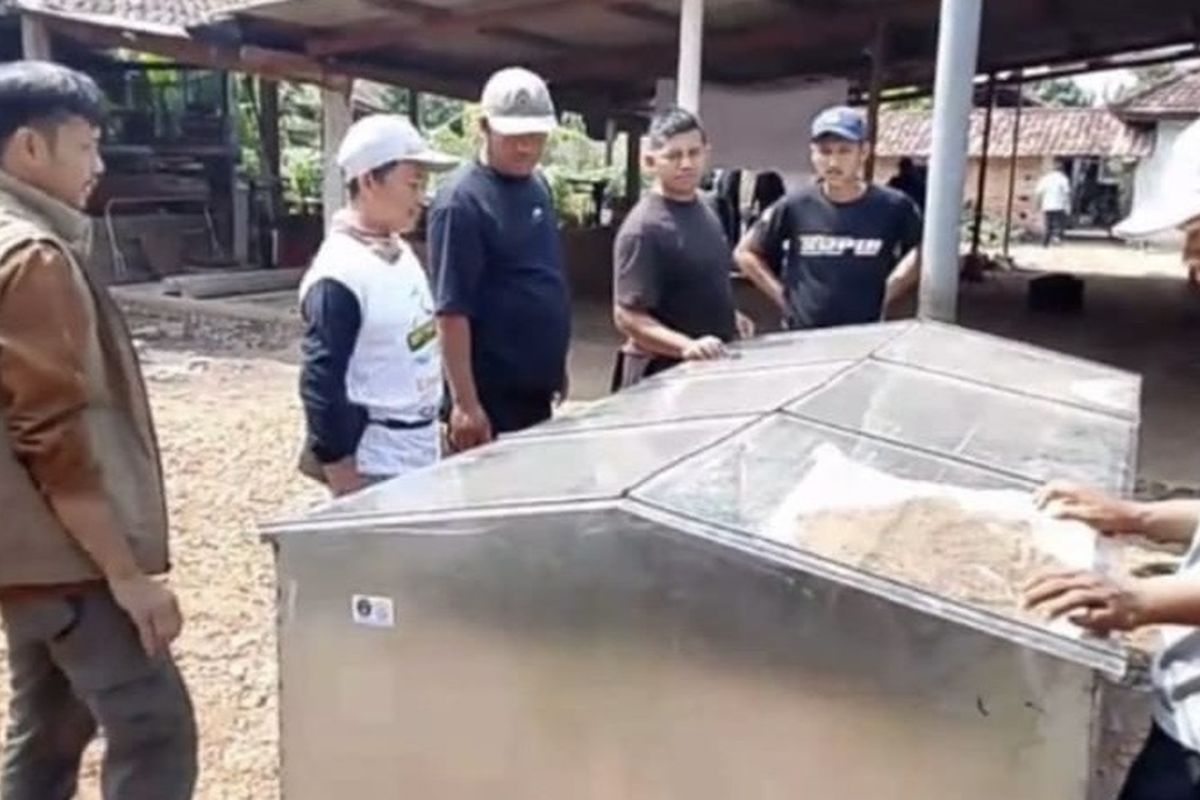
Universitas Nahdlatul Ulama Lampung (UNU Lampung) is rolling out Solar Tunnel Dryer (STD) technology to help the Bina Taruna farmer group (Gapoktan) in Varia Agung Village, Seputih Mataram District, Central Lampung Regency, produce fish feed independently.
The programme is being carried out through a community service activity (PKM) titled “Downstreaming of Solar Tunnel Dryer (STD) Technology in Independent Feed Production for the Reactivation of Fish Farming by Gapoktan Partners in Varia Agung Village,” targeting 20 farmer group members who manage 10 ponds stocked with gourami and catfish.
Frendi Maulana, a lecturer in the Electrical Engineering undergraduate programme at UNU Lampung, said dependence on factory-made feed is one of the main obstacles faced by the partners, as feed costs account for around 55 to 65 percent of total operational expenses.
“This situation has also caused four of the partners’ 10 ponds to stop operating,” he said.
According to him, these conditions prompted UNU Lampung to apply appropriate technology that can help the community utilise local resource potential to reduce production costs.
One raw material source available around the partner site is banana peel waste, which has so far not been optimally utilised. This waste has the potential to be processed into a supporting ingredient in fish feed production.
The application of this technology is part of a series of independent feed production activities carried out together with the community. The dried raw materials then go through a milling process, feed formulation, pellet moulding, drying and vacuum packaging.
“The team also provided training to Gapoktan members on STD operation, feed formulation using the Pearson Square method, use of milling and pellet moulding machines, vacuum packaging, as well as recording production costs and calculating the Cost of Goods Sold (HPP),” he said.
He said community involvement is carried out directly so that Gapoktan members not only receive the technology, but also have the ability to operate the equipment, process raw materials and produce feed independently.
The use of banana peel waste as a feed supporting ingredient is also expected to add value to resources that were previously underutilised.
The integration of drying, milling, formulation, pellet moulding, packaging and cost management technologies provides a foundation for partners to develop feed production more independently and efficiently.
The PKM activity is supported by a grant from the Directorate of Research and Community Service (DPPM) of the Ministry of Higher Education, Science and Technology through the 2026 Community Partnership Empowerment scheme with a total budget of Rp40 million.
Through collaboration between universities and communities, UNU Lampung is promoting the application of appropriate technology that can be directly used to meet the productive needs of village communities.
The downstreaming of this technology is expected not only to help reduce dependence on factory-made feed, but also to support the reactivation of idle ponds and strengthen the independence and sustainability of fish farming in Varia Agung Village.
Source: jawawa.id (https://jawawa.id/newsitem/unu-lampung-develops-solar-dryer-technology-for-independent-fish-feed-production-1786445811)
Originally published by Antara (Indonesian) (https://www.antaranews.com/berita/5689431/unu-lampung-hilirisasi-pengering-surya-untuk-pakan-mandiri-gapoktan), translated from Indonesian