
Untar Promotes Campus Research with Real Impact on Society
Tarumanagara University (Untar) is encouraging higher education research to go beyond mere scientific publication, aiming instead to produce innovations and programmes that deliver a real impact on society. This effort is being strengthened through the development of multidisciplinary research groups and the expansion of inter-campus collaborations.
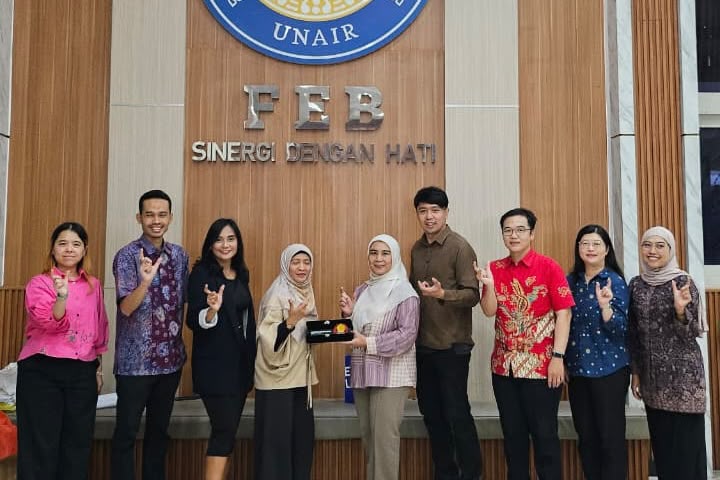
This agenda was a key discussion point during Untar’s separate meetings with Universitas Airlangga (Unair) and Universitas Nahdlatul Unisa Surabaya (Unusa) in Surabaya on 3–4 September 2026. These meetings served as a comparative study of best practices in managing research, publication, innovation, and community service to inform the development of Untar’s policies and programmes as it strives to become a more impactful university.
The Head of the Institute for Research and Community Service (LPPM) at Untar stated that the current challenge for universities is not merely increasing the volume of research and publications, but ensuring that the results can be developed into innovations and solutions for societal issues.
“Publication remains an important part of academic activity. However, research also needs to be directed towards producing knowledge, innovation, and programmes whose benefits can be felt by the community. Therefore, cross-university and cross-disciplinary collaboration must continue to be strengthened,” they said.
In the meeting with the Faculty of Economics and Business at Unair on Thursday (3/9/2026), one of the issues discussed was the strengthening of national journals towards internationally reputable journals. Journal development depends not only on administrative compliance but also on the consistent quality of articles, research novelty, methodological accuracy, the use of academic language, and a rigorous peer-review process.
Discussions also focused on the need to link journals with research groups, study programmes, intellectual property, community service, and the downstreaming of research. Students can be involved in research and scientific writing to strengthen academic culture from their early education.
The subsequent meeting with the Directorate of Research, Innovation, and Community Service at Unusa on Friday (4/9/2026) discussed the development of the research ecosystem, international publication, research centres and groups, and opportunities for ‘Tridharma’ (the three pillars of higher education) collaboration.
One practice studied was the ‘One Person One Scopus International’ (OPOSI) programme developed by Unusa. This programme encourages lecturers to produce manuscripts for Scopus-indexed international journals through journal clinics, writing training, journal selection, and internal mentor assistance.
Untar and Unusa are also exploring the development of assisted regional areas or Islamic boarding schools (pesantren) as spaces for multidisciplinary research and community service collaboration. Several societal issues could serve as focal points, including mental health, bullying, infectious diseases, education, promotive and preventive healthcare, and economic empowerment.
According to the Head of LPPM Untar, such collaboration models allow expertise from various disciplines to converge to address societal problems more comprehensively.
“Collaboration should not stop at the exchange of ideas. We want to encourage the birth of joint research, publications, innovations, and community service programmes that have a measurable impact,” they said.
As a follow-up, Untar will strengthen priority journals and editorial standards, develop an Article Clinic, map lecturer expertise, and form multidisciplinary research groups. Untar is also exploring the formation of a university consortium and partnerships for the development of assisted regional areas or pesantren.
The results of this comparative study and exploration of collaboration are expected to serve as a reference in developing Untar’s research ecosystem. This step aligns with university policies that place research, innovation, and collaboration as vital components of strengthening the ‘Tridharma’ while providing contributions that can be felt by the community.
The Rector of Untar, Prof. Dr. Amad Sudiro, S.H., M.H., M.Kn., M.M., stated that strengthening research and collaboration is part of Untar’s steps in building a productive and impactful academic ecosystem.
“Untar encourages lecturers and students to produce high-quality research that is beneficial to society. Collaboration with various universities and partners continues to be strengthened so that research results evolve into innovations with a broader impact,” he asserted.