
UN's Role in Palestine Conflict Deemed Suboptimal
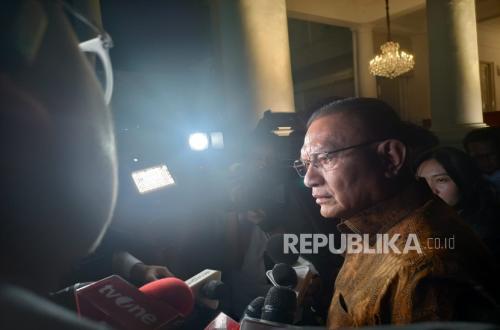
Deputy Coordinating Minister for Political and Security Affairs, Lodewijk Freidrich Paulus, has assessed that the United Nations’ role in pushing for a resolution to the Palestine conflict is still not optimal. According to him, the increasingly complex geopolitical situation demands more effective action from the international community to achieve peace.
Paulus noted that looking at two major ongoing conflicts—the Russia-Ukraine war and the Middle East conflict involving Israel, Palestine, Iran, and surrounding nations—the UN’s role has yet to produce significant solutions. “Indeed, if we look at the two conflicts occurring between Russia and Ukraine, then Israel with Palestine, also Iran. What has been said is correct, the UN’s role is very lacking,” he said while answering questions from participants at the Plenary VI session titled “Politics and National Security Amidst International Geopolitical Dynamics” during the VIII Indonesian Muslim Congress in Jakarta, Saturday (25/7/2026).
Nevertheless, he explained that Indonesia consistently adheres to a free and active foreign policy. In the context of conflict resolution, Indonesia prefers to contribute through peacekeeping missions rather than engaging in combat operations. “Indonesia is free and active, we cannot enter into peacemaking because that requires fighting. We enter for peacekeeping. Once they are at peace, we handle it,” he stated.
Paulus also revealed that Indonesia continues to demonstrate its commitment to supporting the Palestinian people’s struggle through various international forums. One such effort includes joining the Board of Peace forum, which discusses efforts to resolve the Palestine conflict. “Indonesia’s involvement is not merely attendance. Out of 20 points discussed, there is one point that speaks about Palestine. That is our President’s concern. We are still waiting for developments,” he said.
He explained that the government continues to monitor global developments comprehensively before taking strategic steps. This stance does not indicate fear, but rather caution in safeguarding national interests while supporting the creation of world peace. “We must observe these global situation developments more comprehensively, more holistically,” he clarified.