
Unravelling the Issue of Time Poverty in Bekasi
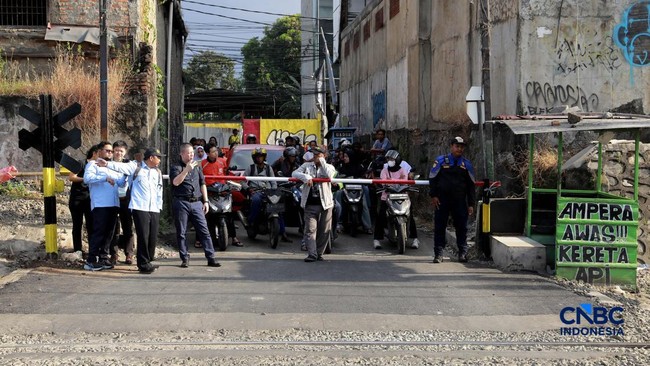
Every day at five in the morning, millions of feet begin to move in Bekasi, West Java Province. Some run to catch the first commuter train at Bekasi Station, some start their motorcycles along Jalan Ahmad Yani, and others are already trapped in long queues on the Jakarta-Cikampek Toll Road even before sunrise. They leave home while their children are still sleeping, and often return only when those children are nearly asleep again. Between those two periods of darkness, most of their lives are spent on the road.
Ironically, they live in one of the most productive regions in the country. Data from the Central Bureau of Statistics (BPS) records that Bekasi City sends 466,260 commuters every day. This accounts for almost one-fifth of its population, making it the second-largest contributor of commuters in the Jabodetabek area after Depok (BPS Bekasi City, 2025). Bekasi is home to thousands of factories, trade centres, and ever-rising new residential areas. The city is becoming taller, denser, and more strategic. However, for many residents, prosperity seems to move slower than the concrete accumulating around them.
It appears we too often measure urban progress by what is built, rather than how humans live within it. We calculate the length of toll roads, the number of apartments, and investment value. Yet, there is another, much quieter metric: how many hours of life are wasted in transit. For many Jabodetube commuters, round trips can consume approximately 2.5 hours every day (Ministry of Transportation, 2024). Furthermore, as of May 2026, the Head of the Bekasi City Transportation Agency stated that the number of congestion points in Bekasi has increased from 24 to 29 due to the growth of new trade and service centres (Arya, 2026). When millions of such journeys occur daily, the issue is no longer an individual burden, but a social and economic cost borne by the entire region.
This problem is reinforced by a study by Bappenas and JUTPI, which estimates that congestion in Jabodetabek causes losses of around Rp100 trillion per year, or approximately four per cent of the region’s Gross Regional Domestic Product (World Bank, 2019). However, those losses are not merely wasted fuel or declining productivity. Behind those figures, there are millions of hours of life lost every day. This is the new face of poverty in modern cities. It increasingly manifests not just as a lack of income, but as ‘time poverty’. A worker living in Bekasi and working in Jakarta may have sufficient income, but when four to five hours a day are spent commuting, they lose something that cannot be bought back: time with family, opportunities to rest, or space to simply enjoy life.
In urban planning, there is a term known as ‘desire paths’—informal paths formed when people repeatedly choose the route they deem most efficient. These tracks often appear in parks, campuses, or public spaces when official paths do not fully follow human movement patterns. For many urban planners, desire paths serve as a reminder that the best designs often emerge from understanding how humans truly move, rather than merely from drawings on a desk.
A similar awareness is now becoming the new direction for our urban development. Through the Coordinating Ministry for Infrastructure and Regional Development, led by Agus Harimurti Yudhoyono, the government is encouraging the development of Transit Oriented Development (TOD) areas. This involves concentrating housing and activities around public transport hubs so that walking can once again become a natural part of urban life.
The idea is simple yet fundamental: bringing people closer to trains, rather than allowing the city to continue spreading like an oil spill and trapping residents in congestion. This concept aligns with international principles regarding transit-oriented development (Institute for Transportation and Development Policy, 2017). This approach is not merely theoretical. The World Bank shows that cities consistently implementing TOD are able to create more efficient mobility, shorten travel times, strengthen access to employment, and increase regional productivity (Ollivier & Salat, 2017). Furthermore, various studies indicate that increasing employment density in areas integrated with mass transport can boost economic productivity by 5-10 per cent through agglomeration effects (Suzuki et al., 2013).
At the same time, developing more compact areas also makes public transport more economically viable, reduces carbon emissions, and creates a more comfortable urban environment (Suzuki et al., 2013). TOD development aims to integrate railway networks, LRT, MRT, BRT, and feeder transport with residential areas, trade centres, offices, public spaces, and education and health services within a radius reachable by walking or cycling (Institute for Transportation and Transportation Development Policy, 2017). Thus, the community not only has better transport choices but also gains certainty in time, comfort, and efficiency in their daily activities. Shorter travel times allow people to leave for work later, return home earlier, and have more time to gather with their children and families. The experiences of Hong Kong, Singapore, and Tokyo demonstrate that the success of public transport is determined not only by the quality of the rail network, but also by…
Source: jawawa.id (https://jawawa.id/newsitem/unravelling-the-issue-of-time-poverty-in-bekasi-1785495442)
Originally published by CNBC Indonesia (https://www.cnbcindonesia.com/opini/20260731171429-14-755564/mengurai-masalah-kemiskinan-waktu-di-bekasi), translated from Indonesian