
Unravelling the Information-Betrayal Network and Alleged Treason
Alleged surveillance of the President and the government’s inner circle, if established through a lawful investigation, would be more than an information-technology crime or a planned operation to undermine the President’s authority—an act of treason. It would be an attack on the heart of the state’s decision-making process.
What is at stake is not just private conversations. A leak of the President’s communications could expose economic policy before it is announced, plans to regulate natural resources, the direction of law enforcement, cabinet dynamics, diplomatic strategy and the state’s response to security threats. Information leaked prematurely can become a commodity: traded, used to move assets, exploited to get ahead of policy or wielded as a weapon to put pressure on the government.
That is where the danger lies. Illegal surveillance does not always end with a phone screen. It can lead to market manipulation, project-rigging, tax evasion, the transfer of profits overseas and the sabotage of policies intended to benefit the public.
Investigators must pursue not only “who carried out the surveillance”, but the entire chain of crime: who ordered it, who operated the equipment, who provided access, who received the data, who profited and who benefited from protection in connection with the information leak.
Illegal surveillance of a head of state could provide access to strategic policy plans before they are announced: tax policy, natural-resource regulation, exports, export-proceeds repatriation, law enforcement, cabinet changes and Indonesia’s position in geopolitics. Such information has enormous economic and political value. If it falls into the hands of interested parties, state policy could be anticipated through market transactions, asset transfers, opinion-shaping or even the sabotage of government programmes.
Lawful interception may only be conducted within a legal framework, for law-enforcement or national-security purposes, by authorised institutions and under accountable procedures. Intelligence powers are also limited to protecting national security and sovereignty; they must not become tools for factions, businesses or private conflicts of interest.
Therefore, if the allegations are proven, the investigation must uncover the criminal chain from beginning to end.
First, identify the operational perpetrators: who installed, accessed, managed and copied the communications data. Second, identify those who gave the orders: who financed, protected or directed the operation. Third, identify the beneficiaries: who gained political, economic or business advantages from the confidential information. Fourth, trace the data: where it was sent, stored, sold or transferred across jurisdictions. Fifth, trace the money and assets, since an operation of this kind cannot proceed without funding, intermediaries and compensation.
The approach should be simple but firm: follow the data, follow the money and follow the benefits.
Digital forensic examinations should cover devices, servers, accounts, access logs, communication patterns and evidence of data deletion. Investigators should compare the timing of information access with subsequent events, such as changes in business transactions, asset movements, market activity, changes in companies’ positions or actions by particular parties that appear to have anticipated state policy improperly.
Indonesia’s cyber risks are real. The National Cyber and Crypto Agency (BSSN) recorded around 5.16 billion internet-traffic anomalies throughout 2025, or an average of 182 potential threats per second. Those figures do not mean that all the anomalies were attacks, but they show that Indonesia’s digital space is under serious pressure and must not be addressed through merely ceremonial measures.
On the financial side, the Financial Transaction Reports and Analysis Centre (PPATK) received more than 43.7 million reports in 2025, including around 39.8 million reports of fund transfers to and from overseas. Outbound transfers totalled Rp7,959 trillion. These figures do not mean that all the transactions were suspicious, but they underline that the state has data and tools to trace unusual cross-border transaction patterns, including those potentially linked to predicate offences, money laundering or the trade in data.
The state should immediately establish an independent, cross-agency task force involving law-enforcement personnel of integrity, BSSN, PPATK, the Ministry of Communication and Digital Affairs (Komdigi), state intelligence and independent digital-forensics experts. The team should have a clear mandate, firm deadlines and measurable reporting to the President and the public, without disclosing material that could endanger national security.
Seven measures should be implemented simultaneously:
Conduct a full audit of all communications systems and digital devices used by the President and strategic officials.
Isolate and secure all digital evidence to prevent it from being deleted, manipulated or moved.
Trace the accounts, assets, affiliated companies, nominees and suspicious transactions of parties under investigation.
Compare access logs with the timing of economic policy, law-enforcement actions and strategic state decisions.
Strengthen state communications security through layered encryption, need-based access restrictions and regular independent audits.
Conduct a comprehensive review of interception powers across all institutions to ensure they do not become instruments of informal power.
Impose the maximum criminal, ethical and administrative penalties, and confiscate assets, against anyone found to be involved.
Personal-data leaks alone carry serious criminal consequences. The stakes are even higher when the information exposed concerns a head of state’s strategic communications, economic sovereignty and national policy. The state must not allow government secrets to become commodities for rent-seekers, political actors or foreign interests.
The President must be assured that state officials serve the Republic, not networks, groups or interests operating behind the scenes. Loyalty to the state is not demonstrated simply by holding office or wearing a uniform. It is demonstrated when someone entrusted with state secrets chooses to protect them rather than sell them.
If the illegal surveillance is proven, the law must not stop at arresting the person who pressed the button. It must identify the mastermind who ordered it, the purse that financed it and those who enjoyed its proceeds.
Could amount to alleged treason
If the illegal surveillance went beyond information theft and is proven to have been part of a planned operation to undermine the President’s authority, control government decisions, foment conflict within the Cabinet, create political pressure or overthrow the lawful government, the case would no longer be merely a cybercrime. It should be investigated as conduct that may amount to treason.
Treason is not criticism of the government. Nor is it political disagreement, press freedom, peaceful protest or legitimate competition for power in a democracy. Treason involves an intention to attack, disable or overthrow the lawful government through means outside the Constitution and the law.
The applicable Criminal Code treats treason against the President or Vice-President, and treason intended to overthrow the government, as very serious offences. The state must therefore clearly distinguish constitutionally protected criticism from covert operations that use surveillance, the leaking of strategic information, economic pressure, digital propaganda and power networks to weaken the government from within.
If there is evidence that information obtained through surveillance was used to map internal weaknesses, set state officials against one another, intervene in policy, mobilise particular economic forces or devise a plan to delegitimise the President, investigators must examine whether there was a chain of criminal conspiracy. They must not view each act in isolation. The state must assess patterns, relationships, motives, flows of funds and the benefits gained by the parties involved.
Modern treason does not always arrive with weapons and tanks in the streets. It can take the form of control over information, the hijacking of communications, illicit transactions, manipulation of public opinion, market pressure and betrayal by people given access to state secrets.
Therefore, if the allegations are proven, the response must not be half-hearted. The government must act firmly, carefully and in accordance with the law to protect the President, the lawful government and the sovereignty of the Republic of Indonesia.
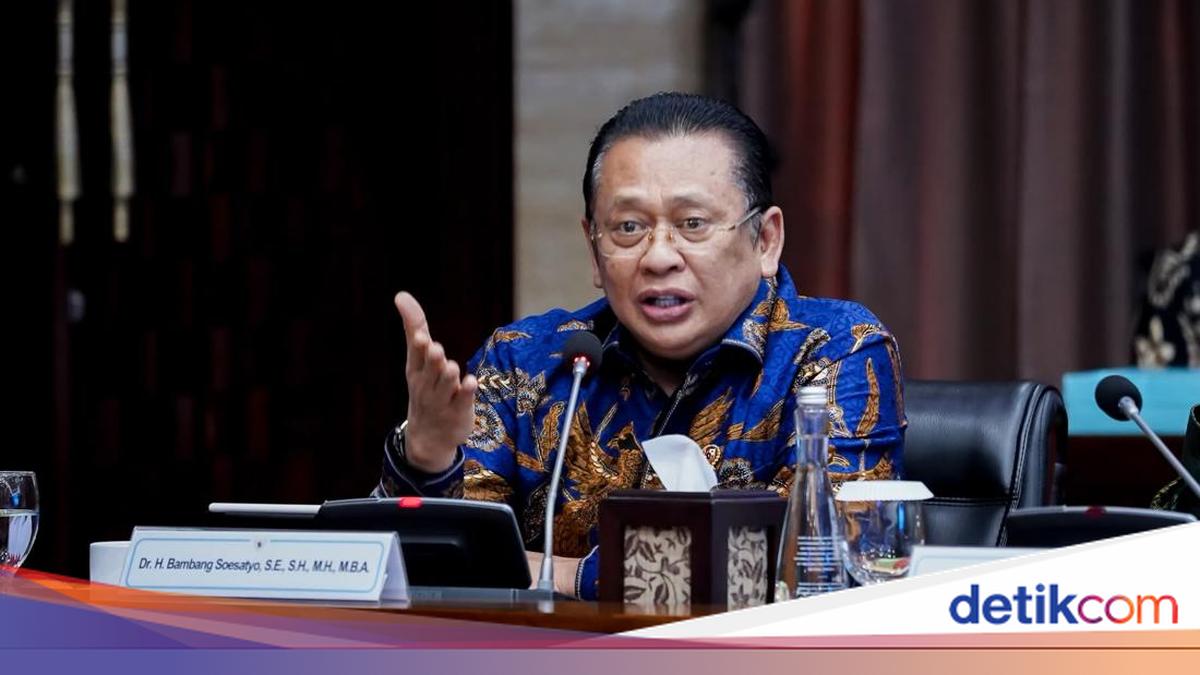
Bambang Soesatyo, member of the Indonesian Presidential Advisory Council
Source: jawawa.id (https://jawawa.id/newsitem/unravelling-the-information-betrayal-network-and-alleged-treason-1794203492)
Originally published by detikcom (https://news.detik.com/kolom/d-8744645/bongkar-ekosistem-pengkhianatan-informasi-hingga-dugaan-makar), translated from Indonesian