
Unpad’s Patriot Expedition Team Builds 500kg-Capacity Crop Dryer in Fakfak
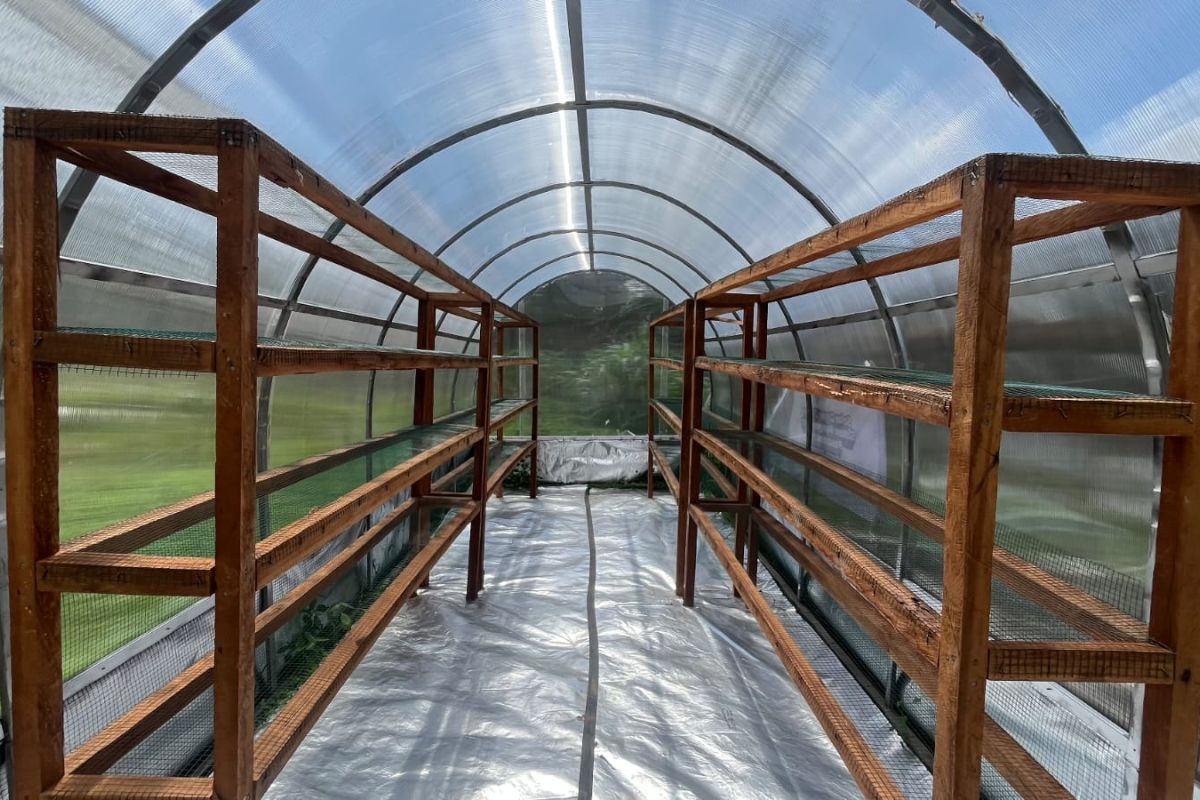
Jakarta (ANTARA) — The Patriot Expedition Team (TEP) from Universitas Padjadjaran (Unpad) has built a crop-drying facility with a capacity of up to 500kg in the Bomberay-Tomage Transmigration Area in Fakfak Regency, West Papua, to support local food processing.
The Ministry of Transmigration said the solar-powered dryer can be used for rice, maize, pulses and cassava, which is used to make mocaf flour.
“Encourage farmers who are interested to grow cassava. There is already a clear buyer to take it,” Sido Rukun Farmers’ Group chairman Suharyanto said in a statement received in Jakarta on Thursday.
The solar dryer dome measures 2.5 by 8 metres. Its roof is made of polycarbonate and its floor is lined with aluminium sheets, protecting crops from rain during the drying process.
The post-harvest technology is being introduced alongside cassava cultivation, as the crop can grow in acidic soil and requires little water.
Johar Arifin, head of TEP Unpad Team 1, said cassava cultivation was intended not only to produce food but also to make use of marginal land in Tomage.
He said cassava had been chosen as the main crop because it grows in acidic soil and requires little water.
“Cassava absorbs materials and nutrients in the soil that contain toxins or acids. So after the cassava is harvested, the soil’s pH will improve,” Johar said.
The harvested cassava is then processed into mocaf (modified cassava flour), a cassava-based flour made through fermentation and drying to increase the crop’s value.
Johar has also initiated meetings with prospective mocaf-processing investors in an effort to establish a supply chain linking farmers’ cassava cultivation with processing and the marketing of products.
The development of mocaf is in line with the national policy of downstreaming cassava. On 28 October 2026, the Ministry of Agriculture said the government was preparing opportunities to export mocaf to expand markets and increase cassava’s added value.
During a dialogue with farmers in Pringsewu, Lampung, on 25 October 2026, Agriculture Minister Andi Amran Sulaiman was also told that the price of cassava at farm level in the area had at one point reached Rp3,050 per kg.
Benyamin Unwakoly, an agricultural extension officer in Tomage District, said cassava cultivation and the drying technology were well suited to local farming conditions.
He hopes the support will encourage farmers to resume growing root crops and use the dryer to expand mocaf production.
Alongside cassava, TEP Unpad Team 1 has planted sword beans around farmland where soil pH ranges from 4 to 5. The beans are intended to improve nitrogen availability and act as a living fence to keep wild boars away.
In 2026, the Ministry of Transmigration assigned 1,476 TEP participants, organised into 246 teams, to 53 transmigration areas to follow up on research findings and develop local economic potential.
About 1,200 participants were assigned to 10 transmigration areas in Papua, focusing on increasing productivity, income and employment opportunities.
Source: jawawa.id (https://jawawa.id/newsitem/unpads-patriot-expedition-team-builds-500kg-capacity-crop-dryer-in-fakfak-1795668752)
Originally published by Antara (Indonesian) (https://www.antaranews.com/berita/5879439/tep-unpad-bangun-pengering-panen-kapasitas-500-kg-di-fakfak), translated from Indonesian