
Unpad Students Map Cikandang River in West Java for White-Water Tourism Potential
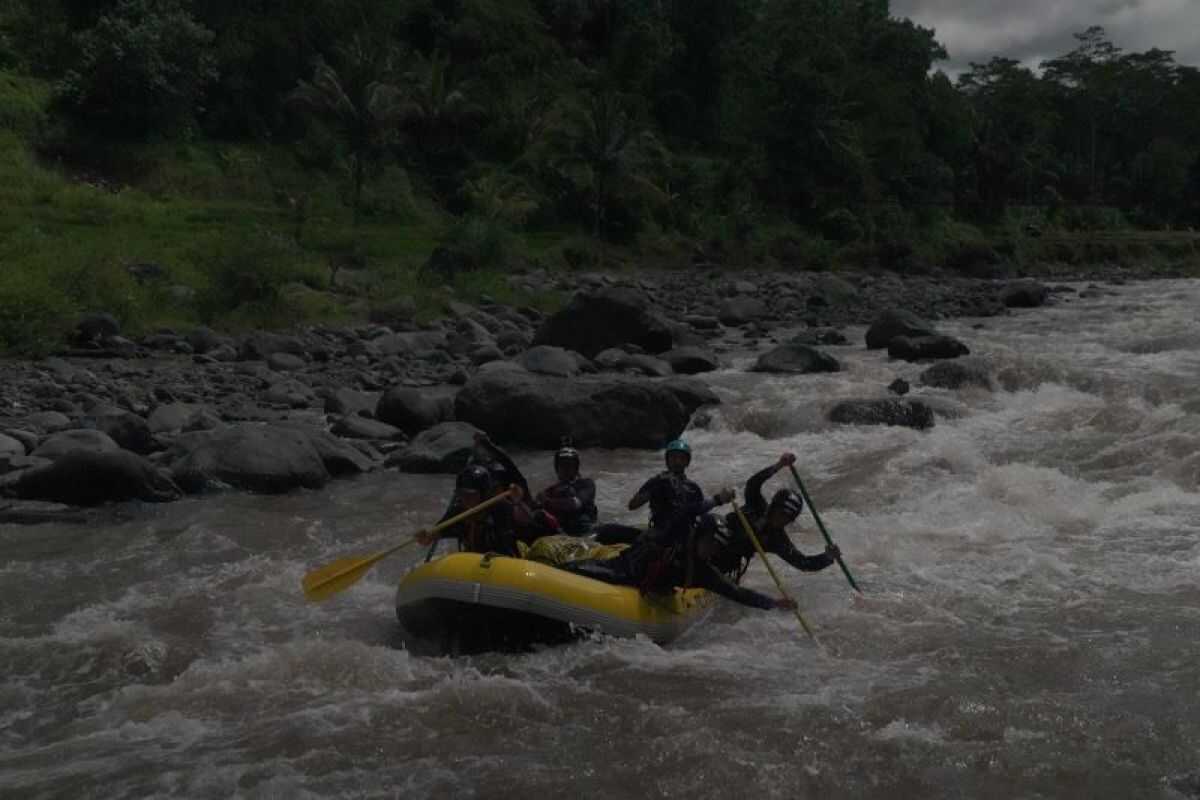
Bandung (ANTARA) — The Student Nature Lovers Association (PMPA) PALAWA of Padjadjaran University (Unpad) has carried out a mapping survey of the Cikandang River in Garut Regency, West Java, to assess its potential as a special interest white-water rafting tourism destination.
“The river mapping was conducted over two days from 12 to 13 February 2026 using drone equipment and manual surveying,” said Rizky Aulia Guevara, head of the Cikandang River Rapids Mapping Team from PMPA PALAWA Unpad, in Bandung, West Java, on Thursday.
The data gathered from drone observation and manual mapping will be processed into a rapids map for white-water rafting, which could benefit enthusiasts of the sport as well as the local government through the Garut Tourism Office or Garut Regency Disaster Management Agency (BPBD).
The stretch of river mapped covers 17 kilometres, starting from an elevation of 600 metres above sea level down to the zero point at the mouth of the Cikandang River, on the coast of the South Garut area.
In terms of natural scenery, he said, the Cikandang River is well suited for special interest tourism given the abundance of cliff views, rice paddies, and waterfalls. “Those rafting the Cikandang River will be treated to the natural landscapes characteristic of the Tatar Priangan region,” he emphasised.
Preliminary research findings indicate there are approximately 20 rapids with varying classifications of danger. “These include currents directed towards cliffs and potential drops in the riverbed of around 2 metres, which, if water discharge increases, could become dangerous rapids,” he explained.
For the community service component of the project, data was obtained on past landslides affecting three neighbourhood units (RW) in Jatiwangi Village, Pakenjeng, Garut.
The Cikandang River is located in Cikandang District, Garut Regency, West Java. The river flows at coordinates between 07 degrees 11 minutes and 07 degrees 15 minutes South Latitude, and 107 degrees 49 minutes and 107 degrees 54 minutes East Longitude.
The geographical conditions of the Cikandang River feature hilly terrain with varying slope gradients that influence river flow patterns and surrounding erosion. Gradients range between 15 and 40 degrees, indicating terrain conditions from steep to moderately gentle.
The mapping and rafting expedition of the Cikandang River was carried out by junior members of PMPA PALAWA Unpad from the Askara Dhaya cohort, who named the activity “Cikandang River Rafting, Mapping, and Disaster Mitigation — Jala Yodha”.
The rafting team members are Unpad students from the 2024 intake: Rizky Aulia Guevara (Faculty of Cultural Sciences/German Literature), Sifa Azzahra Mukhalifahtul Dinniyah (Vocational School/Maritime Tourism), Mikayla Fauzia Rendyastiwi (Faculty of Social and Political Sciences/Anthropology), and Sansan Aldianti (Faculty of Agro-Industrial Technology/Agricultural Engineering).
Additional team members include Teresa Intan Cahyani (Vocational School/Maritime Tourism), Ahmad Al Mustafa Habiburahman (Faculty of Geological Engineering/Geological Engineering), Wanodya Sekar Sukma Oktavianus (Faculty of Nursing/Nursing), Kintan Apriliani Azzahra (Faculty of Mathematics and Natural Sciences/Electrical Engineering), and Muhammad Ali Rafie Ramadhan (Faculty of Social and Political Sciences/International Relations).