
Unpad Professor Claims Dedi Mulyadi's Bounty for Street Robbers is Unethical
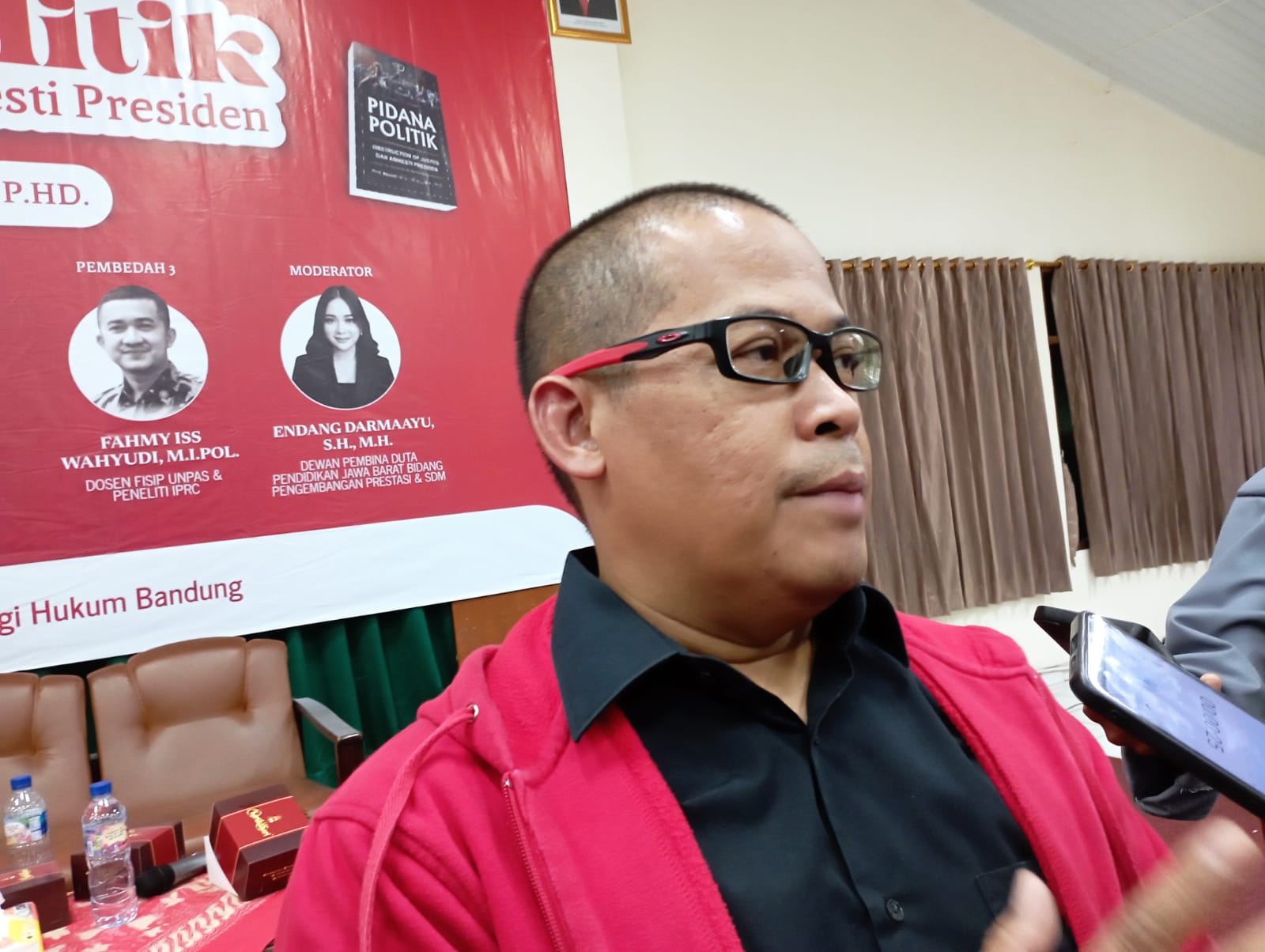
Muradi, a Professor of Political Science and Security at Padjadjaran University Bandung, has assessed that the bounty competition for the capture of street robbers initiated by West Java Governor Dedi Mulyadi is unethical. He believes that such a controversial move should not be undertaken by someone holding an official position.
Muradi noted that a bounty competition is an informal measure that is unnecessary for a governor to implement. “If it is turned into a competition, it is essentially an informal matter. If this is used as a gubernatorial policy, then it violates the ethics of his position as a public official,” Muradi stated on Friday.
Muradi explained that a governor should instead encourage coordination between law enforcement agencies to reduce the threat of street robbery. As the representative of the central government in the region, he believes regional heads must prioritise formal coordination functions with the police, such as directly summoning and coordinating with the Regional Police (Polda) or local Police Resor (Polres). “It should not be done through a bounty competition,” he said.
He further criticised the initiative because it was launched openly without first following formal channels, such as coordinating with security agencies. “My criticism is quite simple. Conducting a bounty competition is unethical from both a bureaucratic and political standpoint, as it is perceived that he is not following formal procedures to reduce the robbery incidents,” he added.
Regarding regulations, Muradi mentioned that the bounty does not violate existing laws. However, from the perspective of good governance, the step is deemed unhealthy.
Furthermore, Muradi observed that amidst the rise of social media, the public often prefers instant responses to field situations. However, he warned that public responses on the internet should not obscure bureaucratic ethical standards. “In the era of social media, the public may demand speed. I previously mentioned that even if I deem it wrong, it does not mean it is wrong for netizens. In terms of ethics, it is wrong, but for netizens, they might think, ‘Oh, that is good,’” he said.
Consequently, Muradi hopes that Dedi Mulyadi can educate the public on the importance of bureaucratic ethics, focusing on long-term interests rather than social media engagement. “This means prioritising coordination and encouraging the formation of task forces and other measures that are far more formal and measurable,” he explained.
RISKS OF THE BOUNTY
Furthermore, he warned that a bounty competition lacks clear metrics and risks triggering vigilantism within society, which could resemble the repressive approaches of the past. “I would say this competition has no clear measurement. This could encourage people to engage in anarchic actions. Is that possible? Yes, it is,” said Muradi.
He assessed that such a competition might incite mutual suspicion among citizens. “Everyone using loud motorcycles or anyone with a fierce appearance might be targeted. People might think, ‘This is definitely a thug, this is definitely a robber,’ and so on. There is no need for that,” he said.
Therefore, Muradi suggested that regional leaders must balance formal and informal measures. Formal channels must be prioritised so that the presence of the state is fully felt by the community. “The formal process must be balanced first. Do not prioritise the informal over the formal. A bounty is informal, so the formal procedures must be executed first,” he concluded.