
UNNES Public Health Students Launch SEHATI Programme in Semarang
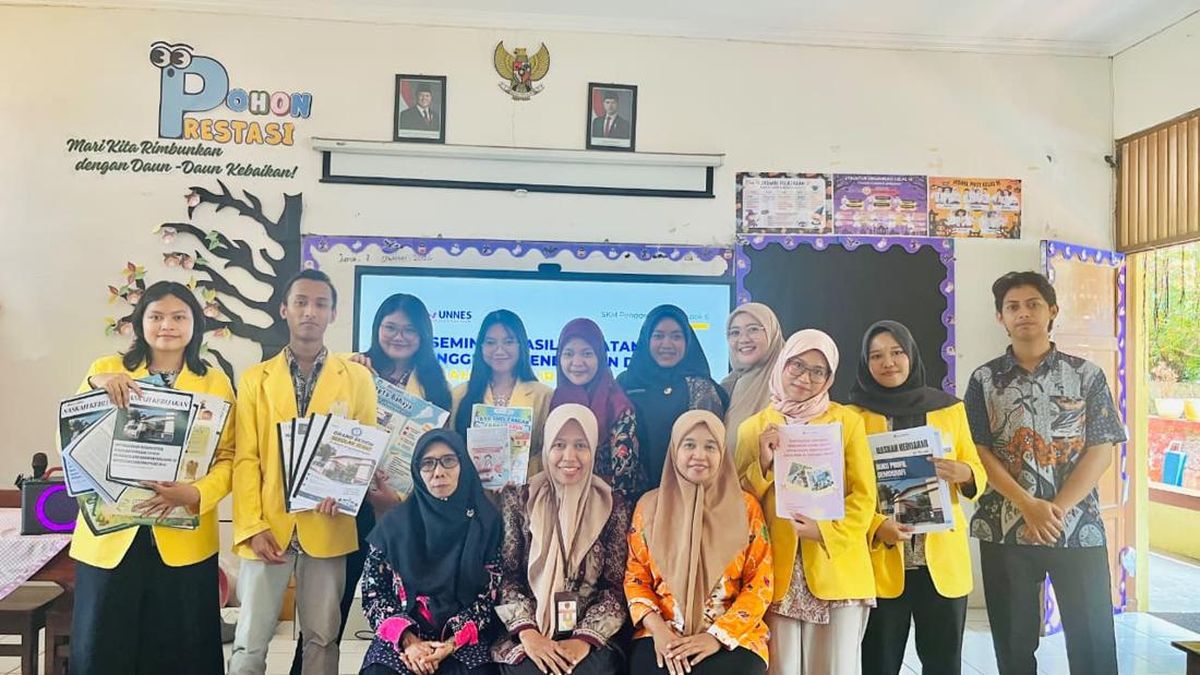
Students from the Public Health Study Programme, Faculty of Medicine, Universitas Negeri Semarang (UNNES) implemented the SEHATI programme (Healthy, Safe, Orderly, and Clean School) at SD Negeri Gajahmungkur 02, Semarang, last September.
The programme involved students from five specialisations: Biostatistics and Population, Environmental Health, Health Promotion, Occupational Health and Safety (K3), and Health Policy and Administration (AKK).
During the implementation of SEHATI, students produced several outputs related to health and the school’s environmental conditions. These outputs included policy briefs, healthy school designs, academic manuscripts, policy drafts, interactive dashboards, digitised health data, school demographic profile books, data-based nutritional status analysis, hazard mapping, evacuation route maps, educational modules and posters, and even composting units.
The products generated cover various aspects, ranging from health data management and environmental health to health promotion and safety within the school environment. Students also conducted hazard mapping and developed evacuation route maps. In the field of environmental health, the SEHIT programme also produced a composting unit as a means of waste management at the school.
Furthermore, health data digitisation and interactive dashboards were created to assist in presenting school health data in a more structured and user-friendly manner.
Dina Puspitasari, the Year 6 class teacher at SD Negeri Gajahmungkur 02, acknowledged that the activities carried out by the students provided significant benefits to the school and its pupils. “We are very grateful to the students. We have witnessed the process from their arrival to this point. It is truly extraordinary; everything is excellent and, God willing, will be beneficial for the school and our students. The products are also very useful,” said Dina Puspitasari.
She expressed hope that in future opportunities, students could involve more teachers in the process of gathering information regarding school conditions. According to Dina, involving more teachers could provide more diverse information and perspectives regarding the school’s situation.
“My suggestion is that they could communicate more with various teachers, rather than relying on just one source. Because opinions are subjective, involving one, two, or three people could help ensure the data is more accurate,” she added.
The SEHATI programme serves as a practical application of Public Health science within the school environment. The various products produced can be utilised by the school as supporting materials for managing health, safety, and the environment.