
Unmanaged Dependency is a Weakness
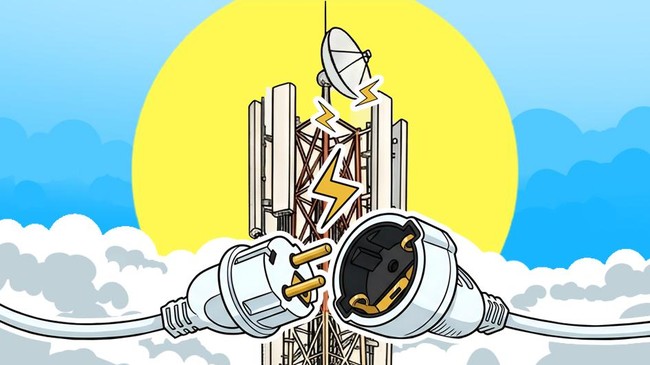
There is a common misunderstanding in debates regarding energy sovereignty. We often assume that a strong nation is one capable of meeting all its energy needs independently, without relying on other countries and maintaining full control over its entire supply chain.
This idea sounds convincing, but it is increasingly difficult to maintain in a globally interconnected economy. No modern major power lives entirely without dependency. The United States relies on global mineral and manufacturing supply chains. China requires access to markets and resources from various nations. Japan and South Korea import a large portion of their energy needs.
Even nations with immense economic and technological power still require trade, investment, technology, and international networks. The modern world is built not on absolute independence, but on interdependence. The issue is not whether a nation depends on others, but whether that dependency is within its strategic control.
Throughout history, international relations have always been shaped by dependency. Ancient trade routes connected centres of civilisation through the need for spices, metals, food, and energy. Empires built ports and trade routes not merely to expand territory, but to secure access to the resources they required.
In the modern era, oil is one of the clearest examples. Industrial nations without large oil reserves build strategic relationships with producer nations. Conversely, producer nations require technology, capital, markets, and security from industrial nations. A relationship of mutual need is formed—not always equal, but interdependent. From this, we learn that dependency does not inherently produce weakness. Dependency becomes a weakness when a nation has no options when those relationships are disrupted.
This concept should serve as the new foundation for Indonesia’s energy security thinking. Energy security does not necessarily mean Indonesia must produce all its energy needs itself. In many situations, pursuing absolute self-sufficiency can be inefficient and unrealistic.
Indonesia will continue to engage with global markets. We will import some energy, export certain commodities, utilise foreign technology, receive foreign investment, and connect with international supply chains. What we must ensure is that no single dependency can strip Indonesia of its ability to make choices when conditions change. Strategic resilience does not mean being independent; strategic resilience means having enough options when dependencies are tested.
Oil is a highly relevant example. Indonesia possesses oil resources, but domestic production is no longer sufficient to meet all national needs. In such a situation, the question is not simply whether Indonesia can avoid oil imports, but how to ensure those imports do not become a strategic vulnerability.
Diversifying supply sources, strengthening storage capacity, improving energy efficiency, developing more efficient transport, increasing economical domestic production, and developing alternative energy sources are all parts of a strategy to manage dependency. With this approach, imports are not a sign of weakness. Imports become one instrument in a larger system, provided Indonesia has the choice and the ability to adapt when prices, suppliers, or geopolitical conditions change.
The same applies to gas. Gas can play a vital role in maintaining energy system reliability while supporting the transition to a lower-emission system. However, dependency on a single source, a single supplier, or specific infrastructure can create risks. Therefore, a gas strategy should not only focus on production; we must also look at networks, terminals, storage, contracts, domestic markets, and the ability to divert supply.
A resilient energy system is not one that has no risk, but one that is capable of absorbing risk without halting economic activity.
Globally, this principle is increasingly evident in energy technology supply chains. Solar panels, batteries, turbines, power grids, and various modern energy technologies require raw materials and components from many countries. No nation masters the entire supply chain perfectly. Even the most technologically advanced nations remain dependent on minerals, components, manufacturing, or markets from other countries. Therefore, a sensible strategy is not to try and produce everything alone. The strategy is to determine which parts must be strategically controlled, which parts can be obtained through cooperation, and which parts need to be diversified to avoid creating a single point of failure.
Indonesia has a great opportunity in this regard because it possesses strategic minerals that are increasingly important to the future economy. However, having minerals alone is not enough. If all the processing technology remains abroad, Indonesia will remain in a vulnerable position within the value chain. Therefore, downstreaming must be understood not just as a process of increasing export value, but as a way to build capability.
Processing capabilities, technology, expertise, financing, research and development, component manufacturing, and national industrial capacity must develop gradually. In this way, Indonesia…