
UNM Lecturer Develops AI to Identify Waste with 98.79% Accuracy
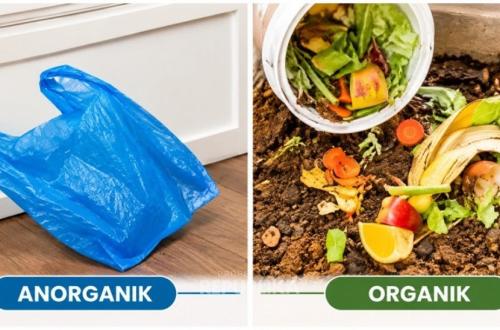
JAKARTA — Artificial intelligence (AI) is being developed to help with waste sorting. One such effort is research by Universitas Nusa Mandiri (UNM) lecturer Sri Hadianti and her team, who have developed an AI model to identify organic and inorganic waste from images.
The research used a Convolutional Neural Network (CNN) with a DenseNet121 architecture. The model was trained to recognise the visual characteristics of waste so it could distinguish between organic and inorganic categories.
The research team used Transfer Learning in developing the model. It was first equipped with knowledge from the ImageNet image database before being trained specifically to identify types of waste.
The team also applied data augmentation techniques, rotating, enlarging, shifting and flipping images horizontally. These techniques were used to help the model recognise objects from different viewing angles.
The research data was divided into 80 per cent for training and 20 per cent for validation. The model, optimised using the AdamW algorithm, recorded validation accuracy of 98.79 per cent.
More specifically, the model achieved a precision of 0.99, recall of 0.99 and F1 score of 0.99 for inorganic waste. For organic waste, it achieved a precision of 0.99, recall of 0.98 and F1 score of 0.99.
The results demonstrate the model’s ability to distinguish organic from inorganic waste in the test data used in the research.
Although the model achieved high accuracy, the researchers noted that the results were limited to experimental testing. Conditions in the field can pose different challenges, such as changing light and waste that is dirty or misshapen.
Further development will be needed to test the model’s capabilities in real-world conditions. One potential application is to connect the AI model to scanning cameras and an automated sorting system at a waste-processing facility.
In this scenario, a camera could capture images of waste moving along a conveyor belt. The AI model would then identify the type of waste before a mechanical system directs it to the appropriate container.
The technology could help with sorting processes that are currently carried out manually. However, technological development must go hand in hand with public habits of reducing and sorting waste at its source.
The research team also plans to expand the model’s capabilities to recognise more specific waste categories, such as paper, glass, metal, plastic and hazardous and toxic waste (B3).
With further development, AI could become one of the technologies supporting waste management, while reducing and sorting waste at household level remains an important part of environmental management.
Source: jawawa.id (https://jawawa.id/newsitem/unm-lecturer-develops-ai-to-identify-waste-with-98-79-accuracy-1794743481)
Originally published by Republika (https://news.republika.co.id/berita/toji5i370/dosen-unm-kembangkan-ai-untuk-identifikasi-sampah-dengan-akurasi-9879-persen), translated from Indonesian