
Unlocking Petrochemical Industry Opportunities to Strengthen Downstream Manufacturing
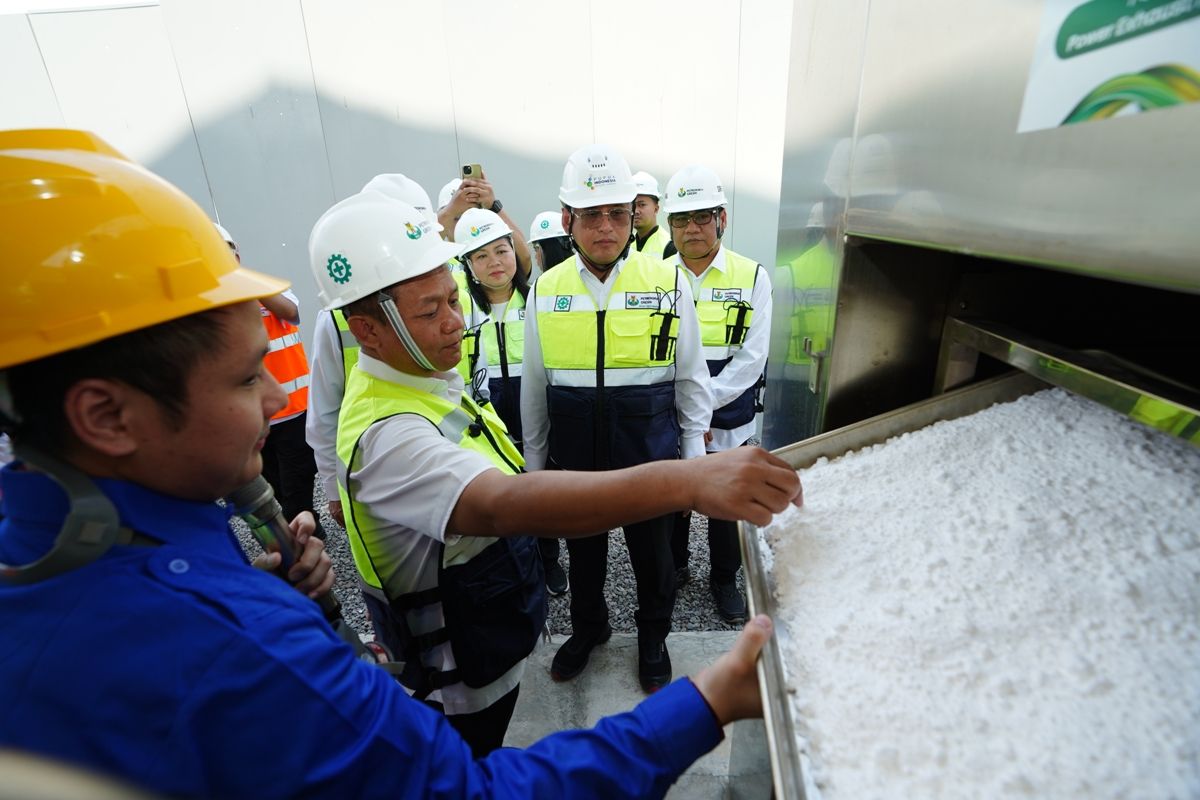
Jakarta (ANTARA) – The petrochemical industry is a foundation underpinning activity across a range of manufacturing sectors, from plastics and textiles to automotive production.
As 2027 approaches, this sector, often described as the “mother of industry”, faces challenges as well as significant opportunities for growth. Stronger investment, feedstock diversification and rising demand from downstream industries offer a basis for building a more competitive petrochemical industry.
Sri Bimo Pratomo, Director of the Ministry of Industry’s Upstream Chemical Industry Directorate, said the petrochemical industry holds a strategic position within the manufacturing structure. The sector supplies raw materials to almost every part of the processing industry supply chain, so strengthening it also helps determine the competitiveness of downstream industries.
According to Ministry of Industry data, Indonesia’s installed petrochemical capacity in 2026 reached around 2.1 million tonnes of polypropylene (PP), 1.99 million tonnes of polyethylene (PE), 1.3 million tonnes of propylene and 2.13 million tonnes of ethylene.
Despite this substantial production capacity, utilisation has yet to reach its full potential. Domestic capacity for polyolefin products such as PE and PP is projected to meet only around 60–66 per cent of domestic demand in 2027.
This points to scope for increasing production and strengthening investment in Indonesia’s petrochemical sector. However, domestic producers face not only the challenge of optimising output but also a global petrochemical market characterised by oversupply.
The pressure is already evident in high import volumes. In the first quarter of 2026, imports included around 266,915 tonnes of polypropylene, 251,371 tonnes of polyethylene, 125,863 tonnes of polyethylene terephthalate (PET) and 376,240 tonnes of purified terephthalic acid (PTA).
Fajar Budiyono, secretary-general of the Indonesian Olefin, Aromatic and Plastic Industry Association (Inaplas), said import pressure was most pronounced for basic commodity products, which are highly sensitive to price.
These commodity products are generally used to make sacks, household goods and children’s toys, so consumers tend to choose the most competitively priced raw materials. By contrast, specialty-grade products are relatively more resilient because they serve more specific markets and have distinct characteristics.
To ease this pressure, the government is encouraging feedstock diversification. One policy under consideration is a zero per cent import duty on LPG used as a raw material by the petrochemical industry.
The policy is temporary and runs until early 2027. However, the Ministry of Industry is preparing a study to propose its continuation after recording improved industrial productivity during its implementation.
LPG can be used as an alternative to replace some naphtha, one of the main feedstocks used to produce petrochemical derivatives. Further diversification opportunities are available through the use of domestic natural resources.
One example is the development of coal-to-chemicals technology through coal gasification, which can produce methanol that can then be processed into other petrochemical feedstocks, including ethylene and propylene.
Source: jawawa.id (https://jawawa.id/newsitem/unlocking-petrochemical-industry-opportunities-to-strengthen-downstream-manufacturing-1794012710)
Originally published by Antara (Indonesian) (https://www.antaranews.com/berita/5837815/menyulam-peluang-industri-petrokimia-sebagai-penopang-kekuatan-hilir), translated from Indonesian