
Unlike Other European Elections, Sweden's Left Wing is Rising
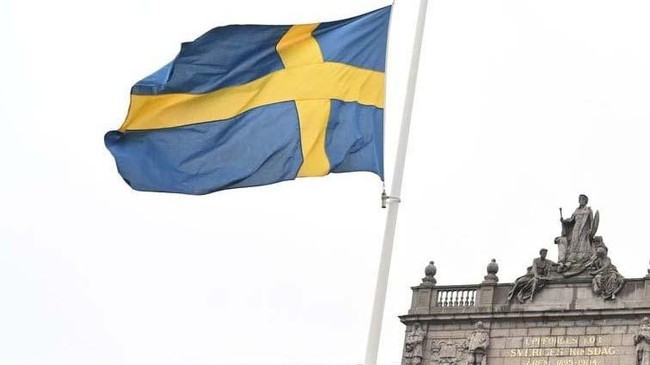
Sweden is set to hold its national election this Sunday. Amidst the easing of several issues that previously dominated public attention, centre-left parties are beginning to regain support.
Nevertheless, the far-right remains a significant factor in the political struggle. Currently, Sweden’s condition is relatively improved compared to recent years. According to The New York Times, cases of armed violence, which had been increasing for years, have begun to decline. On the economic front, several major companies such as Volvo, IKEA, and Spotify remain global players contributing to economic growth. Additionally, Sweden maintains a relatively high number of billionaires compared to other countries with similar economic size and population.
Given that the national election will take and the general state of the country is considered quite good, one might assume the incumbent centre-right government would easily return to power. However, the primary issues concerning voters are now shifting, providing an advantage to centre-left parties. This phenomenon defies the general trend across Europe. Recent polls show the centre-left coalition holds a slim lead over their centre-right rivals ahead of the start of voting.
Scandinavia often serves as a pioneer for social trends, and Sweden (along with Denmark) provides a glimpse of what may happen when pressing issues such as migration begin to subside and voter attention shifts elsewhere. Nonetheless, the political strength of the far-right in Sweden has not lost its influence. The groups that have supported the centre-right government have the potential to gain a share of power for the first time if the right-wing coalition manages to maintain government through a narrow victory. Such a move would represent a major shift in Sweden and another victory for European nationalists, following the recent success of the far-right in German elections.
The Rise of the Left
In the last decade, Swedish politics has undergone significant changes. The country received a large wave of migrants, which triggered debates regarding immigration and integration policies. The situation became more complex following the Covid-19 pandemic and the Russian invasion of Ukraine. The war drove up energy prices and increased public concerns regarding security. Right-wing parties in Sweden, similar to those in the UK, Italy, France, and Germany, capitalised on this unrest to gain higher popularity.
However, compared to other parts of Europe, the Swedish economy has recovered more quickly. Meanwhile, rates of inflation, migration, and shooting incidents have decreased. As a result, analysts suggest the political wind has changed. “The situation was far more difficult four years ago,” said Jens Rydgren, a professor of sociology at Stockholm University. “And traditionally, it was the centre-left that championed these issues,” he added.
The party leading in the polls is the Social Democratic Party, an established centre-left organisation in the country, with 27 per cent of the vote. Alongside its allies, the left wing is predicted to achieve 51 per cent of the vote.
The Right Wing Remains Strong
Despite the increase in support for centre-left groups, the Sweden Democrats remain one of the country’s largest political forces. This organisation has roots in the neo-Nazi movement and has recorded 19 per cent in polls, a very high level for a party once considered marginal. Its popularity remains relatively stable even as their more moderate (centre) allies have begun to lose momentum.
In a recent Sweden Democrats rally, party leader Jimmie Akelsson paced across a stage illuminated by pyrotechnic effects. “Do you remember what Sweden looked like four years ago?” he shouted loudly. “Do we want to return to that time?” “No!” the crowd shouted in response.
The Sweden Democrats hold the largest number of seats in parliament from their side, and their support strengthens the centre-right coalition. The government has adopted many of their hardline policies regarding crime management and has implemented a much stricter immigration system, including tightening rules for asylum seekers and facilitating deportations. However, due to the Sweden Democrats’ past links to white supremacist groups, the party has not been allocated ministerial positions.
This election could change the status quo. The Sweden Democrats have requested half of the cabinet seats if the centre-right coalition returns to power. If this occurs, the country’s policy direction will change drastically, with the government adopting a much harsher approach to migration and crime. Christopher Jarnvall, a local official for the Sweden Democrats in Norrköping, stated that the government needs to encourage immigrants to adopt a traditional Swedish identity to maintain social cohesion. He emphasised that his party wants to return Sweden to its traditional identity. “We want to make Sweden like the Sweden of old,” he said, echoing the far-right slogan.
Source: jawawa.id (https://jawawa.id/newsitem/unlike-other-european-elections-swedens-left-wing-is-rising-1789311255)
Originally published by CNBC Indonesia (https://www.cnbcindonesia.com/news/20260913185705-4-767527/beda-dari-pemilu-eropa-lain-sayap-kiri-swedia-malah-bangkit), translated from Indonesian