
UNJ Sees Rise in Disabled Student Applicants, Strengthens Inclusive Services
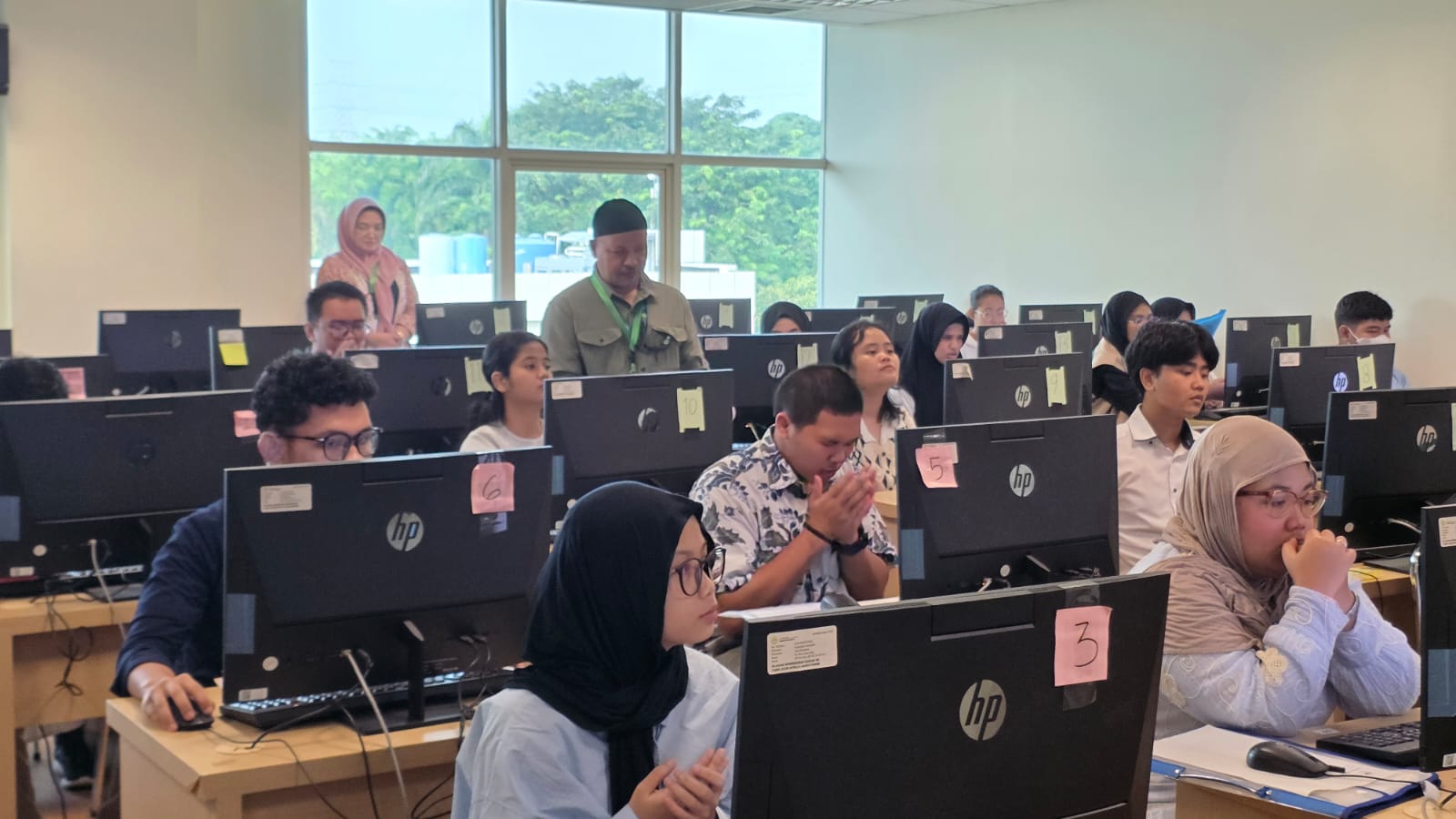
The number of participants in the Jakarta State University (UNJ) Independent New Student Admission (Penmaba) Disability Pathway has continued to rise in recent years. In 2026, the number of candidates taking this route reached 138 people, an increase of about 10.4 per cent compared to the previous year’s figure of 125 people. The Penmaba Independent Disability Pathway selection was held offline at the Dewi Sartika Building (GDS) at UNJ on Saturday (18/7/26). The building was chosen because it has various accessibility support facilities, such as special lanes for wheelchair users and lifts equipped with Braille signage. In a statement today, the Head of the UNJ Admissions Office, I Wayan Sugita, said the increase in participants shows the growing interest of persons with disabilities in pursuing higher education. It also reflects increased public trust in the inclusive education services provided by UNJ. “The number of participants this year reached 138 people. This increase shows that more persons with disabilities are interested in continuing higher education and see UNJ as an option to continue their studies,” said Wayan. He explained that the three faculties most in demand by disability pathway participants this year are the Faculty of Engineering, the Faculty of Education, and the Faculty of Languages and Arts. Meanwhile, the study programme with the highest number of applicants is the Applied Bachelor Programme in Culinary Arts and Food Service Management. To ensure all participants can follow the selection process properly, UNJ provides various forms of assistance according to each participant’s needs. Participants with visual impairments, autism, ADHD, intellectual disabilities, physical disabilities, and hearing impairments receive support from UNJ Disability Volunteers (REDIS), who accompany them from arrival on campus until all stages of the selection are completed. In addition, the committee also placed sign language interpreters in the examination rooms to help participants with hearing impairments follow the exam without communication barriers. The REDIS Coordinator for Penmaba Disability, Prila Ahdanila, said the participants’ assistance needs had been mapped out before the exam took place. Data on participants and service needs were obtained from the Admissions Office and then matched with the number of available volunteers. “We received the participant data and their assistance needs from Admissions. After that, we divided the volunteer tasks so that each participant receives appropriate support,” said Prila. According to her, this year REDIS deployed 65 volunteers from various cohorts and study programmes. In addition to active members, volunteers were also recruited from previous cohorts to ensure all assistance needs could be met during the selection process. Prila added that the volunteers have received regular training in sign language and disability assistance. They not only accompany participants during the written exam but also at the interview stage. “Volunteers help with participant mobilisation and bridge communication between the committee and participants with disabilities, while the administration and verification process is still handled by the Admissions office,” she said. The Vice Rector for Academic, Student, and Alumni Affairs at UNJ, Prof. Ifan Iskandar, said the disability pathway is part of the university’s effort to ensure every citizen has equal opportunities to access higher education. According to him, the provision of inclusive services does not stop at the new student admission process but continues while students are undergoing their education on campus. “UNJ strives to ensure every prospective student has an equal opportunity to demonstrate their academic potential. Therefore, we continue to prepare support services so that the selection process runs fairly and is accessible,” said Prof. Ifan. Meanwhile, UNJ Rector Prof. Komarudin, who directly inspected the selection process, assessed that services for participants with disabilities had been running well. He appreciated the involvement of volunteers and the entire committee who supported the smooth running of the selection process. However, Komarudin noted there is still room for improvement, especially regarding the written exam material. According to him, the characteristics of participants with disabilities need to be considered in the preparation of selection instruments and assessment mechanisms. “If the questions are still the same as the regular pathway, then there needs to be an adjustment in the assessment criteria so that the selection process is fairer,” said Prof. Komarudin. Currently, the admission quota for students through the disability pathway at UNJ is flexible and can be adjusted according to the development of the number of applicants. The increase in the number of participants from year to year shows that access to higher education for persons with disabilities is increasingly open. In line with this, UNJ continues to develop facilities, services, and academic support to strengthen an inclusive campus environment for all students.