
UNJ Lecturers Provide Natural Cosmetic Training for Indonesian Migrant Workers in Singapore
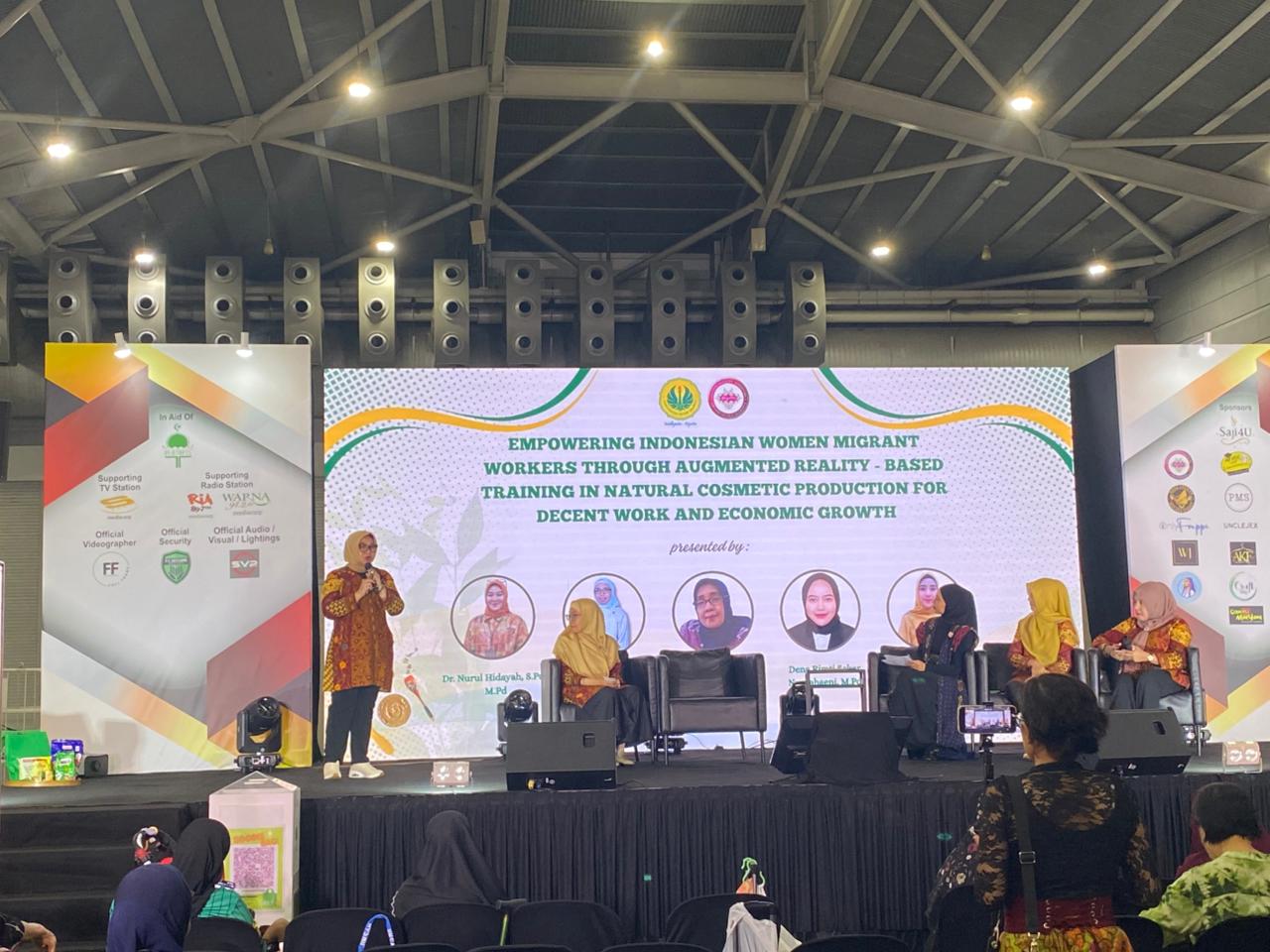
The Cosmetology and Beauty Care Study Programme of the Faculty of Engineering, State University of Jakarta (FT UNJ), has again carried out Community Service (PKM) activities as an implementation of the Tridharma of Higher Education. The activity, which took place in June 2026 in Singapore, is part of efforts to support the achievement of the Sustainable Development Goals (SDGs), particularly SDG 4 on Quality Education, SDG 8 on Decent Work and Economic Growth, and SDG 10 on Reduced Inequalities. The PKM was organised in collaboration with Gayatri Academy Singapore and targeted Indonesian Migrant Workers (PMI) as training participants, with lecturers including Prof. Neneng Siti Silfi Ambarwati, Nurul Hidayah, Mari Okatini, Dena Ritmi, and Aniesa Puspa Arum serving as instructors. Through this activity, UNJ seeks to make a tangible contribution to Indonesian communities abroad by equipping them with knowledge and skills that can be utilised upon their return to the homeland. During the training, lecturers from the Cosmetology and Beauty Care Study Programme, Nurul Hidayah and Prof. Neneng Siti Silfi Ambarwati, who currently serves as Dean of the Faculty of Engineering UNJ, provided education on the use of natural ingredients for beauty cosmetics. Among the materials presented was the making of natural hair dye from dried henna leaves combined with natural essential oils. The product can be used to enhance appearance with a simple and easy-to-apply manufacturing process. In a statement received today, PKM activity chair Nurul Hidayah expressed that providing education and skills to PMI is a strategic step to prepare them for life after returning to Indonesia. “It is necessary to provide education and skills to Indonesian Migrant Workers as an effort to prepare PMI for when they return to Indonesia, so they are more ready and independent in building a foundation of economic self-reliance and improving community welfare. This is in line with national development goals,” said Nurul Hidayah. Prof. Neneng Siti Silfi Ambarwati stated that natural ingredient cosmetics are currently often used as an alternative for people who are reluctant to use chemical-based cosmetics. According to her, this alternative has an impact not only on the market but also on skills in utilising natural materials as cosmetic media. “Many natural ingredients are beneficial for the body, especially their benefits for natural cosmetics today,” she said. She expressed hope that natural ingredient cosmetics will provide not only beauty benefits but also long-term health benefits, as well as being safe cosmetics to use. The training received a positive response from the participants. Among them, participant Sheryl said she was pleased to take part in the PKM activity because it provided new insights into business opportunities in the beauty sector. According to her, the training opened up opportunities to develop an entrepreneurial spirit through the utilisation of Indonesia’s biological wealth as the main ingredient for natural cosmetics, which are increasingly in demand by the public. Appreciation was also conveyed by the Head of Gayatri Academy, Dyah Gayatri. She expressed her gratitude to the speakers and the UNJ Research and Community Service Institute (LPPM) for their concern in providing benefits to Indonesian communities abroad. Through this activity, UNJ demonstrated its commitment to delivering impactful community service programmes, not only for communities within the country but also for Indonesian citizens overseas. The skills provision based on local potential is expected to encourage the birth of new entrepreneurs, enhance the economic independence of PMI, and introduce the utilisation of Indonesia’s biological wealth in the field of natural cosmetics to the international community.