
University of Brawijaya Researchers Discover Four New Beetle Species
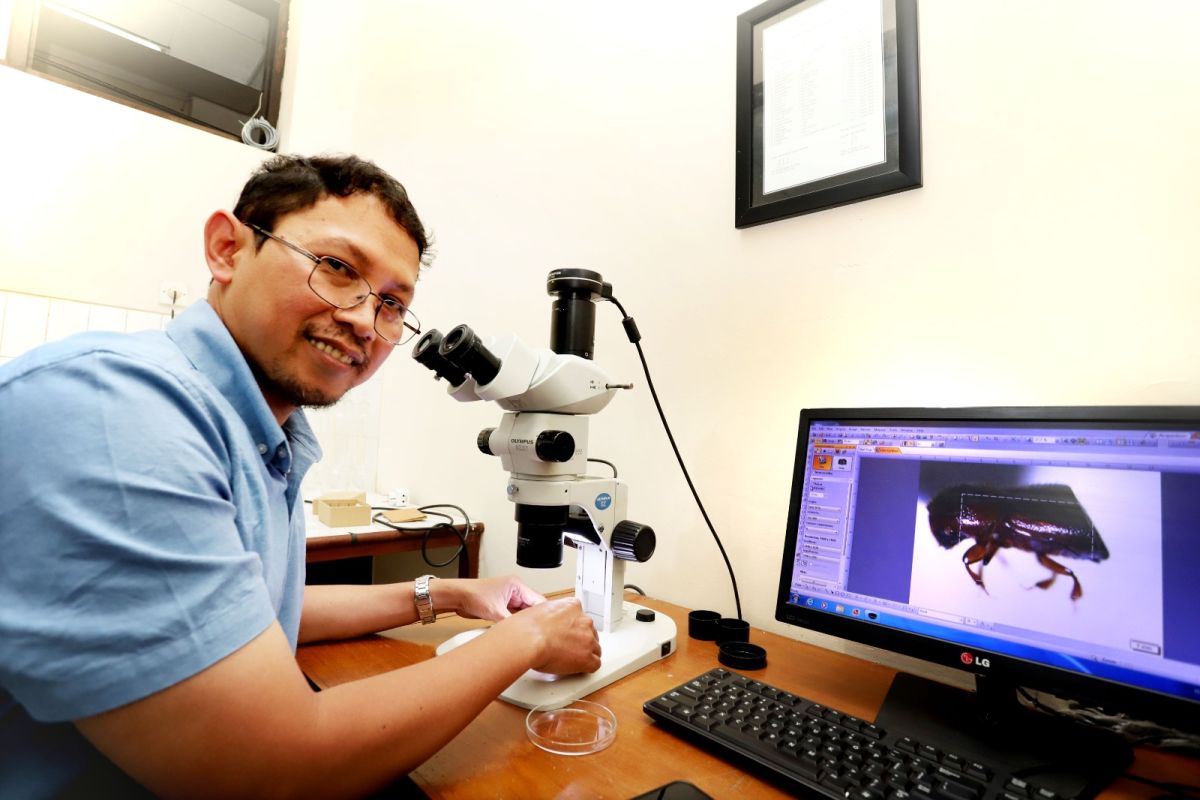
A research team from the University of Brawijaya (UB), collaborating with the University of Florida, Michigan State University, and the National Research and Innovation Agency (BRIN), has discovered four new species of ambrosia and bark beetles in the UB Forest area. The team leader, Prof Dr Hagus Tarno, explained that the sampling process was conducted on dry twigs and wood that had fallen to the ground. “Ambrosia beetles were found on various types of wood, such as pine, coffee, sonokembang, Ficus, and other woods where the fungi they feed on grow,” he said in a statement received in Malang, East Java, on Friday. Ambrosia beetles are unique because they live in symbiosis with fungi. They bore tunnels into the wood and cultivate fungi as a food source. “Therefore, we took many samples from various types of twigs and wood in UB Forest,” said the Professor from the Department of Plant Pests and Diseases at UB’s Faculty of Agricultural and Forestry Bio-Industry. Data collection in the UB Forest area began in October 2024. The research coincided with the Bark and Ambrosia Beetles Academy organised by the University of Florida, with UB acting as host. The event brought together researchers, academics, and taxonomy experts to study the diversity of tropical forest beetles in Indonesia more closely. The team successfully identified four new species: Crossotarsus gunungapi Hulcr, Tarno and Levia; Cosmoderes arjuno Johnson; Cosmoderes opacus Johnson; and Amasa brawijaya Smith. One of the new species was given a special name, Amasa brawijaya, which holds particular significance as it refers to the University of Brawijaya and the historical legacy of the Majapahit Kingdom. This naming is a form of respect for local identity while affirming that Indonesia’s forest areas still hold high-value biological wealth for global science. “We want the name Brawijaya to be known not only as a university but also as part of world science history. When people search for or study this species, they will know that it was discovered through research conducted at the University of Brawijaya,” he stated. During the identification process, the team used two main approaches: morphological analysis and DNA-based molecular analysis. Through the morphological approach, the researchers compared the physical characteristics of the specimens with collections stored in various insect museums around the world. The molecular analysis involved extracting DNA to compare the genetic sequences of the specimens with international databases. “We compared their morphological characters with species already stored in various world insect museums. Additionally, we conducted DNA analysis to confirm the genetic differences. If the results showed significant differences from previously known species, the specimen could be designated as a new species,” he said. The Amasa brawijaya specimen is now stored at the Museum Zoologicum Bogoriense (MZB), managed by BRIN, as a scientific collection and reference for Indonesian biodiversity research. The discovery of these four new species demonstrates that Indonesia’s tropical forests, including the UB Forest area, have great potential as a natural laboratory for biodiversity research. Amidst increasing global attention on biodiversity conservation, this type of research is important for strengthening the scientific database on insect species, especially groups that are not yet widely known to the public. For UB, this research not only produces international scientific publications but also strengthens the university’s position as a centre for ambrosia beetle research in Indonesia. Hagus noted that studies on ambrosia beetles are still limited, opening up great opportunities for UB to become a pioneer in this field. “In the future, we want to build a broader research network, both nationally and internationally. The hope is that anyone wanting to study ambrosia beetles will come and collaborate with the University of Brawijaya,” he said. The findings on tropical forest biodiversity have been published on 21 June 2026 in the Journal of the Coleopterists Bulletin in an article titled “Checklist of the Bark and Ambrosia Beetle Species (Coleoptera: Curculionidae: Platypodinae and Scolytinae) Collected at the Universitas Brawijaya Forest Properties, East Java, Indonesia with Descriptions of New Species”.