
Universities Urged to Strengthen Quality of DPR Legislation
The House of Representatives (DPR) is encouraging universities, especially law faculties, to strengthen their role in the legislative process. Their involvement is considered vital to ensure that the formation of laws has a scientific basis while responding to the needs of society.
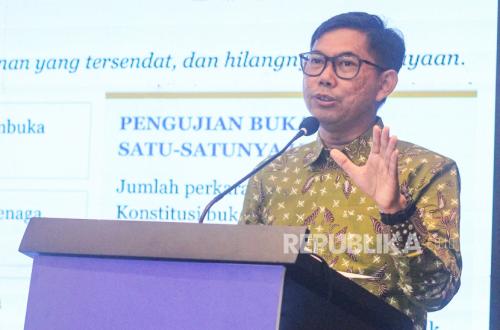
Head of the DPR’s Expertise Body, Prof. Bayu Dwi Anggono, stated that universities have extensive room for collaboration with the DPR, particularly in carrying out the legislative function. “In fact, the role of higher education, legal education, can collaborate with us in the DPR, one of whose functions is the legislative function,” he said during the Top Indonesian Law Schools 2026 event held by Hukumonline in Jakarta on Wednesday (13/8/2026).
According to Bayu, universities hold a strategic position in the policy-making ecosystem because they not only perform an educational function but also research and community service. These three functions can serve as a basis for campuses to contribute to the legislative process. He explained that academics can be involved in drafting academic papers and bills, expert discussions, public consultations, and providing research findings relevant to regulatory material. Universities can also conduct surveys on draft laws and submit input through hearings with the DPR’s Expertise Body.
“Higher education serves as a channel for public aspirations and needs based on objective and scientific expertise,” he said. The need for campus involvement is becoming increasingly important as policy issues grow more complex. The formation of regulations cannot always be viewed solely from a legal perspective but also requires economic, social, technological, environmental, and governance approaches. Therefore, Bayu believes universities can become a space to bring together various scientific disciplines with legislative needs. Academic research results can be used not only in the initial stages of drafting a law but throughout the entire cycle of regulation formation and evaluation.
He explained that this collaboration could include monitoring and reviewing the implementation of laws, legislative analysis, budget analysis, state financial accountability analysis, and foreign legislative analysis. With this pattern, universities do not stop at providing input during bill discussions. Knowledge and academic research can become part of the process of formulating, discussing, implementing, and evaluating policies. “How the collaboration we build impacts the quality of legislation,” he said.
The role of universities can also continue after a law is enacted. Bayu mentioned that campuses can be involved in monitoring and evaluating the implementation of laws, including providing support in the judicial review process at the Constitutional Court. Academics, for example, can contribute to drafting the DPR’s statement in judicial review proceedings or serve as expert witnesses for the DPR in the Constitutional Court. This involvement demonstrates that the contribution of universities to legislation does not stop in the classroom or with scientific publications. Academic expertise can be used to assess the effectiveness of norms, test the implementation of regulations, and evaluate their relevance to societal developments.
The push to strengthen collaboration between campuses and the DPR emerged during the Top Indonesian Law Schools 2026 event organised by Hukumonline. The event also served as a platform to appreciate law schools that contribute to the development of education and the national legal ecosystem. Chief Media & Engagement Officer of Hukumonline, Amrie Hakim, stated that higher education has a broader role than merely transferring legal knowledge. “Higher education is not just a place to transfer knowledge, but a space for the growth of critical thinking, integrity, and intellectual courage,” he said.
This year, Hukumonline refined the Top Indonesian Law Schools methodology by distinguishing institutions based on their type, namely universities and non-universities. The assessment includes the number of Golden Alumni from undergraduate law programmes, BAN-PT accreditation, SINTA Score, and international reputation. The rankings are divided into regional and national categories. The regional categories include the best public and private law schools in the Western, Central, and Eastern regions. Meanwhile, the national categories include the Best National Law Campus 2026, Leading National Non-University Law Campus 2026, Best National Public Law School 2026, and Best National Private Law School 2026. In addition to the rankings, the event series also featured the 2026 National Law Seminar, which presented several legal and legislative figures.
Source: jawawa.id (https://jawawa.id/newsitem/universities-urged-to-strengthen-quality-of-dpr-legislation-1786719155)
Originally published by Republika (https://news.republika.co.id/berita/tjr5nh522/perguruan-tinggi-didorong-perkuat-kualitas-legislasi-dpr), translated from Indonesian