
Universities Urged to Spearhead Poverty Eradication Efforts
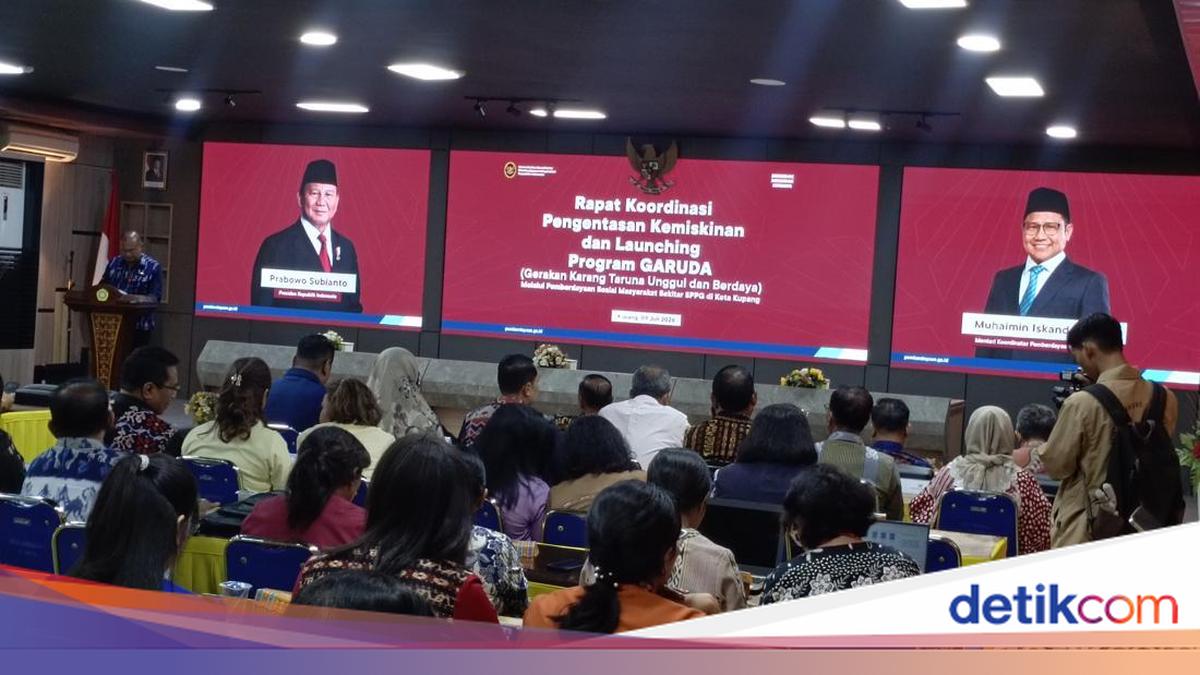
The Coordinating Ministry for Community Empowerment has stressed that universities must be involved in efforts to eradicate extreme poverty, in accordance with Presidential Instruction No. 8 of 2025. The government is targeting a significant reduction in extreme poverty this year, and campuses are being encouraged to become the spearhead of this initiative.
“Campuses have extraordinary human resources to strengthen government programmes, particularly in providing solutions for poverty alleviation,” said Abdul Haris, Deputy for Coordination of Village, Disadvantaged Regions, and Special Regions Empowerment at the Coordinating Ministry for Community Empowerment, during a coordination meeting at Nusa Cendana University (Undana) in Kupang on Thursday (9/7/2026).
According to Haris, the key to poverty eradication is access to education. Through education, it is hoped that communities can become empowered and determine the direction of their own lives. He added that, as directed by Coordinating Minister for Community Empowerment Muhaimin Iskandar, every rupiah of the state budget should be directed towards empowerment programmes, not just social assistance. “This means we will shift from social assistance programmes to empowerment-based programmes,” he asserted.
As an example, he cited a youth organisation that has successfully processed waste from the SPPG (Nutrition Fulfilment Service Unit) programme into useful products such as soap. “These products will also be encouraged for use in washing mess tins at the SPPG. This is a form of circular economy that we must continue to build and develop,” he said.
Haris noted that there are still 30 regencies in Indonesia categorised as underdeveloped regions, three of which are in East Nusa Tenggara. “Our target this year is for six regencies to resolve their poverty issues,” he stressed.
Speaking at the same event, Deputy Minister of Higher Education, Research, and Technology Fauzan agreed, stating that universities possess abundant human resources that can be deployed through research and community service. “From a programme perspective, this aligns perfectly with research and community service. The focus should be on how this research and service can be concentrated on regional needs so that it has a real impact,” he said.
He emphasised that research and community service by lecturers and students should not merely be a formality, but must provide a tangible contribution to solving regional problems. “The encouragement and support from the Ministry of Higher Education, Research, and Technology are crucial because this is where innovation and scientific knowledge originate, and we must demand a real contribution,” he explained.
The central government hopes that synergy between ministries, agencies, regional governments, and universities can accelerate the target of eliminating extreme poverty in East Nusa Tenggara and other regions by 2026.