
Universities Urged to Adapt to AI Boom
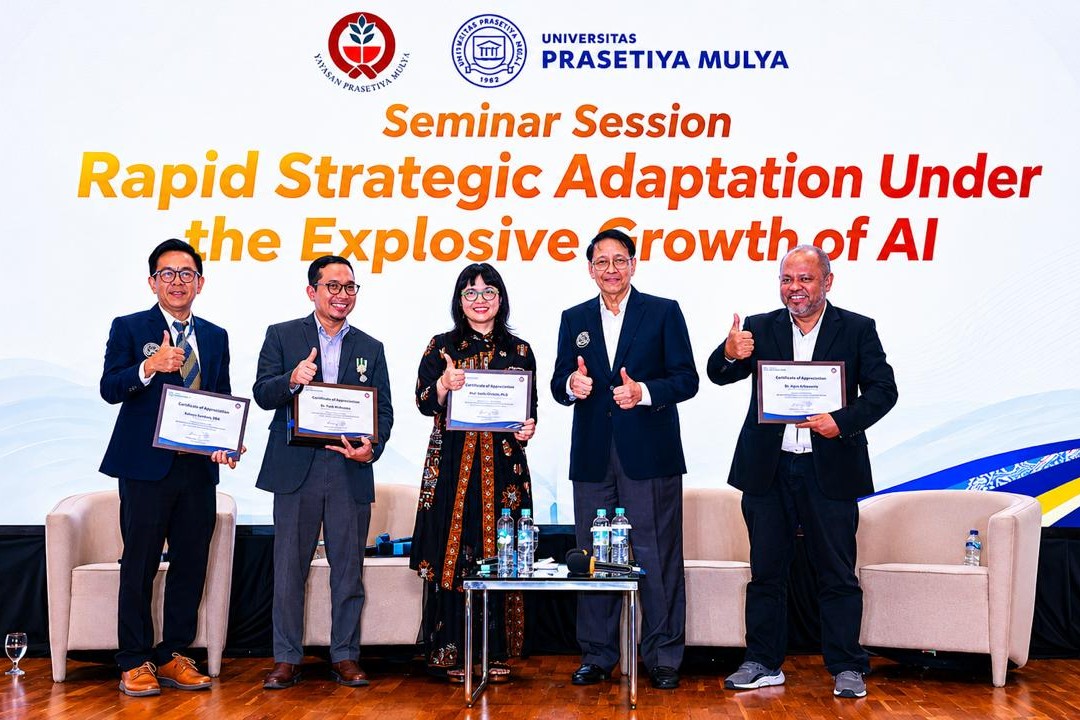
The rapid development of artificial intelligence (AI) is prompting higher education institutions to revise their teaching approaches to better align with future industry needs. Universities are no longer sufficient as mere knowledge transfer hubs but must build collaborative ecosystems connecting education, technology, and business.
Deputy Minister of Higher Education, Science, and Technology Stella Christie emphasised universities’ significant role in preparing the youth to adapt to rapid global technological changes. She stated AI represents a paradigm shift in how humans learn, work, and innovate, urging institutions to foster collaboration, creativity, and adaptability so Indonesian students can compete globally while contributing meaningfully to the nation.
Similarly, Amazon Web Services Indonesia’s Public Sector Lead, Muhamad Yopan, highlighted education’s strategic role in preparing digital talent for sector-wide technological transformations. “AI growth is rapid and will impact nearly all occupations. Universities must cultivate agile, collaborative learning cultures closely aligned with industry needs to produce problem-solvers in the digital era,” he said.
Prasetiya Mulya University Rector Hassan Wirayuda noted AI’s development is a critical moment for universities to transform and produce graduates ready for global challenges. “Amid technological acceleration, universities must go beyond knowledge transfer and become collaborative spaces linking academia, industry, and technology to nurture talent capable of addressing future complexities and contributing to Indonesia’s progress,” he explained. Through the Prasmul New Look programme, the university is strengthening technology and AI-based collaborative learning to prepare future-ready talent adaptable to workplace and digital industry changes.
“Prasmul New Look is not merely a physical campus overhaul but a symbol of the university’s learning transformation. We aim to create a more open, collaborative, and adaptive learning environment where students experiment, innovate, and co-create tangible solutions across disciplines,” he added.
To bolster the collaborative learning ecosystem, Prasetiya Mulya has expanded partnerships with national and global companies including Indofood CBP, MPM Group, BCA Digital, Astra International, Estée Lauder Companies, Orang Tua Group, and BDO Indonesia. These collaborations involve industry-based curriculum development, student internships, applied research, practitioner lectures, graduate recruitment, and collaborative projects to provide students with work-relevant learning experiences.
AI academic and researcher Agung Alfiansyah stated future learning will require students to work across disciplines, think critically, and leverage technology to create societal solutions. “Students must become accustomed to interdisciplinary collaboration, critical thinking, and using technology to develop real-world solutions,” he said.
Through this transformation, Prasetiya Mulya reaffirms its focus as a future-ready university connecting education, industry, technology, and innovation to prepare adaptable Indonesian talent for the AI era.