
Universities take action to tackle waste issues through thematic community service programmes
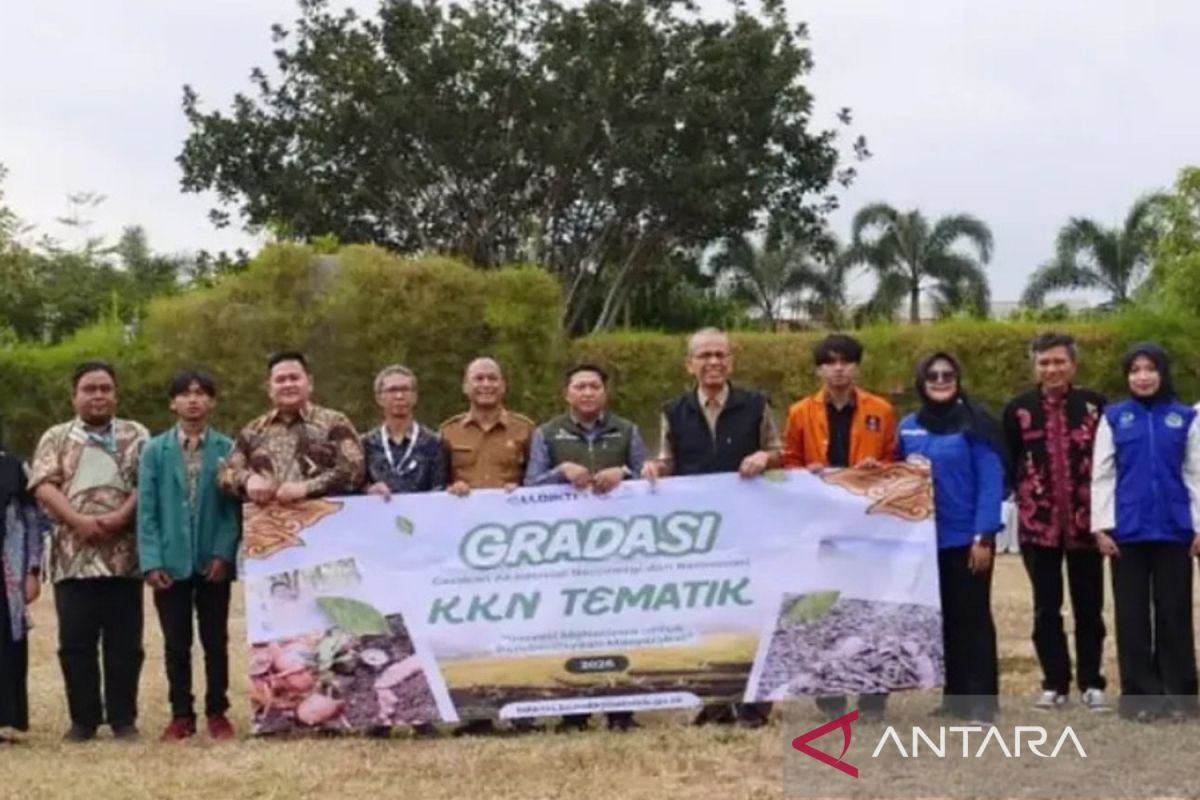
Several universities in Indonesia have begun moving to address waste and environmental issues across various regions through the ‘Sampah Tuntas’ (Waste Resolved) Thematic Community Service (KKN) programme, which has commenced in the Greater Bandung area and Sumedang Regency.
The Minister of Higher Education, Science, and Technology, Brian Yuliarto, emphasised that waste issues require cross-sector collaboration and the utilisation of science, technology, and innovation to provide solutions tailored to local conditions. “The research team for waste management has found very promising new breakthroughs. We want to trial this first in Bandung. From there, we will be able to calculate and analyse the most suitable technology,” said the Minister in a statement in Jakarta on Friday.
The Head of the Higher Education Service Institute (LLDikti) Region IV (West Java & Banten), Lukman, asserted that students in this programme play a role in assisting communities to build waste management habits at the source. The programme is directed towards strengthening changes in community behaviour through a participatory social engineering approach.
“Students are not there to assist waste collectors. The concept is to change the culture and behaviour of the community towards waste. Education is conducted starting from households so that waste can be reduced and managed before leaving the home, while simultaneously performing participatory social engineering with the community,” said Lukman.
He explained that the ‘Sampah Tuntas’ Thematic KKN covers five components: education, sorting, selecting, management, and ‘zero to landfill’. Students act as motivators and facilitators of behavioural change, rather than waste collectors or sorters. The programme implementation also includes strengthening waste banks and organic waste processing in the assisted areas.
By 2026, the programme is projected to involve 90 private universities, 25,529 students, and 56 sub-districts across five regencies/cities. Bandung City includes 69 private universities with 15,166 participants; Bandung Regency includes six universities with 5,371 participants; Cimahi City includes seven universities with 3,300 participants; Sumedang Regency includes five universities with 1,402 participants; and West Bandung Regency includes three universities with 292 participants.
Lukman stated that the programme is designed for 12 weeks, equivalent to 10 credit units (SKS) with a workload of 450 activity hours. The series of activities includes briefing, waste condition mapping, surveys of knowledge, attitudes, and practices (KAP), waste audits, the preparation of a 90-day action plan, mentoring, evaluation, and sustainability strengthening.
He mentioned that the programme continues the implementation of Thematic KKN in several regions. In 2024 in Bandung City, the activity involved 57 universities, 1,114 students, and 90 sub-districts, while in 2025 in Cimahi City, it involved seven universities, 1,600 students, and 15 sub-districts. By 2026, the programme will expand to Karawang, Tasikmalaya, and Sukabumi, involving a total of 26 universities and more than 2,000 students.
The ‘Sampah Tuntas’ Thematic KKN targets assistance for approximately 2,500 community units (RW), at least one active waste bank in every assisted sub-district/village, one active composting unit per RW, and at least two trained cadres per RW. The programme also aims to reduce residual waste entering disposal sites/landfills by at least 15-20 per cent from the initial condition.