
Universities Need to Prepare Talent for the Global Industry
The working world no longer recognises geographical boundaries. Companies from various countries can now seek the best talent without being tied to a specific location. This condition requires students to possess competencies capable of competing at a global level.
Universities are not enough to merely equip students with academic knowledge and degrees; they also need to create spaces that are more closely aligned with industrial needs. Collaboration between education and industry is a vital step to ensure that young talent is not only ready to enter the workforce but is also able to identify career opportunities at an international level.
Higher education institutions need to view student employability as an essential part of the educational process, rather than just a stage that begins after graduation. Changing industrial needs mean that the competencies sought by companies are also evolving. Therefore, campus learning must be linked to the actual problems and demands of the professional world.
Collaborating with industry players can serve as a way to bring academic knowledge together with professional experience. Such collaboration simultaneously provides students with an overview of the required competency standards. With this approach, universities become more than just places to obtain degrees; they become spaces to build readiness for increasingly open global job competition.
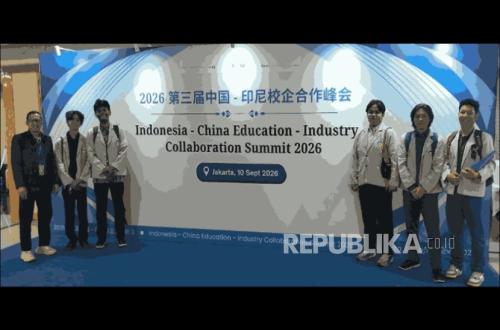
This idea can be seen in the steps taken by Cyber University, which has begun expanding its educational links with international industries. During the Indonesia-China Education–Industry Collaboration Summit 2026, Cyber University established recruitment partnerships with more than 15 companies from China. This collaboration demonstrates that the relationship between universities and industry can open wider opportunities for students to understand global job needs and prospects.
This opportunity was evidenced by the experience of five Cyber University students who presented their work before industry practitioners and participated directly in recruitment assessments. Bimo Yunda from Entrepreneurship, Muhammad Zidan from Information Technology and Systems, Fakhri Rasyid from Information Systems and Technology, Muhammad Kayyis from Digital Business, and Ikhwan Nusafa from Information Systems were all part of this experience.
Their involvement shows that students can begin to familiarise themselves with industrial processes and expectations while still in university. Such experiences serve as important preparation for building confidence and understanding the competencies required when entering global job competition.
However, collaboration with industry should not stop at opening recruitment opportunities. Universities must ensure that students gain experience, competence, and an understanding of ever-changing industrial needs. In this way, the relationship between campuses and industry can truly become part of the process of shaping talent ready to compete in the global labour market.
Ultimately, universities need to move beyond merely producing graduates with degrees. Connectivity with industry is a vital component in shaping talent capable of understanding the needs of the working world and adapting to global competition.
Through collaboration with international industries, Cyber University demonstrates that these opportunities can be built while students are still in university. Education that successfully merges knowledge, experience, and industrial needs will be essential for the emergence of digital talent that is not only ready to work but also ready to compete on a global scale.
Source: jawawa.id (https://jawawa.id/newsitem/universities-need-to-prepare-talent-for-the-global-industry-1789300693)
Originally published by Republika (https://news.republika.co.id/berita/tlav3h416/kampus-perlu-menyiapkan-talenta-untuk-industri-global), translated from Indonesian