
Universities Must Prepare Individuals to Face Change
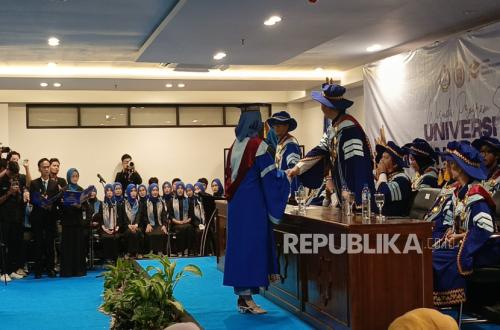
Graduation always brings happiness. The mortarboard is worn, names are called, diplomas are handed over, and cameras capture the smiles. However, once the applause ceases and the academic regalia is put away, the real question begins: are they ready to face life after campus?
In September 2026, numerous universities will hold graduation ceremonies once again. Thousands of students will leave campus with proud academic titles. However, graduation should not merely be a ceremonial release, but rather a momentum to test the results of education: what kind of human beings have truly been formed?
A diploma is certainly important; it serves as proof that someone has completed their academic education. However, the professional world does not only ask where a graduate is from. The world asks further: what are they capable of doing, how do they solve problems, how do they work with others, how do they make decisions, and how do they face change?
This is where universities need to expand their metrics of success. It is not enough for campuses to merely count the number of graduates, grade point averages, or timely graduation rates. What is more important is observing how the knowledge and experience gained during university transform into tangible abilities after students leave the campus.
From a human capital perspective, education is not just a process of obtaining a diploma, but an investment to increase human knowledge, skills, capacity, and productivity. Therefore, students must not only be equipped with academic knowledge but also possess the capital to adapt, work, create, and generate value for society.
The concept of employability reinforces this view. Graduates with employability are not merely those capable of securing a job, but those who possess the knowledge, skills, experience, and personal attributes to work effectively, face change, and continue to grow throughout their career journeys.
Consequently, universities must produce more than just graduates who “know.” Universities must produce graduates who can “do.” Learning needs to provide wider space for real-world projects, internships, organisations, research, entrepreneurship, problem-solving, communication, collaboration, and experience in facing life’s challenges.
The challenge is growing larger as the world of work changes very rapidly. The World Economic Forum’s Future of Jobs Report 2025 estimates that 39 per cent of the core skills required by workers will change by 2030. Analytical thinking, creativity, resilience, flexibility, leadership, technological literacy, and the willingness to continue learning are becoming increasingly vital amidst these changes.
This means that higher education institutions must not only prepare students for today’s jobs. They must prepare them to face jobs that may change, disappear, or even not yet exist when they graduate. Universities must instil the ability to relearn when old knowledge is no longer sufficient.
This is where Savickas’s idea of career adaptability becomes relevant. A career is not a straight, predictable path. It is a journey that demands readiness to face transitions, changing working conditions, uncertainty, and new opportunities. Therefore, graduates must be equipped not only with the competence to secure a job but also with the ability to continuously adapt when the professional world changes.
However, competence and adaptability alone are not enough. Universities also have a responsibility to shape character. For a person who is intelligent but dishonest, skilled but irresponsible, or high-achieving but lacking integrity, does not represent the true success of education.