
Universities Encouraged to Build Entrepreneurship Ecosystem Based on Innovation and AI
Universities are being encouraged not only to produce graduates ready for the workforce but also to create a generation of job creators through entrepreneurship education that is adaptive to technological developments. This transformation is seen as a key to increasing Indonesia’s competitiveness amid global economic changes.
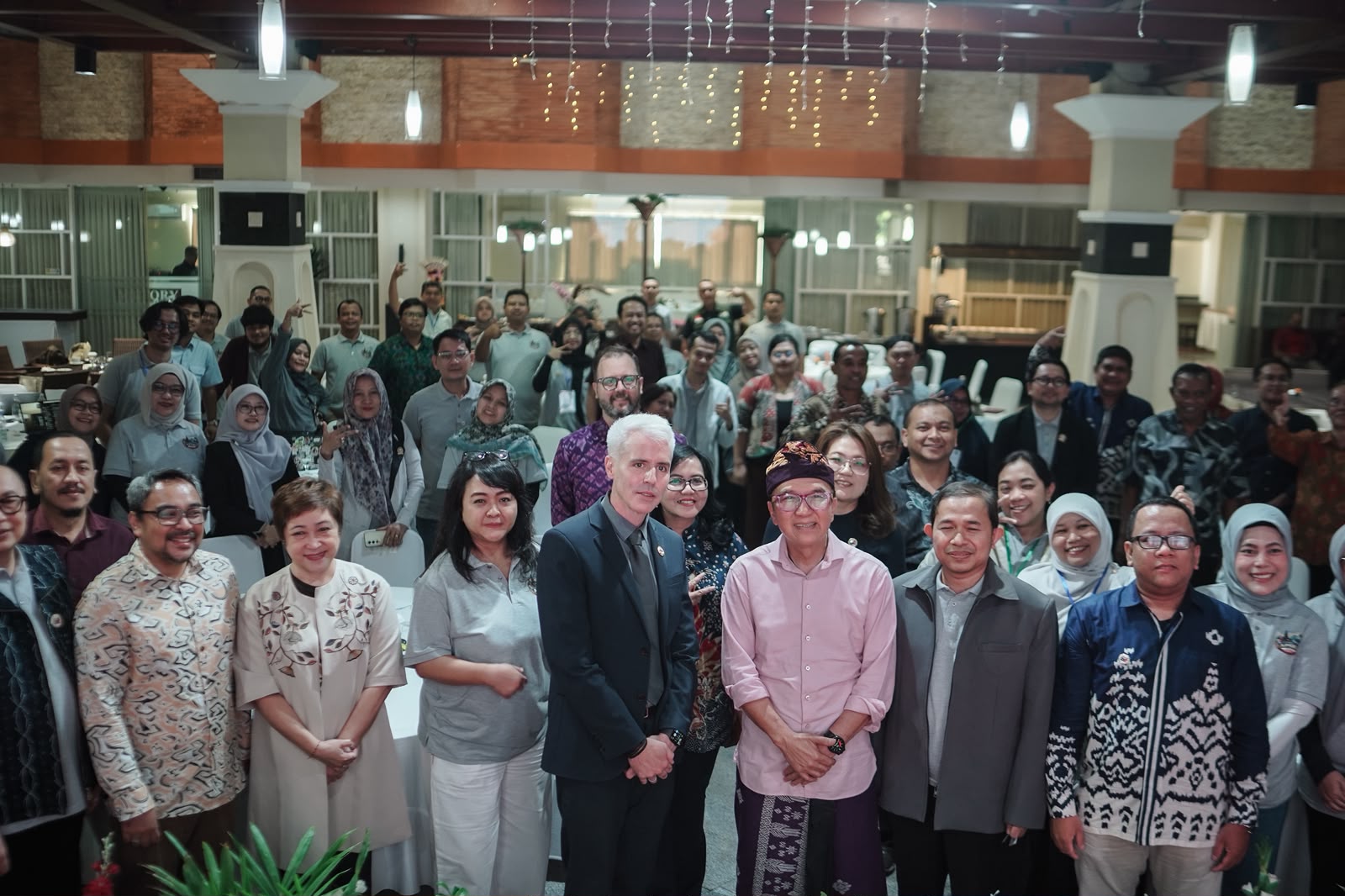
The commitment emerged during the Third National Working Meeting of the Indonesian Entrepreneurship Study Programme Association (APSKI) held in Kuta, Bali, from 22 to 24 July 2026. The forum, attended by representatives from 49 universities across Indonesia, served as a platform to formulate strategies for strengthening the national entrepreneurship education ecosystem.
With the theme ‘Transforming Entrepreneurship Education through Artificial Intelligence: Advancing Pedagogy, Innovation, and Global Collaboration’, the meeting discussed the use of AI in curricula, learning, research, and business development, while prioritising ethics, creativity, and a human-centred approach.
APSKI Chairman Sonny Rustiadi stated that entrepreneurship education must go beyond teaching students how to start a business. Universities should equip students with the ability to identify societal problems and transform them into economically viable solutions. ‘Students must be guided to find specific issues in their regions, develop relevant solutions, test them in the market, and bring innovations from campus into real businesses that provide tangible benefits,’ he said on Friday.
He added that entrepreneurship learning needs to be increasingly project-based, involving field experience, applied research, and real-world problem-solving. APSKI also advocates for stronger inter-university collaboration, the development of business incubators, and expanded student access to mentoring, financing, technology, and markets.
Echoing this view, Secretary General of the Ministry of Higher Education, Science and Technology, Professor Badri Munir Sukoco, assessed that universities are the most strategic ecosystem for producing entrepreneurs and new start-up companies. He said campuses need to build ecosystems supported by research, laboratories, business incubators, mentors, the business world, financing institutions, government, and alumni networks to generate more job creators.
Meanwhile, Deputy for Entrepreneurship at the Ministry of Micro, Small, and Medium Enterprises, M Riza Damanik, said entrepreneurship education must continuously adapt to technological developments, business needs, regional potential, and the national development agenda. ‘We do not expect all graduates to become entrepreneurs. However, every graduate needs to have an entrepreneurial mindset: being sensitive to problems, creative in finding solutions, courageous in making measured decisions, able to collaborate, and resilient in facing change,’ he said.
He added that this step aligns with Presidential Regulation Number 38 of 2026 on National Entrepreneurship Development, which serves as a reference for building an integrated entrepreneurship ecosystem.
In addition to the national working meeting, APSKI also held an International Conference on Entrepreneurship featuring academics from Indonesia, the United Kingdom, South Korea, Australia, and the Netherlands to discuss the development of entrepreneurship education in the digital transformation era. The organisation also launched two new scientific journals, the Journal APSKI Entrepreneurship and the Journal APSKI PKM, and inaugurated the management of the Indonesian Entrepreneurship Study Association.
As a follow-up to the meeting, APSKI established six strategic agendas, including strengthening the implementation of Presidential Regulation Number 38 of 2026, expanding collaboration with the Ministry of MSMEs through the Productive PRO-KESRA programme, enhancing the entrepreneurship curriculum connected to the SAPA UMKM ecosystem, and encouraging universities to make entrepreneurship part of their vision, mission, and key performance indicators.
Through the Third National Working Meeting, APSKI reaffirmed its commitment to improving the quality of entrepreneurship education, expanding international networks, and fostering more young entrepreneurs capable of competing globally and contributing to the national economy. The next APSKI National Working Meeting is scheduled to take place in Jakarta in 2027, hosted by Universitas Terbuka, alongside the election of the central board for the 2027-2031 period.