
Universitas Terbuka Students Urge Non-Conviction Based Asset Forfeiture to Remain Subject to Court Oversight
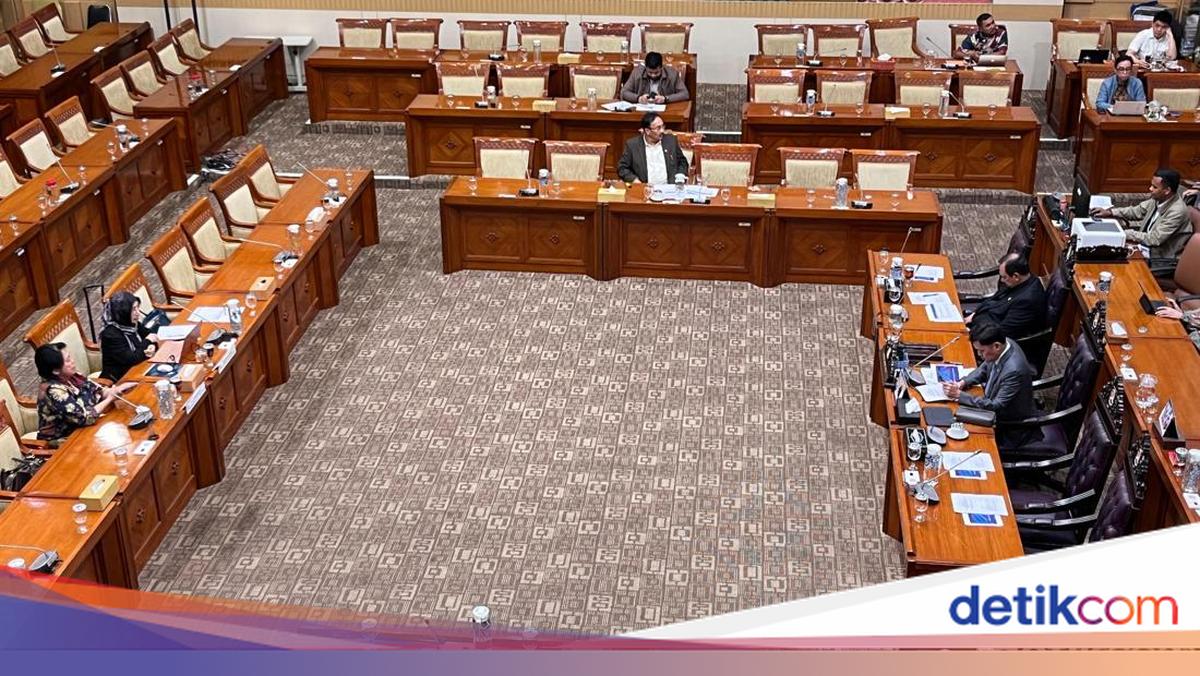
Students from Universitas Terbuka (UT) have voiced their support for the proposed Asset Forfeiture Bill, while insisting that the mechanism for non-conviction based forfeiture (NCBF) must still be conducted through the courts.
This stance was presented by UT student representative Matondang during a public hearing with Commission III of the House of Representatives (DPR) in Senayan, Jakarta, on Tuesday (6/10/2026). Matondang stated that the student body seeks immediate clarity regarding the Asset Forfeiture Bill.
“Our position is simple: we support this Bill, but we request that the state’s power and authority be balanced with strong legal safeguards,” he said.
Matondang noted that asset forfeiture is necessary, particularly for crimes such as corruption, money laundering, narcotics, terrorism, and other major organised crimes where perpetrators can be criminally prosecuted.
He explained that the NCBF mechanism is essential for pursuing assets linked to criminal activities when criminal proceedings against the perpetrator cannot proceed. However, he warned that this mechanism should not be utilised merely because it is perceived as faster or easier.
“We understand that NCBF is a forfeiture mechanism focusing on the legal relationship to the asset. We fully accept its existence, but we request that the requirements for the burden of proof be clarified,” he said.
According to Matondang, the court’s role in notice and control must be clearly defined. He argued that NCBF should be understood as a forfeiture where the primary object is the asset, rather than the punishment of an individual.
“NCBF should be applied when criminal processes truly cannot proceed—for instance, if a suspect or defendant dies, flees, or their whereabouts become unknown after reasonable efforts are made, or due to other legal circumstances that prevent criminal proceedings from continuing,” he explained.
“That is where NCBF can be utilised. However, NCBF must not be used simply because it is faster or easier,” he added.
He maintained that if the criminal process can proceed normally, criminal prosecution should remain the primary route. Consequently, asset forfeiture must still be adjudicated by a court.
“What is vital is that this is not the same as ‘without a court.’ Asset forfeiture must still be examined and decided by a judge,” he stated.
Furthermore, Matondang highlighted the need for protection for third parties with legitimate interests in the assets. This includes spouses, children, heirs, creditors, buyers, grantees, pledge holders, and other lawful owners.
“Article 28, paragraph (5) must be drafted carefully so that restrictions on suspects or defendants who have fled or are on the wanted list do not also strip away the rights of independent third parties,” he noted.
Matondang provided an example where, if the state discovers proceeds of crime in a house, the government may seize assets proven to originate from criminal activity. However, assets belonging to legitimate third parties should not be seized.
“The state must explain the link between the asset and the crime. If there are items belonging to a spouse or other parties, their rights must remain separate,” he explained.
“Because NCBF must serve as a specialised route to pursue assets, not a back door to avoid criminal processes and the burden of proof,” he concluded.
Source: jawawa.id (https://jawawa.id/newsitem/universitas-terbuka-students-urge-non-conviction-based-asset-forfeiture-to-remain-subject-to-court-oversight-1791356340)
Originally published by detikcom (https://news.detik.com/berita/d-8696168/mahasiswa-ut-dorong-perampasan-aset-tanpa-pemidanaan-tetap-lewat-pengadilan), translated from Indonesian