
Universitas Brawijaya appoints three new professors across various disciplines
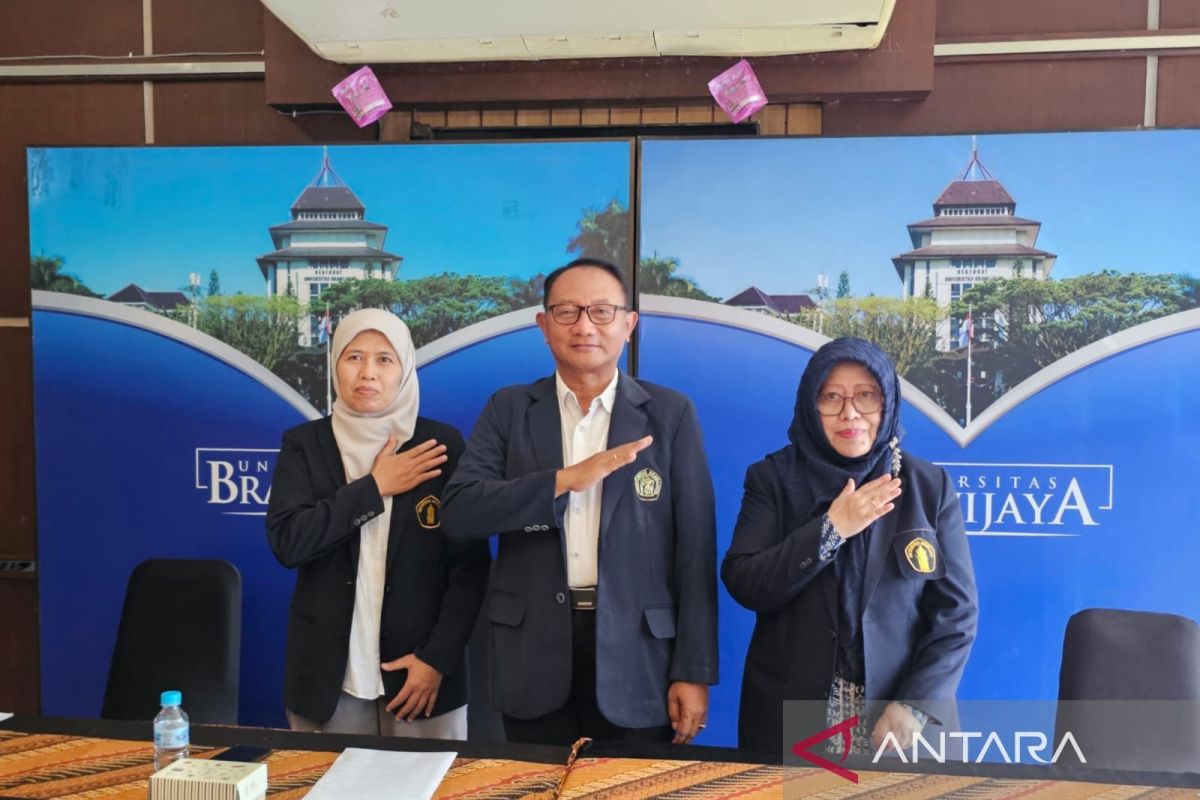
Malang, East Java — Universitas Brawijaya (UB) Malang, East Java, has added three professors from various scientific disciplines, who were inaugurated before the university’s academic senate at the Samantha Krida Building on Wednesday (10/8).
The three new professors are Prof. Bambang Semedi, specialising in Marine Remote Sensing and Geographic Information Systems; Prof. Erni Sofia Murtini, specialising in Cereal Technology and Traditional Foods; and Prof. Sri Muljaningsih, specialising in Natural Resource Economics.
During a press conference at the Samantha Krida Building on Monday, Prof. Bambang Semedi discussed the development of the Marine Intelligence System for Spatio-Temporal Catch Prediction, known as MARINESCAPE. This cutting-edge technological framework is designed to predict precise and adaptive Potential Fishing Zones (ZPPI) amidst fluctuating sea surface temperatures and extreme current changes caused by global warming.
“Fishing zones that have traditionally been guided by empirical experience and local wisdom are now difficult to predict, causing fishermen to spend more time searching for fish,” he stated. These environmental changes have led to unpredictable migration patterns for economically significant fish species, such as skipjack tuna. Consequently, fishermen face increased risks, including higher fuel consumption for their vessels.
Prof. Bambang noted that MARINEScrope is equipped with multi-sensor satellite data, including sea surface temperature, chlorophyll-a concentration, and ocean fronts, analysed using machine learning models. “MARINESCAPE is not intended to replace the human role, but rather to serve as an intelligent decision support system to assist fishermen in maintaining marine food security for future generations,” he added.
Meanwhile, Prof. Erni Sofia Murtini discussed cereals as a group of grains, such as rice, wheat, sorghum, and millet, which serve as essential carbohydrate sources for human energy needs. She encouraged the development of local cereals that have not yet been fully utilised. “One with great potential is sorghum. This plant can grow in low-fertility soil, meaning it does not compete with land used for rice cultivation,” she said.
Additionally, Prof. Sri Muljaningsih presented the ‘Lily Model’, which is based on the philosophy that micro, small, and medium enterprises (MSMEs) have the opportunity to create added value from available natural resources. “This model is community-centric, where value creation occurs through social interaction,” she explained.