
United Arab Emirates Officially Exits OPEC: Reasons and Impacts on the Oil Market
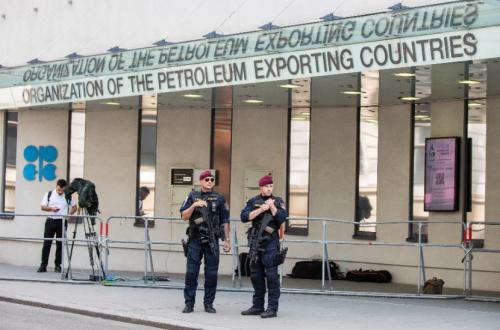
REPUBLIKA.CO.ID, JAKARTA – The United Arab Emirates (UAE) has announced its exit from OPEC and the OPEC+ framework. This removes one of the main pillars from the most influential group in the energy world.
The Gulf state, with a capacity of around 4.8 million barrels per day and significant room to increase production, announced on Tuesday that it will leave the organisation to focus on “national interests”.
This step occurs amid the US-Israel war against Iran, which has triggered historic energy shocks.
Here is an explanation of the history and role of the organisation in the global economy, as reported by Al Jazeera on Wednesday (29/4/2026).
When was OPEC founded and why?
The Organization of the Petroleum Exporting Countries (OPEC) is a permanent intergovernmental organisation based in Vienna, Austria, with the aim of coordinating and unifying petroleum policies among member countries.
The organisation was first formed at the Baghdad Conference in September 1960 by five founding oil-producing countries: Iran, Iraq, Kuwait, Saudi Arabia, and Venezuela.
At that time, the global oil market was dominated by a powerful group of Western oil companies, known as the “Seven Sisters”, which controlled production and set prices.
The main goal of the founding countries was to assert sovereignty over their natural resources and ensure fair and stable prices for oil producers, while maintaining regular supplies for consumer countries.
Currently, OPEC has 12 members, including besides the United Arab Emirates: Algeria, Republic of the Congo, Equatorial Guinea, Gabon, Iran, Iraq, Kuwait, Libya, Nigeria, Saudi Arabia, and Venezuela.
Based on the statement released on Tuesday, the United Arab Emirates’ withdrawal will take effect on 1 May, marking the exit of a member that has contributed since 1967.
The organisation maintains price stability by setting agreed production quotas, which collectively control around 30 per cent of global supply.
Since 2016, OPEC has also worked with Russia, Azerbaijan, Kazakhstan, Bahrain, Brunei, Malaysia, Mexico, Oman, South Sudan, and Sudan through the OPEC+ framework, bringing total production to around 41 per cent of global supply.
Source: jawawa.id (https://jawawa.id/newsitem/united-arab-emirates-officially-exits-opec-reasons-and-impacts-on-the-oil-market-1777452691)
Originally published by Republika (https://ekonomi.republika.co.id/berita/te8y2g370/uni-emirat-arab-resmi-keluar-dari-opec-ini-alasan-dan-dampaknya-bagi-pasar-minyak), translated from Indonesian