
Unisa Yogyakarta Pushes Research Outputs Beyond Publication
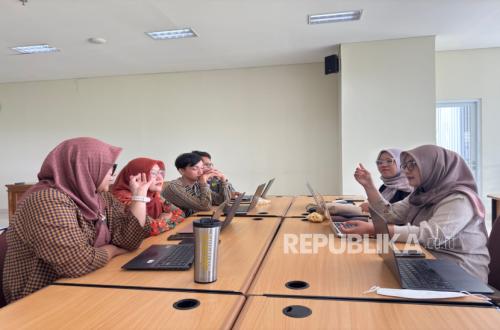
Universitas ’Aisyiyah (Unisa) Yogyakarta continues to encourage the research outputs of its lecturers and researchers not to end as academic publications, but to be applied directly to address various problems in society. A number of research outputs have been realised in tangible form.
Sinta Maharani, Head of the Public Relations and Protocol Bureau at Unisa Yogyakarta, said the university, which focuses on developing knowledge in health, community empowerment, and research-based innovation, is committed to producing research with real impact. According to her, this aligns with Unisa Yogyakarta’s vision as an excellent university with a health perspective, grounded in progressive Islamic values.
“Unisa Yogyakarta consistently encourages lecturers and researchers to produce work that not only contributes to the development of knowledge, but is also able to answer the real problems faced by society,” Sinta said last week.
She noted that research productivity at Unisa Yogyakarta has shown significant development in recent years. Several studies have even produced innovations with the potential to improve the quality of healthcare services and community welfare.
Among them are the Inclusion App, a community-based rehabilitation application developed to improve access to services for people with disabilities and vulnerable groups; the Smart Sensor Bracelet (SErBet), based on the Internet of Medical Things (IoMT), to support early detection of stunting risk; and my SADARI, an educational medium for early breast cancer detection.
Beyond app- and technology-based innovations, Unisa has also developed a number of ergonomic medical devices, such as GOE-KB, the Small Baby Carrier (SBC), VR-MAFETAL, KursiMU, and the Proning Mattress. These various innovations were developed based on the needs of both communities and health workers. For this reason, Sinta said, research outputs from Unisa Yogyakarta are not solely directed at producing academic publications, but also applicable solutions.
“All of these innovations are proof that research at Unisa Yogyakarta does not stop at academic publication, but is directed towards solutions that can be applied in everyday life,” she said.
Although research productivity continues to grow, Sinta said the university’s current challenge is no longer merely producing research. The next challenge is ensuring that research results are recognised, understood, and widely utilised by the public.
To date, much of the research output has been communicated through academic articles, proceedings, and seminars. Such forms of publication have a relatively limited audience within academic circles.
Yet society, as the end user, needs information about research results in language that is simpler, contextual, and easy to understand. “Therefore, research results need to be communicated in a way that is closer to the public, so that their benefits and applications can be understood by users,” Sinta said.
Resona Saintek builds a science communication ecosystem
Sinta explained that science communication is an essential part of building bridges between laboratory and society, researcher and innovation user, and scientific knowledge and real needs on the ground. For Unisa Yogyakarta, the Resona Saintek programme is a strategic step towards building a sustainable science communication ecosystem. Carrying the theme ‘Right Research, Healthy Society’, the programme is positioned as a link between research activity and public communication.
Its implementation will involve various elements within and beyond the campus, from the Public Relations and Protocol Bureau, the Research and Community Service Institute (LPPM), faculties, lecturers, and students, to media, government, communities, and the wider public.
“Through effective communication, society will not only know that Unisa Yogyakarta produces research, but will also understand the benefits of that research and be encouraged to adopt it in daily life,” she said.
The Resona Saintek programme will also mark the starting point for the formation of the Unisa Yogyakarta Science Communication Network (SCN), a science communication network designed to strengthen the dissemination of research results to the public. The SCN will be tasked with identifying research results with potential for public communication, developing dissemination strategies, producing science storytelling-based content, and expanding the publication of research results through various digital and mass media.
In addition, the SCN will initiate the One Research One Story programme. This internal policy encourages every research output to produce at least one public communication product as part of the downstream application of research.
With this approach, research results are expected not only to end up as journal articles or in academic forums, but to have communication products that reach the public in language and formats that are easier to understand.
“Resona Saintek does not stop with the campaign during the funding period, but becomes the foundation for integrated and sustainable science communication development within Unisa Yogyakarta,” Sinta said.
According to her, the presence of this ecosystem is expected to strengthen the position of science communication as part of the research process. In this way, the benefits of innovations produced by the campus can be felt ever more widely by society.
Source: jawawa.id (https://jawawa.id/newsitem/unisa-yogyakarta-pushes-research-outputs-beyond-publication-1788745869)
Originally published by Republika (https://rejogja.republika.co.id/berita/tkyxnb291/unisa-yogyakarta-dorong-hasil-riset-tak-berhenti-pada-publikasi), translated from Indonesian