
UNISA Bandung Lecturers Empower Sukapura Elderly Through SEFT Therapy and Islamic Mindfulness
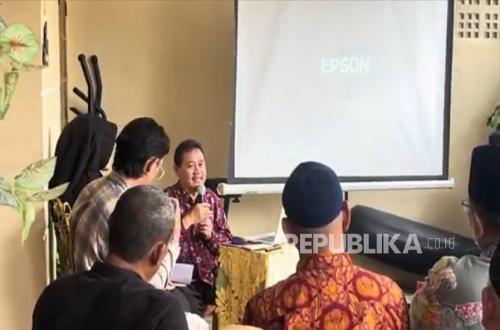
Amidst the increasing elderly population in West Java, a group of lecturers from Universitas ’Aisyiyah (UNISA) Bandung has introduced a simple yet spiritually-focused approach to assist senior citizens in self-care. Through training in the Spiritual Emotional Freedom Technique (SEFT) and Islamic mindfulness, the programme aims to improve both physical and mental well-being.
This community service initiative was conducted alongside the congregation of the Sukapura Muhammadiyah Branch Leadership (PRM) in the Kiaracondong District, Bandung, involving 42 participants from pre-elderly and elderly groups. The team was led by Sajodin, alongside Perla Yualita, Nike Arta Puspitasari, Muhammad Insan Jawwad Haifa, and Fadilla Nur Handayani.
The programme was prompted by urgent needs, as most members of the congregation, averaging over 51 years of age, face chronic illnesses such as hypertension, diabetes, and rheumatism, often accompanied by psychological issues like stress, sadness, and loneliness. These conditions frequently lead to a decline in their independence during daily activities.
“We want the elderly to be not only physically healthy but also innerly calm. We chose SEFT and Islamic mindfulness because they align with the religious values they live by daily, making them easier to accept and practise,” said Sajorb, the head of the community service team, in a statement on Saturday (1/8/2026).
By combining spirituality with relaxation techniques, SEFT integrates prayer, sincerity, and surrender to Allah with light tapping on the body’s meridian points while focusing on perceived issues. Meanwhile, Islamic mindfulness trains participants to be fully present in the moment through dhikr (remembrance), muhasabah (self-introspection), and tadabbur (contemplation) to foster tranquility.
The programme was implemented in stages, including needs observation, health education, direct training, daily mentoring, and the formation of peer support groups to ensure sustainability. Participants were trained to practice tapping sequences and mindfulness sessions independently, ranging from performing wudu (ablution) to dhikr and tadabbur.
The results showed measurable improvements. Before the training, none of the participants were in the high-knowledge category, with 76.2 per cent in the low category. Following the training, the high-knowledge category surged to 31 per cent, while the low category dropped to 23.8 per cent. Overall, participants’ knowledge of SEFT and Islamic mindfulness increased by an average of 23.97 per cent.
Beyond the statistics, psychological changes were also evident. Participants reported feeling calmer and less lonely after rutinly practising these techniques, with most now able to perform them without supervision.
The programme is considered highly relevant to the demographic trends in West Java, which faces an ageing population with millions of elderly individuals requiring empowerment. The team noted that this religious-based community approach is cost-effective, easy to implement, and aligns with the participants’ spiritual values—a combination rarely reached by purely medical approaches.
However, the team emphasised that these spiritual practices are complementary and not a substitute for medical services. Elderly individuals with severe disorders still require professional medical assistance.
The service team expressed their gratitude to the Council of Higher Education, Research and Development of the Muhammadiyah Central Leadership, the LPPM of UNISA Bandung, and the leaders and members of PRM Sukapura for their full support throughout the programme. Moving forward, it is hoped that similar activities can be replicated more widely with continuous mentoring to maximise benefits for the elderly.