
Unique Facts About the Sumatran Rhino, the Only Asian Rhino with Two Horns
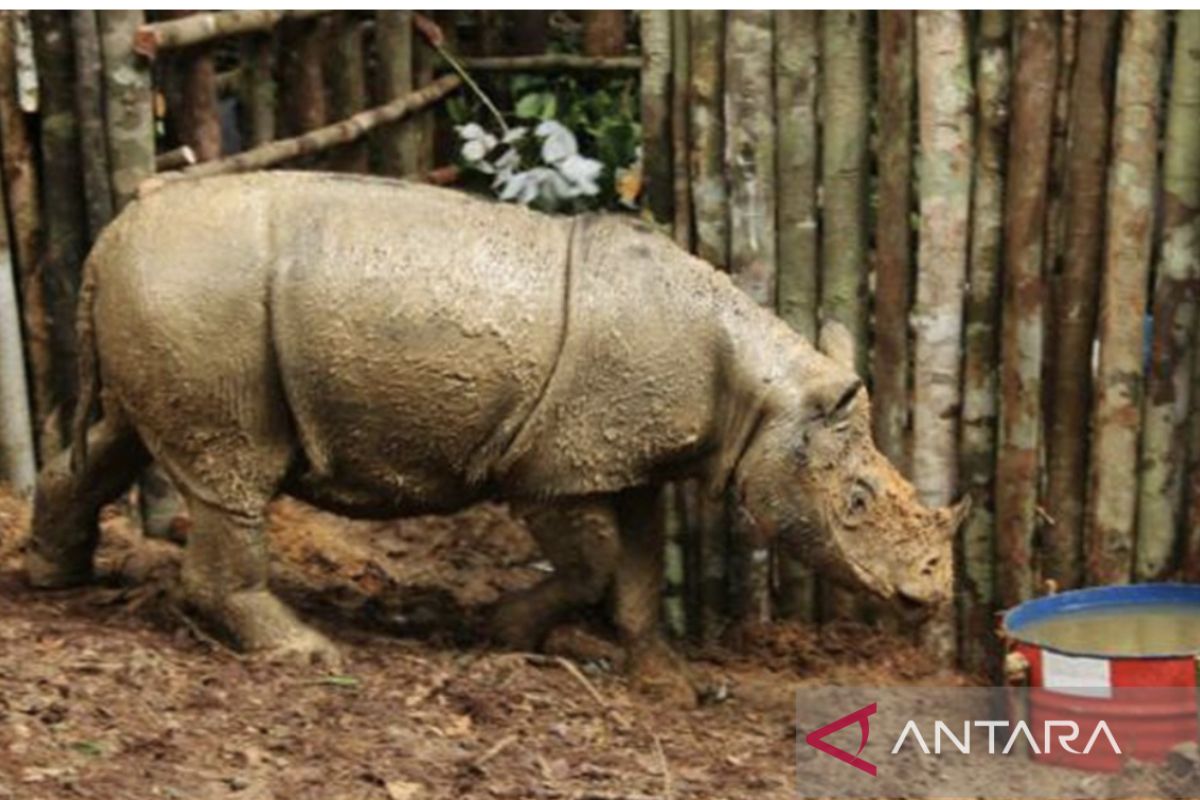
Jakarta (ANTARA) – The Sumatran rhino is one of Indonesia’s most distinctive animals. Scientifically known as Dicerorhinus sumatrensis, it is not only the world’s smallest rhino species but also the only Asian rhino with two horns.
According to the World Wide Fund for Nature (WWF), the Sumatran rhino is classified as Critically Endangered on the International Union for Conservation of Nature (IUCN) Red List. This status indicates that the species faces an extremely high risk of extinction in the wild.
Here are some unique facts about the Sumatran rhino.
- The only Asian rhino with two horns
One of the Sumatran rhino’s most recognisable features is the pair of horns at the front of its head. The front horn is usually longer, while the rear one is shorter and sometimes appears as little more than a small bump.
This distinguishes it from the Javan and Indian rhinos, which each have only one horn.
Rhino horns are made of keratin, the same protein that forms human hair and nails. They are not bones, as some people might imagine.
The horns continue growing throughout the animal’s life. However, they also make rhinos targets for illegal hunting, driven by demand on the black market.
- The smallest living rhino species
Although it has a large, powerful body, the Sumatran rhino is the smallest of the five rhino species still living today.
WWF puts its shoulder height at around one to 1.5 metres and its weight at approximately 600 to 950 kilograms, although individuals vary in size.
Its relatively small build helps it move through dense forest. The animal spends much of its time roaming the forest in search of food and water.
- Its body is covered in coarse hair
Unlike most other rhinos, which appear almost hairless, the Sumatran rhino has coarse, reddish-brown hair.
Its coat is thicker when it is young, becoming sparser and coarser with age. This feature has led to it being known as the “hairy rhinoceros”.
Its hair also makes it look quite different at a glance from the Javan and Indian rhinos, whose thick skin has more prominent folds.
- It is related to the extinct woolly rhinoceros
The Sumatran rhino has a close evolutionary relationship with the woolly rhinoceros, an ancient rhino species that is now extinct.
According to WWF, among living rhinos, the Sumatran rhino is closely related to the extinct woolly rhino group.
This makes it important to research into mammalian evolution. Its existence helps scientists understand the history of rhino development and the changes that have taken place over millions of years.
- It tends to live alone
Sumatran rhinos are generally solitary animals. Adults usually forage and roam their territories alone rather than living in large groups like some other herbivores.
They do, however, interact with others, particularly during mating. Females also stay with their young while raising them.
This behaviour makes breeding encounters more challenging when the population is scattered across separate forest areas.
- It communicates through sound
Although it is known for living alone, the Sumatran rhino does communicate. It is known to make a range of sounds, including whistles, moans and short calls.
These sounds are thought to help rhinos communicate with one another, particularly in dense forest where visibility is limited.
Vocal communication is an intriguing characteristic, given that much of the animal’s activity takes place in habitat covered by thick vegetation.
- It likes to wallow and needs mineral sources
The Sumatran rhino also has a habit of wallowing in mud. This helps maintain its body and skin in the humid tropical forest environment.
It also needs access to natural mineral sources known as salt licks, which provide minerals required by its body.
For this reason, conserving its habitat means more than preserving trees. Water, wallowing sites, food sources and minerals must also be taken into account.
- It reproduces slowly
The Sumatran rhino has a relatively low reproductive rate. According to IUCN information on the species, gestation is estimated to last around 15 to 16 months.
Females usually give birth to one calf at a time. This long reproductive cycle means the population grows slowly, particularly when so few individuals remain.
Rhinos living in separate small groups may also have difficulty finding mates. This is a major challenge to maintaining a genetically healthy population.
- It now survives only in Indonesia
In the past, the Sumatran rhino’s range covered a much wider area of Asia, including parts of South and South-east Asia.
Today, the species is known to survive only in Indonesia, in several forest areas on the islands of Sumatra and Kalimantan.
Habitat loss and illegal hunting have caused its population to fall sharply. WWF estimates that only around 40 individuals remain in the wild, although population estimates for this extremely rare animal are uncertain and may change as monitoring findings are updated.
Preventing its extinction requires sustained forest protection, anti-poaching patrols, population monitoring and managed breeding programmes.
The Sumatran rhino is not only an animal with unique physical characteristics but also an important part of Indonesia’s biodiversity. Protecting the species also means safeguarding tropical forests and the many forms of life that depend on those ecosystems.
Source: jawawa.id (https://jawawa.id/newsitem/unique-facts-about-the-sumatran-rhino-the-only-asian-rhino-with-two-horns-1791802447)
Originally published by Antara (Indonesian) (https://www.antaranews.com/berita/5782110/fakta-unik-badak-sumatra-satu-satunya-badak-asia-yang-punya-dua-cula), translated from Indonesian